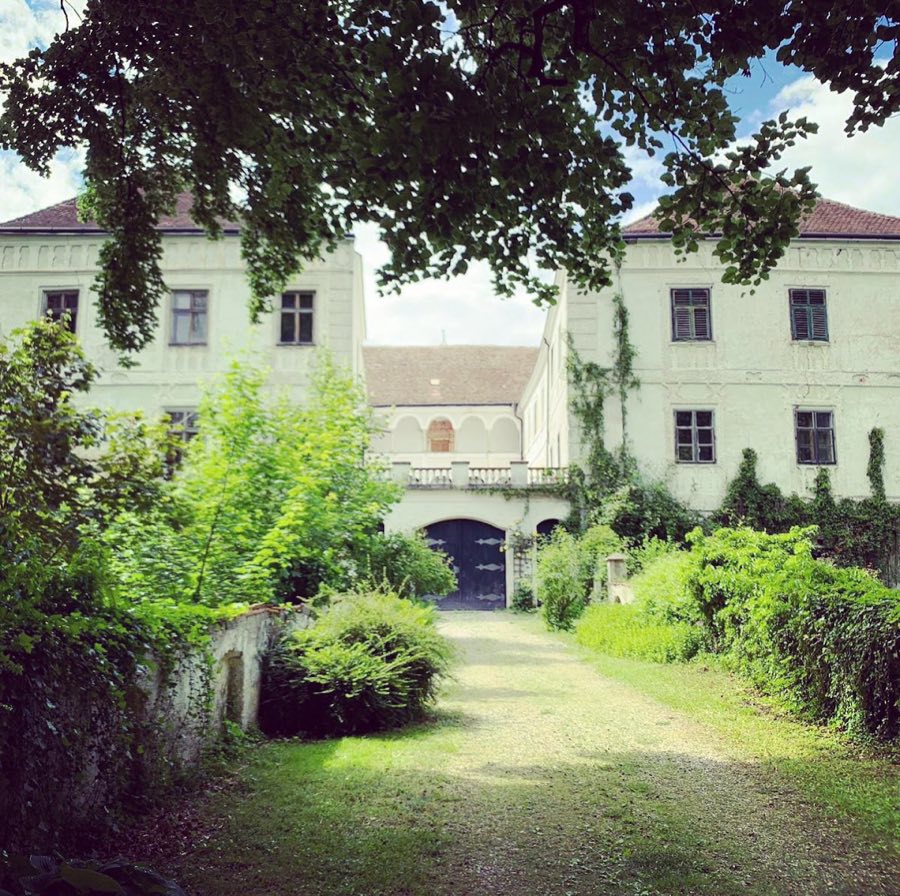
No. 66808
Schloss Katzenberg
Austria
CastleRestoredFor events13th century
No. 46312
Castle · Austria
No. 46312 · 48.275 N, 13.100 E
For rent
Schloss Hagenau is marked for bookable castle accommodation. Nightly pricing, sleeps count, stay rules, and amenities are displayed only when public operator data is available.
Rental type: Hotel / bookable stay, Short-stay rental
Short-term availability: Bookable accommodation signal
For events
Schloss Hagenau is marked as a château or castle venue lead. Capacity, indoor/outdoor spaces, catering rules, and accommodation options are published only after public verification.
Event types: Private events, Cultural gatherings, Filming and photography
Accommodation: Accommodation signal present
Quick summary
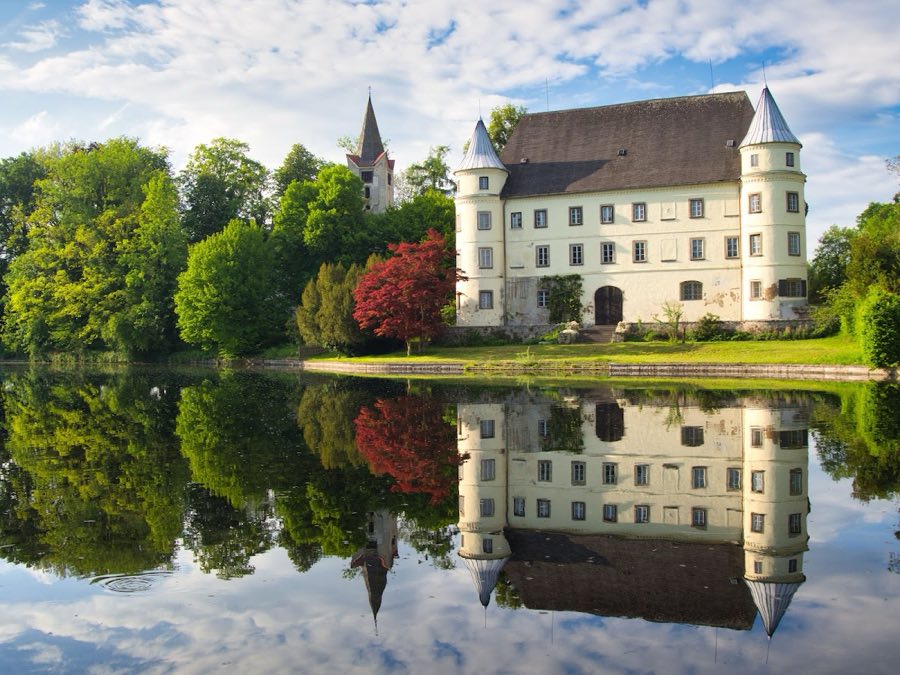
Schloss Hagenau is a castle in Austria with origins associated with the 13th century.
See all castles in AustriaSchloss Hagenau in Hagenau, Austria is a castle site that originated in the High Middle Ages and was established by local medieval nobility. The place appears in records from 1088 as the possession of the family whose name it bears. The present main building dates to a Renaissance rebuilding of 1571, and the site has long connections to regional church and princely authorities, which shaped its role in local administration and ownership.
The earliest phase saw the estate in the hands of the family named after the castle. In 1152 the bishops of Passau acquired the site and held it as a fief, granting it to a ministerial household that adopted the castle name. One member of that group, Reginbert, served as Bishop of Passau and died during the 1147 Crusade. The senior line in Upper Austria ended with Ludwig von Hagenau in 1262, after which control passed briefly to the Ortenburgs and then into the possessions of the dukes of Bavaria.
From the later 13th century the castle changed hands several times. Around 1270 it came under the Toerring family, by about 1400 it belonged to the Ahamer family, and in 1525 it was bought by the Taimer zu Mühlheim family, who kept it until 1635. Repeated fires and flooding led to the demolition of the earlier medieval building in 1571, and at that moment the present Renaissance structure was erected on a raised terrace designed to be safe from floods. In the 20th century the later raising of the Inn for the Frauenstein power plant reservoir altered water levels and has supplied an incorrect impression that the castle was originally intended as a waterbound stronghold.
In 1635 Elector Maximilian I of Bavaria presented the estate to his personal physician, Ferdinand Schütz. Schütz added a brewhouse and stables beside the castle and received permission to use the title “von und zu Hagenau und St. Peter.” In 1710 Count Ferdinand Josef von Rheinstein and Tattenbach took possession and, because the buildings had become dilapidated, carried out rebuilding work between 1717 and 1728. The property passed in 1722 to Johann Franz, Count Franking, who had the chapel in the park reconstructed in 1727–28. In 1829 inheritance transferred the estate to the Barons von Handel. In the 20th century Maximilian Handel converted the site into a castle hotel, an enterprise that did not succeed; on his death in 1966 ownership passed to his daughter Colette Spaur. Her family retains the property and undertook a restoration in 2001. The site is protected as a listed monument.
The castle sits on a rocky spur that projects toward the Inn and lies beside the bay formed by the old mouth of the Mattig river, raised above surrounding ground to guard against flooding. The standing building is a Renaissance house constructed on that raised platform in the late 16th century, its position and masonry reflecting the deliberate effort to place living and service spaces above flood level. The later increase in river levels has changed how the setting appears, but the raised construction remains a defining element.
Four corner towers give the house a compact, fortress-like silhouette, their masonry and form contributing to the building’s defensive appearance. An interior courtyard opens from the main block and contains a wrought-iron decorated draw-well, a well for drawing water fitted with ornamental metalwork, which remains in situ. Above the principal entrance stands the coat of arms of the von Handel family, set into the façade as a heraldic marker of later ownership. Along one side of the courtyard there are arcades that once had galleries above them; those upper galleries have since been filled in with brickwork, altering the original circulation between levels.
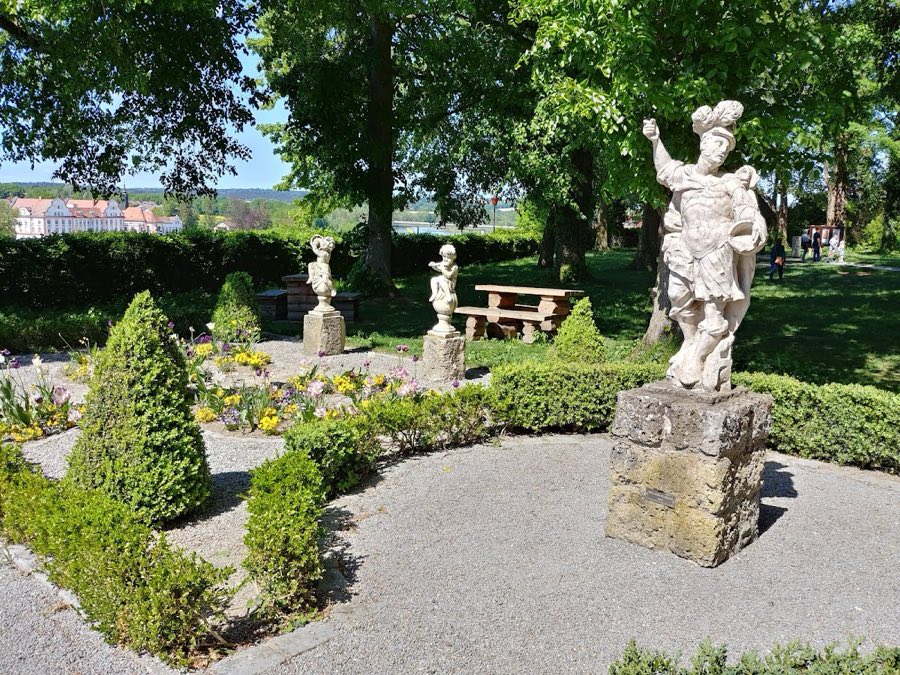
Adjacent to the main residence are ancillary structures added in the 17th century, including a brewhouse and stables erected during Ferdinand Schütz’s tenure, which reflect the estate’s mixed domestic and service functions. In the castle park stands a Gothic chapel dedicated to Saint Nicholas that dates to 1515 and was rebuilt in 1727–28 by Count Franking; the chapel survives as a distinct building and is used for events, including musical performances.
The principal palace underwent a comprehensive restoration in 2001, today accommodates cultural activities and rental apartments, and remains largely occupied by private residents while opening to the public only on occasion.
No. 66808
No. 99759
No. 29490
No. 10663
Comments
Comments for Schloss Hagenau will require a verified account before posting.
We'll send a verification link before your first comment is published.