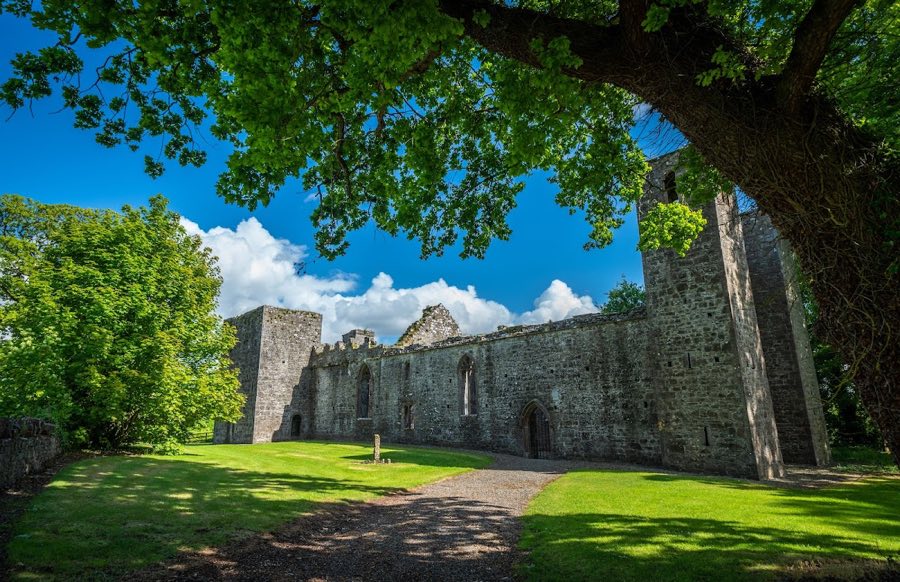
No. 39760
Killeen Castle, Dunsany
Dunsany, Ireland
Tower houseRestoredFor rent12th century
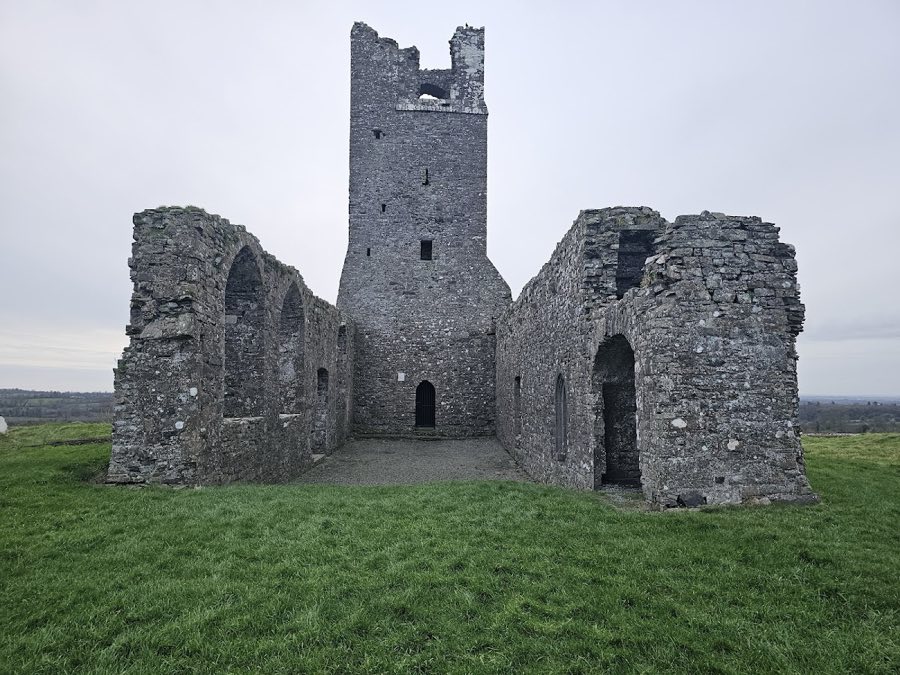
No. 18574
Castle · Ireland
No. 18574 · 53.583 N, 6.562 W
Quick summary
Skryne Castle is a castle in Ireland with origins associated with the 12th century.
See all castles in IrelandSkryne Castle stands in Skreen, Ireland, and was erected by Norman settlers.
The first fortification was raised in the late twelfth century after the Anglo‑Norman arrival in Ireland. Henry II visited Ireland from October 1171 until April 1172, and large tracts of land were distributed during and after that visit. The territory that now forms County Meath was granted to Hugh de Lacy, who granted the lands of Skryne to his vassal Adam de Feypo. The initial castle, a wooden motte and bailey set on an artificial mound, had been built by 1175. The place and its founder are named in the contemporary poem The Song of Dermot and the Earl.
Across the medieval centuries the site underwent repeated destruction, rebuilding, and alteration. Members of the de Feypo family remained associated with the castle and local churches; Richard de Feypo rebuilt an old hilltop church dedicated to St Colmcille, and the family constructed a church of St Laurence in 1341. A monastery was established nearby in the fifteenth century. By 1300 the de Feypo knights had acquired the rank of baron, and the barony of Skryne continued until about 1600, when the titleholders died out and the castle fell into abandonment and gradual ruin.
In the modern period the castle was partially restored in 1800. The estate is recorded as extending to 1,266 acres and containing mills and ponds, with a royal road running close to the site. An old cemetery near the castle is recorded as the burial place of Adam de Feypo and his son Richard. The place name Skryne or Skreen derives from a word meaning a shrine, and a local monastery is said to have once held the shrine of the saint Colm Cille. A public house named O’Connell is noted as lying close to the castle ruins. Reports differ on the present condition of the site, with accounts describing it as ruined while another source describes it as still inhabited.
The site began as a motte and bailey positioned on a constructed mound at the hilltop, giving the complex a compact, raised layout. The summit lies at about 500 feet above sea level, and the location is close to the Hill of Tara. The earliest defensive element was an artificial earth mound supporting timber fortifications and an enclosed outer yard, the typical arrangement for a wooden motte and bailey built in the late twelfth century.
That wooden stronghold was followed by masonry phases recorded in later descriptions. The motte was replaced by a small castle described as an expanded tower house, a building form that superseded simple timber works. This small castle was then succeeded by a larger domestic complex recorded as an L‑shaped range with an adjoining square annex measuring roughly thirty by thirty metres, indicating a move from pure defence toward a manor-scale residence.
Surrounding the principal buildings, documentary notes record a nearby cemetery that held the graves of Adam de Feypo and his son Richard, and estate features such as mills and ponds. A royal road ran adjacent to the property, and the old hilltop church of St Colmcille and other ecclesiastical buildings stood close to the castle. A monastery established in the fifteenth century is associated with the group of religious sites, and local tradition ties that monastery to a shrine of Colm Cille.
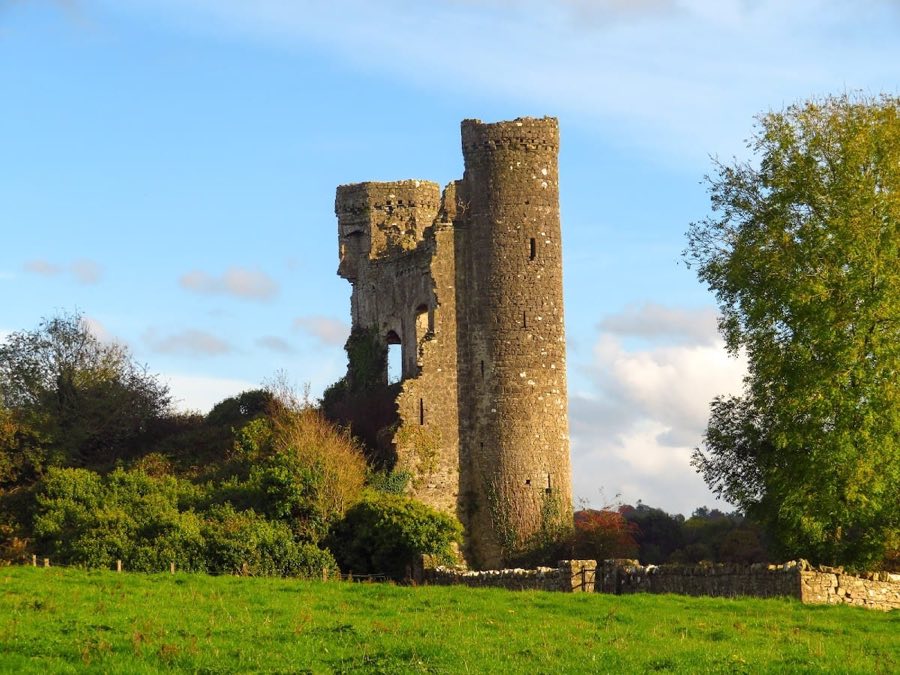
Conditions recorded for the surviving fabric are variable. The site was partly restored in 1800; several accounts describe the castle as now in ruins, while one later report describes the site as still inhabited. The low stone fragments of later buildings, the earthwork mound of the motte, the traces of an L‑shaped range and the square annex remain the principal archaeological elements attested in the record. A public house called O’Connell is recorded as lying close to these remains.
No. 39760
No. 48147
No. 26074
No. 11923
Comments
Comments for Skryne Castle will require a verified account before posting.
We'll send a verification link before your first comment is published.