No. 46515
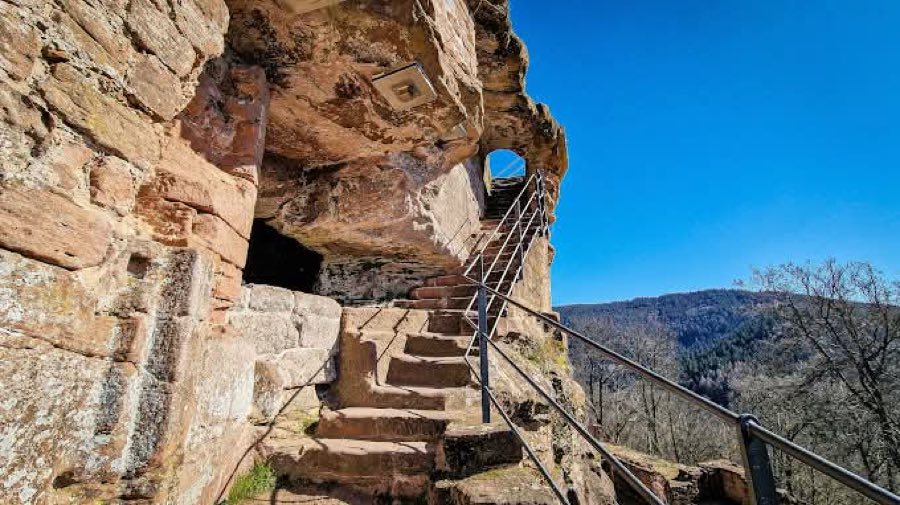
Burg Meistersel
Germany
CastleRuin11th century
No. 90912
Castle · Germany
No. 90912 · 49.351 N, 8.016 E
Quick summary
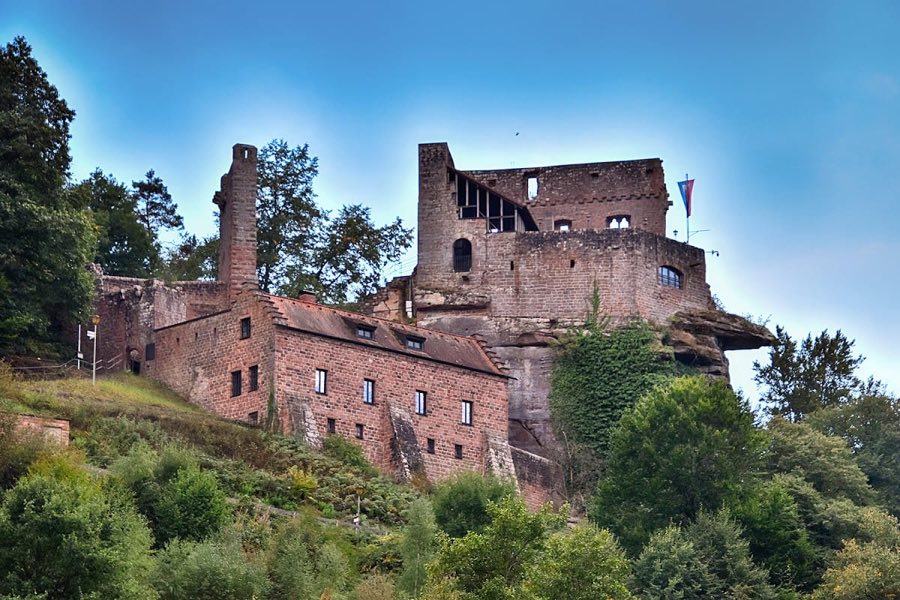
Spangenberg Castle is a castle in Germany with origins associated with the 11th century.
See all castles in GermanySpangenberg Castle is located in the municipality of Erfenstein, Germany. It was constructed during the 11th century by medieval builders whose identity remains undocumented, though shortly after its founding it became linked to the ecclesiastical authority of the Prince-Bishopric of Speyer.
In 1100, the castle came under the control of the Prince-Bishopric of Speyer following a donation by Bishop Johannes I. From this time, it was managed as a fief castle (a type of estate granted under feudal law) by ministeriales, who were officials appointed by the bishopric to oversee its administration. Over the centuries, a series of castellans were entrusted with the castle’s custody, including notable knights such as Diether von Zoller in 1317, Eberhard von Sickingen in 1431, and Heinrich von Remchingen in 1439.
The ownership of Spangenberg was historically distinct from that of the nearby Erfenstein Castle, situated just 200 meters away. While Spangenberg was held by the prince-bishops of Speyer, Erfenstein belonged to the counts of Leiningen. This close proximity but divided ownership created a rivalry that shaped the region’s medieval politics and conflicts.
Both castles suffered severe damage during the Weißenburg Feud of 1470, a conflict between Elector Frederick I of the Palatinate and Duke Louis I of Palatinate-Zweibrücken. Erfenstein Castle was destroyed first, followed closely by Spangenberg. Despite this devastation, Spangenberg was partially restored by 1505, when a stud garden was established nearby. From then, the castle served primarily as the residence of the stud master, responsible for overseeing horse breeding operations, a role it maintained for nearly a century.
The early 17th century brought further turmoil when, in 1618—the opening year of the Thirty Years’ War—the castle was destroyed again by forces led by the mercenary commander Ernst von Mansfeld. Decades later, the ruins faced final devastation in 1688 during the War of the Palatine Succession when troops under King Louis XIV of France laid waste to the site.
By around 1900, the remains of Spangenberg Castle had become the property of the local municipality. Today, the ruins are owned by the town of Neustadt an der Weinstraße, connecting the site’s long history to the present-day community.
Local tradition preserves a legend associated with Spangenberg known as the story of the Leather Bridge. This tale features an evil knight named Caspar and the emperor’s daughter, weaving a narrative that intertwines the castle’s physical presence with mythic elements of the surrounding region.
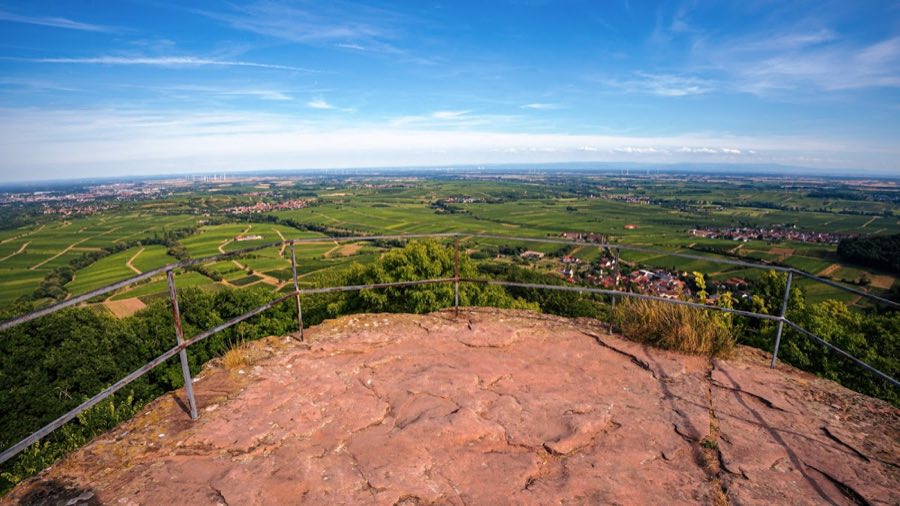
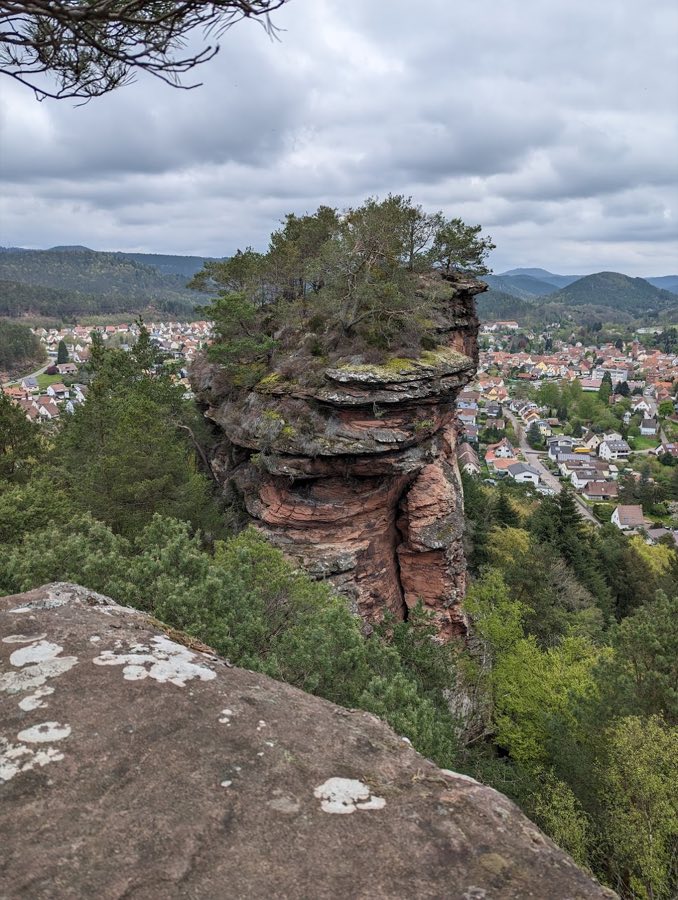
Spangenberg Castle was originally built as a rock castle, utilizing a sandstone outcrop situated at about 249 meters elevation on the northwest spur of the Schlossberg, itself rising to 343.2 meters. This elevated position offered commanding views over the Speyerbach valley, serving strategic defensive purposes typical of medieval fortifications.
Today, the surviving remains include the fortified palas, which functioned as the main residential building within the castle’s lower ward, known in German as the Vorburg or Unterburg. This substantial structure reflects the castle’s role as a noble dwelling and administrative center during its occupation. Adjoining the lower ward, the castle gate leading to the upper ward (the Kernburg or Oberburg) remains partially intact. The gate would have controlled access and provided security between the two sections of the stronghold.
A prominent shield wall—a thick, protective barrier designed to defend key sections of the castle from attack—is also preserved. This wall was an important feature, guarding approaches and absorbing assaults from enemy forces.
These ruins rest on a sandstone outcrop that has been officially recognized as a natural monument (ND-7376-205), highlighting both the cultural and geological value of the site. Some parts of the castle ruins have been partially reconstructed to stabilize the structures and convey their original appearance more clearly.
The close distance of roughly 200 meters to Erfenstein Castle is notable, emphasizing the unusual situation of two neighboring fortifications with distinct ownership and histories, a unique feature in the medieval castle landscape of the region. While no inscriptions, detailed decorative elements, or archaeological finds such as pottery have been documented, the visible remnants of walls, gates, and living quarters provide valuable insight into the castle’s defensive and residential functions over its centuries of use.
No. 46515
No. 22362
No. 57353
No. 36361
Comments
Comments for Spangenberg Castle will require a verified account before posting.
We'll send a verification link before your first comment is published.