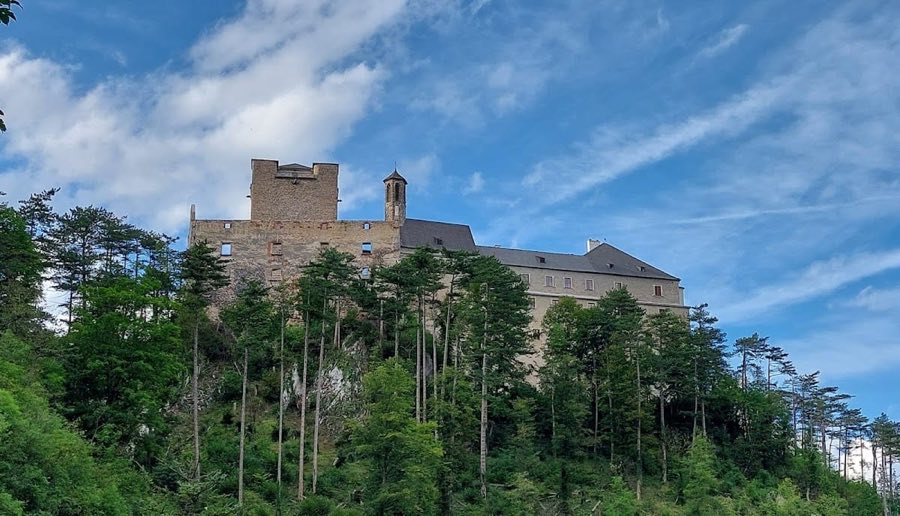
No. 59598
Stixenstein Castle
Austria
CastleRestored12th century

No. 88132
Castle · Austria
No. 88132 · 47.679 N, 15.962 E
Quick summary
Stuppach Castle, Gloggnitz is a castle in Gloggnitz, Austria with origins associated with the 20th century.
See all castles in AustriaStuppach Castle in Gloggnitz, Austria, is a medieval noble residence first recorded in 1130, erected by the region’s medieval nobility and later reshaped through Renaissance and Baroque refurbishments. Its long occupation by local ruling families and a later association with a famous musical commission give the site clear historical significance, while changes in ownership and function trace broader shifts in aristocratic life and 20th-century upheavals.
The earliest phase centers on the Wurmbrand‑Stuppach family, with Leopold Wurmberger identified as an early owner and a Poppo von Stuppach named around 1155. The comital Wurmbrand line held the property under vassalage to the Pitten of Formbach‑Neuburg and kept it until the mid‑17th century. During the 1500s and 1600s the residential parts received alterations, but the castle’s defensive value declined as artillery made its medieval fortifications obsolete.
In 1659 Count Hans Ehrenreich Wurmbrand sold the estate to Matthias Wegerle von Walsegg, who made no major remodelling. Around 1730 Joseph Julius Leopold von Walsegg ordered an enlargement that introduced more contemporary forms. Count Franz von Walsegg resided at the castle from 1763 until his death in 1827. In 1791 he engaged Wolfgang Amadeus Mozart to compose a Requiem for his late wife; Mozart died before finishing the work. The original manuscript remained at the castle until shortly after Count Walsegg’s death and is now in the Austrian National Library.
After Franz’s death his heir Karoline von Sternberg sold the property to Prince Johann von Liechtenstein. Ownership then passed in the late 19th century to the Schlöglmühl paper mill and later to Count Wilhelm zu Castell und Rittenhausen, before moving through several private hands. Decline began in 1936 and in 1938 parts of the building were used as a regional leadership school of the Sturmabteilung (SA). During the Soviet occupation in 1945 an order to demolish the complex assigned to the SS was not executed. Soviet troops converted the castle into a field bakery and in 1946 overheating of the oven triggered a fire that destroyed most of the southern roof truss and caused the south wing’s ceiling to collapse, leaving the complex largely ruined.
The municipality later requisitioned the property to settle unpaid taxes, and social housing occupied the mostly intact northern tract until revitalization works. Restoration of the main structure began in the late 1980s (a 1989 date is given in one account) and returned much of the fabric to use; the restored primary building covers roughly 2,400 square metres. Since the end of the 20th century the Zellinger family has owned the site and the halls have been used for concerts and cultural programmes. Following a 1997 production tied to Mozart the site has been promoted as “Mozart’s last castle.”
The castle stands as a three‑storey rectangular complex made of four wings that frame a small central courtyard, with the principal baroque façade facing south. The building stretches from the southwest toward the northeast for about 41 metres along its front. A rusticated basement, showing rough‑fa
No. 59598
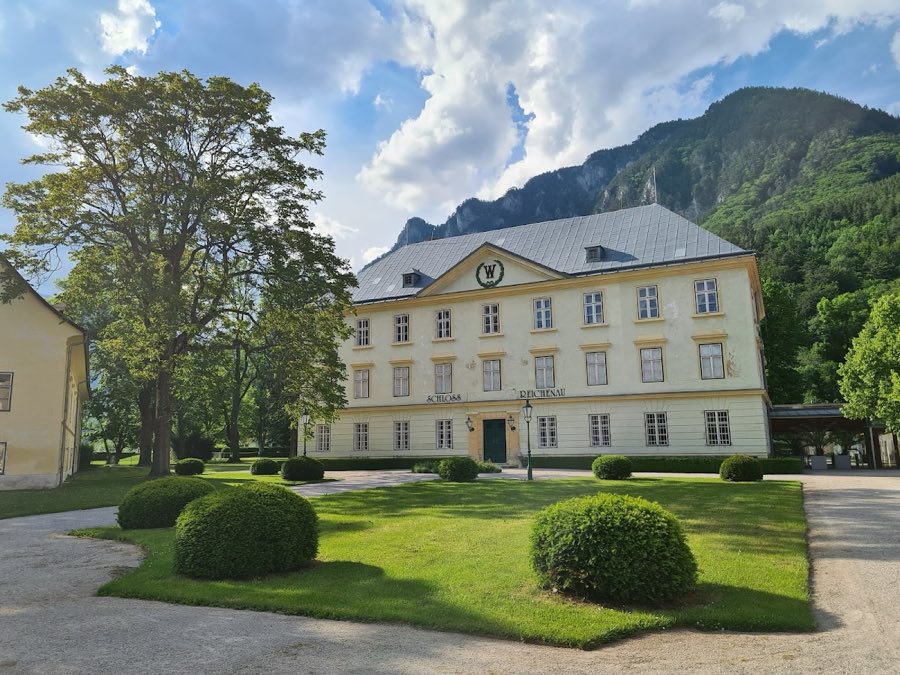
No. 74680
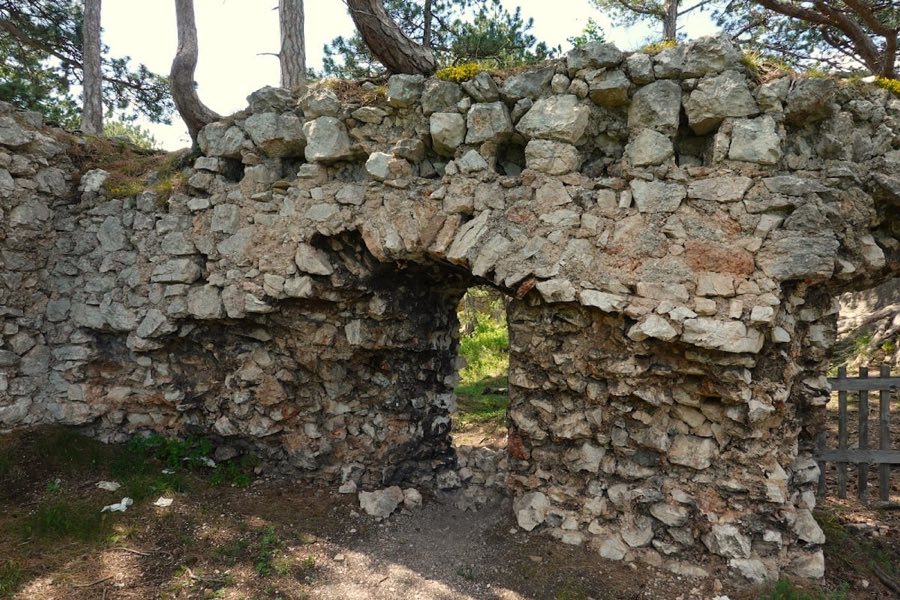
No. 80466
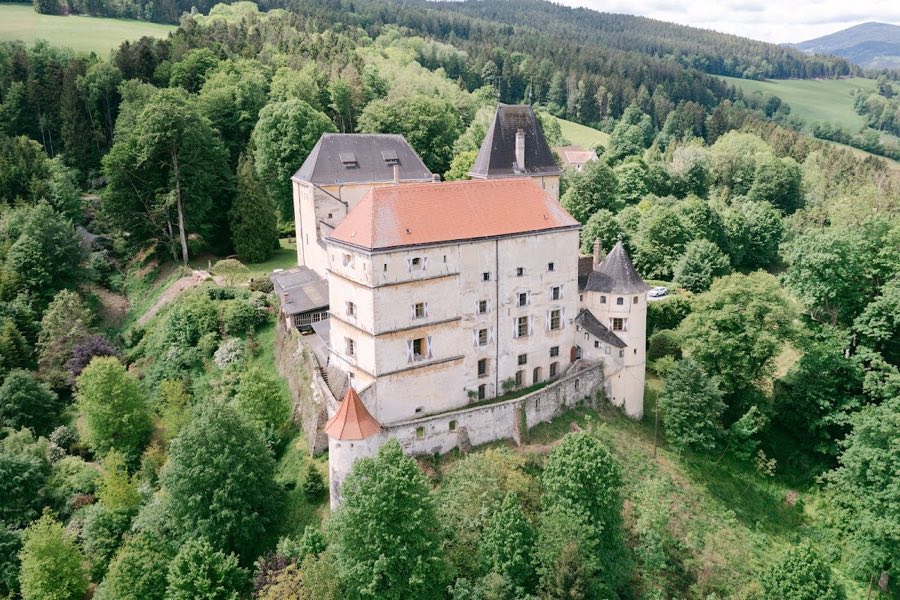
No. 73211
Comments
Comments for Stuppach Castle, Gloggnitz will require a verified account before posting.
We'll send a verification link before your first comment is published.