No. 56457
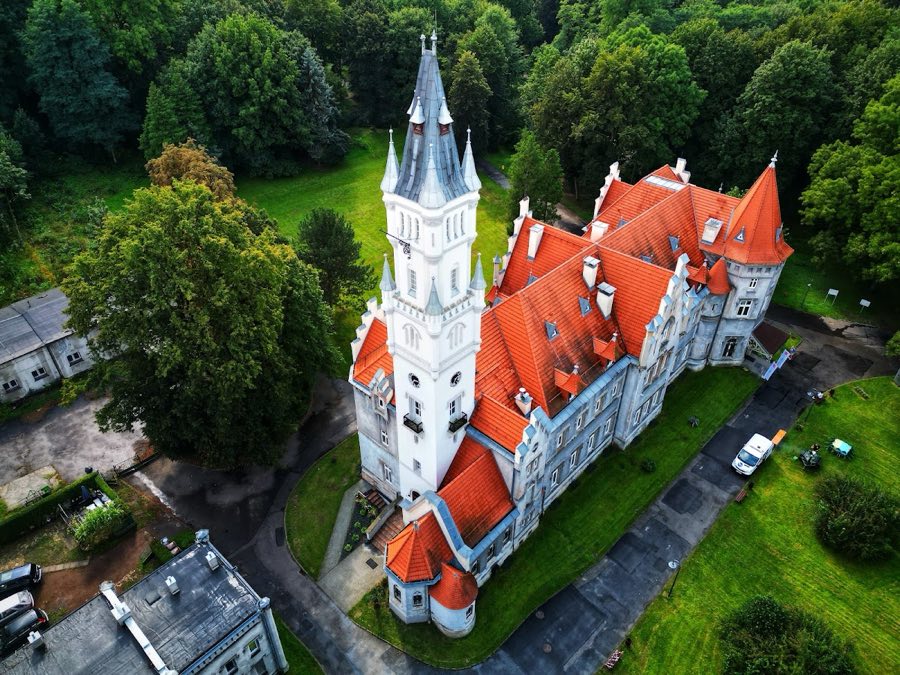
Donnersmarck Palace, Nakło Śląskie
Nakło Śląskie, Poland
Manor houseRestoredFor events19th century
No. 86541
Castle · Poland
No. 86541 · 50.358 N, 18.853 E
Quick summary
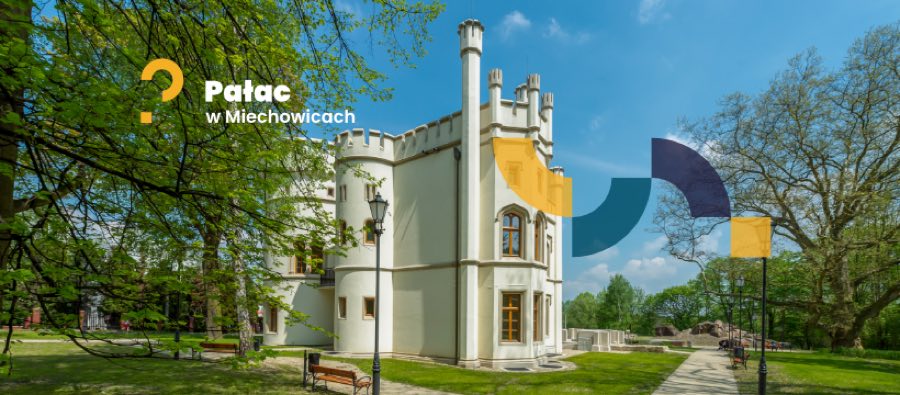
Tiele-Winckler Palace, Miechowice (Bytom) is a castle in Miechowice (Bytom), Poland with origins associated with the 19th century.
See all castles in PolandTiele-Winckler Palace in Miechowice (Bytom), Bytom, Poland, is a 19th‑century residence originally built in the Classical style. The house was erected between 1812 and 1817 by the merchant Ignatz Domes as a palace intended for his daughter Maria and her husband Franz Aresin. Its early 19th‑century origins and later transformation made the site a prominent estate in the local landscape and tied it closely to regional landed families and 19th‑century industrial developments.
After the palace was completed, Franz Winckler came to the area in 1819 and later married Maria Aresin. Through family alliances and marriages the household evolved; in 1854 the Winckler and Tiele family names and coats of arms were combined as Tiele‑Winckler, signaling the estate’s place within that family network.
A violent storm in 1844 tore the palace roof away and prompted a substantial rebuilding. During the mid‑19th century the house was reshaped in a neo‑Gothic manner inspired by 16th‑century English Gothic, commonly known as Tudor style. Rebuilding and expansion proceeded in phases from about 1855, with a further phase around 1860; these works added right and left wings and altered the palace’s silhouette while the estate belonged to Valeska (Waleska) von Winckler and her husband Hubert von Tiele.
The Tiele‑Winckler family maintained ownership until 1925, when Count Claus‑Hubert von Tiele‑Winckler sold the property to Preussengrube AG, the company managing the nearby Preussen coal mine. The estate’s water systems and some structural connections reflected its links to local mining infrastructure.
On 27 January 1945 Red Army forces plundered the palace and set it on fire. A second fire in July 1945 deepened the damage, and in the 1950s large burned sections of the building were blown up, with surviving parts demolished in that decade. After demolition, several remaining structures were converted to house offices and apartments for a State Agricultural Enterprise. Later, those surviving buildings were used by the Bytom Cultural Centre.
The palace’s outbuilding and the surrounding park received legal protection in 1995 when they were entered on the list of immovable monuments. The outbuilding remained a ruin until a revitalization project completed in 2019 repurposed it for cultural activities. The park, laid out as a landscape garden in the early 19th century and enlarged in the mid‑19th century while keeping its original layout, is owned by the city of Bytom and was renamed Park Tiele‑Wincklerów on 26 February 2024. A fountain that once stood in the park, the sculptural group “Boy with Swan” by Theodor Kalide, was recorded in the 1960s but is now reported lost.
The palace occupied a rectangular footprint and rose two storeys. Its overall composition recalled a medieval castle through the use of multiple towers around the main block. The building began as a Classical residence and was later altered in the mid‑19th century into a neo‑Gothic, Tudor‑inspired form; these successive phases of work produced the layered plan visible in surviving elements.
On the east side an octagonal tower known as the “swallow tower” reached approximately 35 metres in height and marked the wing visually. A flat relief showing a swallow’s nest sat above that tower’s entrance, a decorative detail that distinguished the entry. At the northern corner of the same east wing a round water tower contained a reservoir and housed pipes that brought water from the nearby “Maria” mine, linking the mansion’s services to local mining infrastructure.
The west wing was characterised by a rectangular tower that functioned as a powder magazine, reflecting storage needs of the estate, and a round tower closed the complex at the northwest corner. During the mid‑19th‑century remodelling the right and left wings were added, extending the palace’s plan and changing circulation within the complex.
Preservation today is fragmentary. The main building suffered fires in 1945 and large portions were demolished or blown up in the 1950s; remnants of the west wing remain in situ. The outbuilding survived as a ruin until its 2019 restoration for cultural use. A small earth mound beside that outbuilding covers additional buried remains of the palace. The surrounding park survives as a designed landscape with its historic compositional layout and is protected as part of the registered monument. The fountain with the sculptural group “Boy with Swan” by Theodor Kalide was recorded in the 1960s but no longer survives.
No. 56457
No. 43937
No. 83425
No. 81281
Comments
Comments for Tiele-Winckler Palace, Miechowice (Bytom) will require a verified account before posting.
We'll send a verification link before your first comment is published.