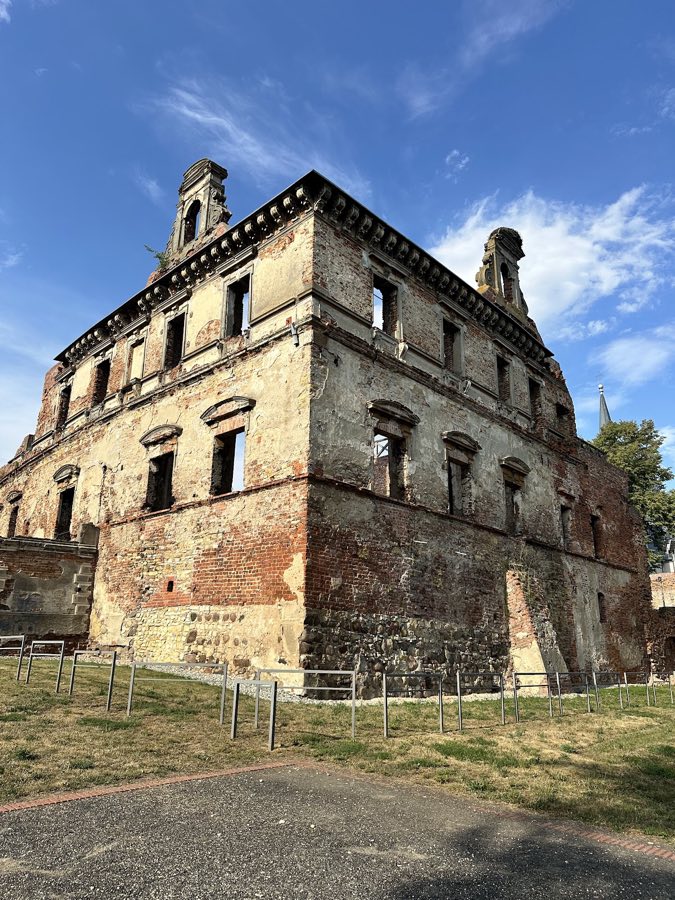
No. 38753
Ujazd Castle
Poland
CastleRuin9th century
No. 75861
Castle · Poland
No. 75861 · 50.456 N, 18.515 E
Quick summary
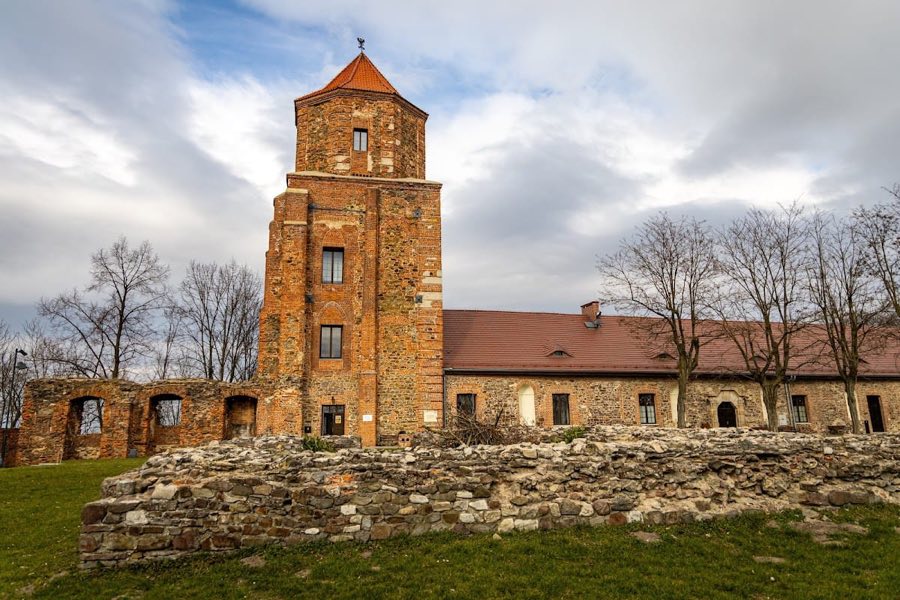
Toszek Castle is a castle in Poland with origins associated with the 11th century.
See all castles in PolandToszek Castle is located in the town of Toszek in Poland. It was originally established by Silesian dukes during a period of feudal fragmentation and early medieval state formation.
The earliest defensive works on the site likely date back to the 10th or 11th century, when a wooden stronghold was erected. This fortification served as a residence for local dukes in Silesia, a region undergoing political division and consolidation. By the early 15th century, the wooden defenses were replaced by a stone castle, demonstrating a transition to more permanent and robust fortifications.
In 1429, the newly built stone castle suffered destruction at the hands of the Hussites, a radical religious movement involved in military campaigns throughout Central Europe. Following this devastation, Duke Przemysław of Toszek undertook a reconstruction, making the castle his permanent seat until his death in 1484. Afterward, the structure remained in the possession of the dukes of Opole until 1532, when the last in their line, Jan II the Good, passed away. The castle then became a fief under the rule of the Czech kings and later the Habsburg monarchy.
During the late 16th century, the castle was pledged to the Redern family. In 1592 they reclaimed ownership and initiated renovations in Renaissance style to restore damage inflicted by a fire in 1570. The Rederns expanded the castle by adding residential quarters near the main gate, reflecting evolving architectural and functional needs. Subsequently, through marriage, ownership passed to Count Kasper Colonna, who commissioned further reconstruction efforts.
In collaboration with Milanese architect Jan Seregno, the Colonna family enhanced the castle with decorative stone portals and additional towers flanking the entrance. The castle’s use continued into the 17th and 18th centuries, during which time it changed hands multiple times. Among its owners were Baron Johann Dietrich von Peterswald, Franciszek Karol Kotuliński, the Pasadowski family, and the family of the poet Joseph von Eichendorff.
In 1797, the Eichendorff family sold the estate to Count Franciszek Adam Gaschin. A fire in 1811 caused significant damage, and the castle was not fully rebuilt afterward. By 1840, the ruins were acquired by Abraham Guradze, whose family maintained ownership until World War II. Between 1957 and 1963, partial restoration was undertaken, allowing the castle to serve as a center for cultural activities in Toszek today.
The surviving structures of Toszek Castle reveal a complex history of construction and adaptation spanning several centuries. The castle’s layout centers around a gatehouse, whose oldest stone components have been identified through archaeological excavations. This gatehouse formed the core defensive entry to the castle and is among the earliest surviving masonry elements.
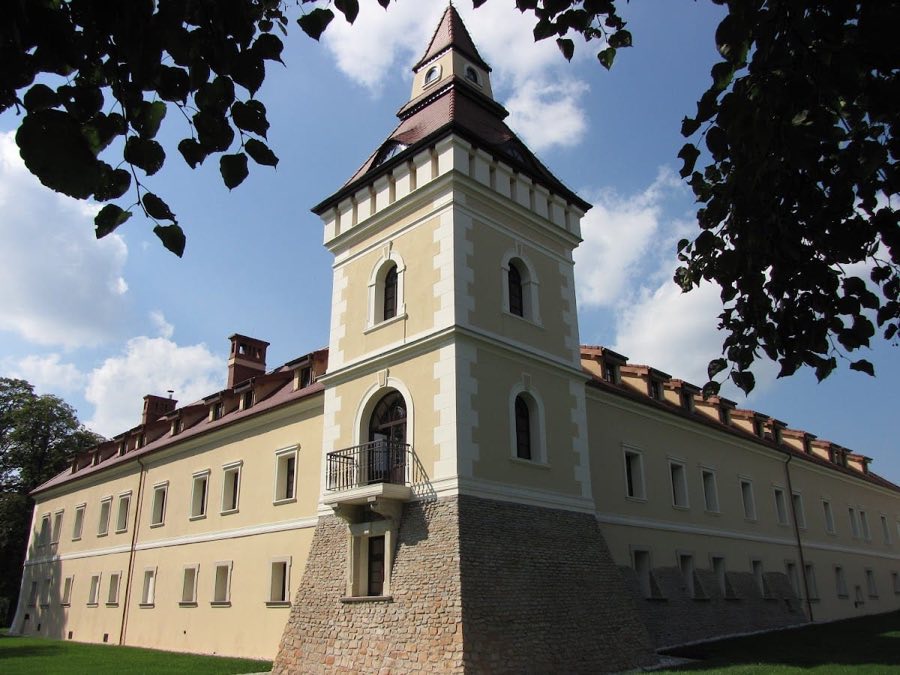
One of the prominent features standing on its original site is a four-story tower. This tower has a distinctive shape, with a quadrangular base that rises into an octagonal upper section. Beneath it lie extensive underground chambers, reflecting the multifunctional use of the building for defense and storage. The tower’s design and enduring presence highlight the medieval origins and continued significance of the castle’s main bastion.
During the period of ownership by the Colonna family, two additional side towers were built to flank the main entrance gate. These towers enhanced the castle’s fortifications and ceremonial appearance. The Colonnas also commissioned the Milanese architect Jan Seregno to oversee improvements, including the construction of two carefully crafted stone portals. One smaller portal, placed above what was once a stable, features the Colonna coat of arms. The main portal provided access to the noble residence and exemplifies Renaissance decorative style.
On the northern side of the castle’s defensive wall stood a building that served as a stable in the 17th century. Archaeological study has revealed horse troughs carved as recessed decorations within the structure’s walls. By the 18th century, this same building had been repurposed as an orangery, showing how the castle’s auxiliary spaces adapted to changing uses over time.
Today, the remains of Toszek Castle include these restored and partially preserved elements, offering insight into its architectural evolution from a wooden fortress to a Renaissance noble residence. The combination of military defensive features and residential enhancements reflects the castle’s varied roles throughout its long history.
No. 38753
No. 44356
No. 81281
No. 43937
Comments
Comments for Toszek Castle will require a verified account before posting.
We'll send a verification link before your first comment is published.