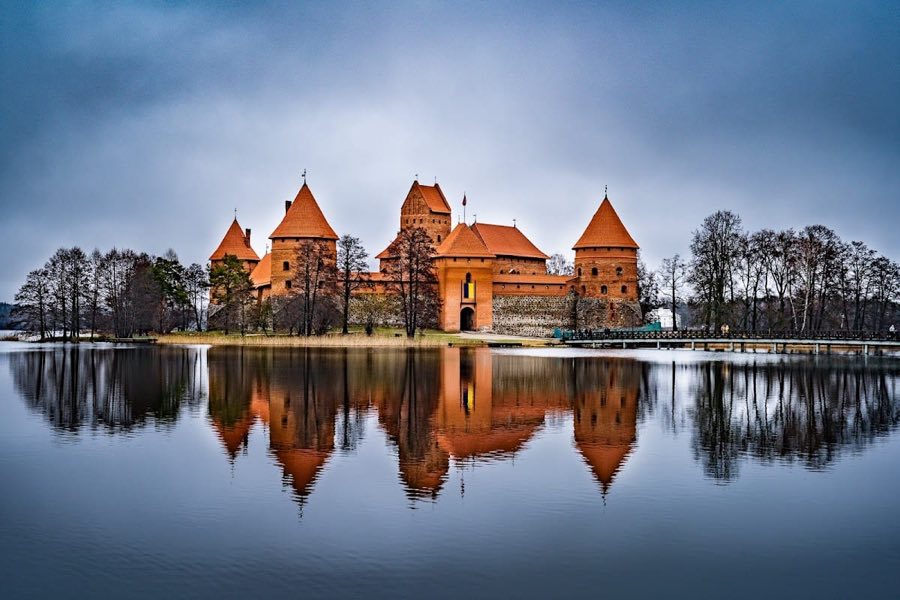
No. 51588
Trakai Island Castle
Lithuania
CastleRuin14th century
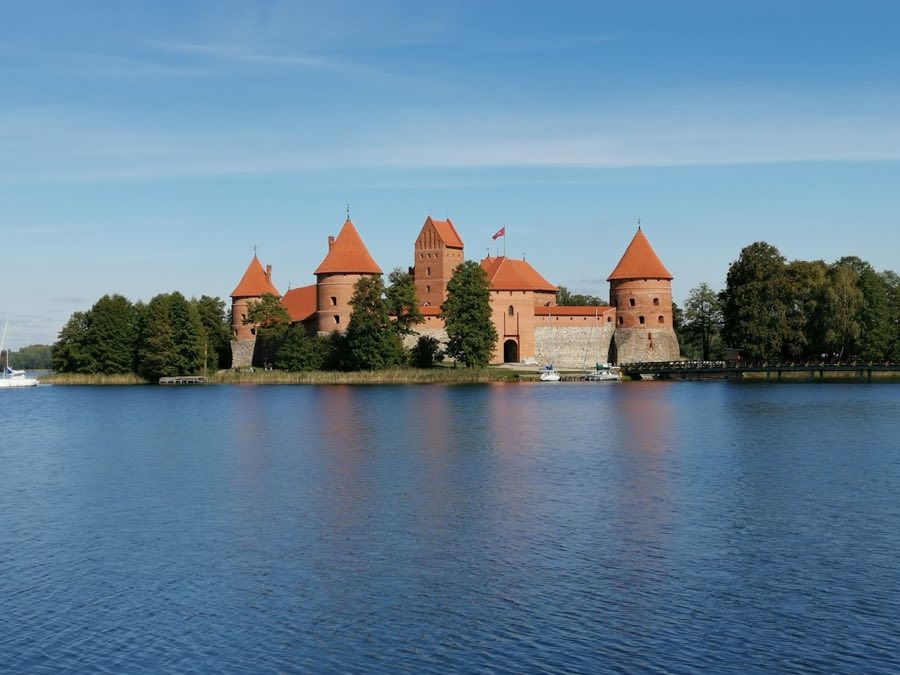
No. 95369
Castle · Lithuania
No. 95369 · 54.646 N, 24.937 E
Quick summary
Trakai Peninsula Castle is a castle in Lithuania with origins associated with the 14th century.
See all castles in LithuaniaTrakai Peninsula Castle stands in Trakai municipality, Lithuania, and was erected by the Grand Duchy of Lithuania under the direction of Duke Kęstutis in the third quarter of the fourteenth century.
Construction took place around 1350–1377 on a narrow landform between two lakes, where the fortification served as a key bulwark defending Trakai and Vilnius from incursions by the Teutonic Knights. During the civil conflicts of the 1380s the castle suffered attacks and damage; it was assaulted in 1382–1383 amid the civil war of 1381–1384 and again in 1390 during the fighting of 1389–1392. Damage sustained in the 1380s during struggles between Vytautas and Jogaila was followed by rebuilding work that returned the site to use.
A 1414 eyewitness comment by Gilbert de Lannoy described the place as already old and reported extensive use of timber and wattle with turf defenses at that moment. After the Treaty of Melno in 1422 the castle’s military importance declined and it was used by successive Grand Dukes as a residence. On 20 March 1440 Sigismund Kęstutaitis was murdered within the castle precincts. In the sixteenth century the fortress fell into decay and parts of it were repurposed as a prison for political opponents of the ruling dukes.
The castle was destroyed in the mid seventeenth century, notably during the Russo‑Polish War of 1654–1667, and was not rebuilt as a fortress. In 1678 Marcjan Aleksander Ogiński, then Voivode of Trakai, transferred the ruined site to the Dominican order. A Dominican monastery and church were completed on the former castle ground in the 1770s, and those main religious buildings have survived as elements of the site. The ruins received national‑monument recognition in 1933, archaeological investigation and conservation work began in the 1950s, Soviet‑period restoration recreated missing tower tops under the supervision of Bronius Krūminis and Stanislovas Mikulionis, and further reconstruction efforts resumed in 2002.
The fortress occupied a narrow tongue of land between two lakes and was built as a ring of masonry defences linked to the shore. Defensive walls of brick and stone were raised to an overall height of roughly ten metres and were pierced by a series of towers of square plan. Contemporary English descriptions record seven towers in total, with the three largest measuring about fifteen by fifteen metres and positioned to protect the most exposed southwestern approach. A broad ditch, between twelve and fourteen metres across, separated the fortifications from the adjacent town (posad).
Surviving masonry includes stretches of the curtain wall and several towers, fragments that reflect the medieval brick‑and‑stone construction phase rather than the timber elements noted in early fifteenth‑century commentary. By the nineteenth century only a number of towers remained and they were reported in poor condition in 1854 by E. P. Tyshkevich. Archaeological excavation beginning in the 1950s revealed structural footprints and supported conservation of the fortifications; mid‑twentieth century work reconstructed missing tower crowns under the oversight of named supervisors, and conservation and reconstruction continued from 2002.
The land transferred to the Dominican order in the late seventeenth century was redeveloped and the monastery and church completed in the 1770s now occupy the core of the old castle site. These later stone buildings survive in situ and are integrated with the ruined medieval fabric, forming the present ensemble. The site was placed under protective status as a national monument and later included within Trakai Historical National Park, measures that accompanied the archaeological and stabilisation work carried out in the twentieth and twenty‑first centuries.
No. 51588

No. 29460
No. 31907
No. 76643
Comments
Comments for Trakai Peninsula Castle will require a verified account before posting.
We'll send a verification link before your first comment is published.