No. 52778
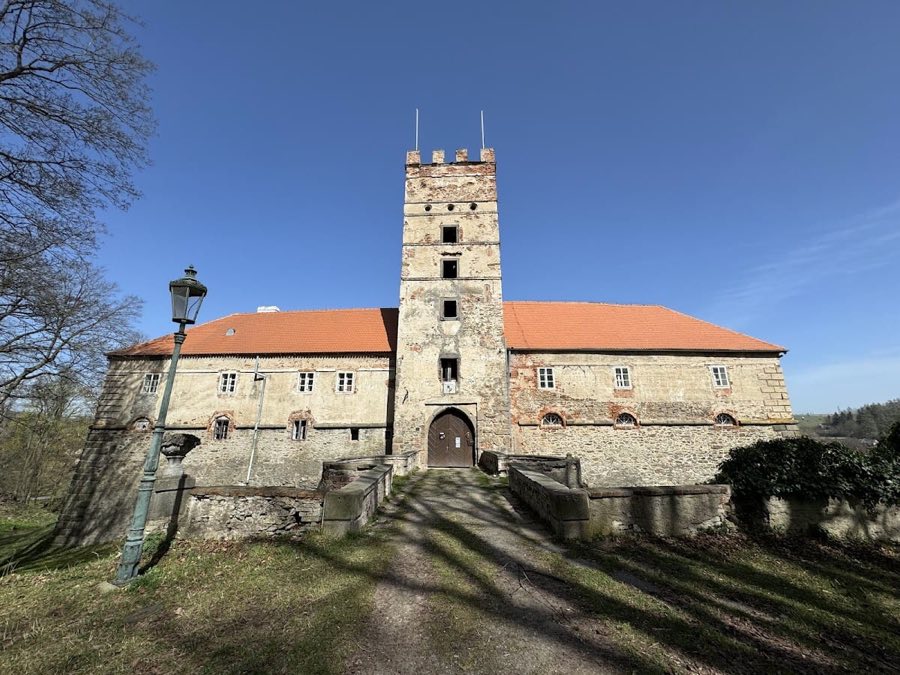
Brtnice Castle
Czechia
CastleRuin14th century

No. 79058
Castle · Czechia
No. 79058 · 49.217 N, 15.873 E
Quick summary
Třebíč Castle is a castle in Czechia with origins associated with the 12th century.
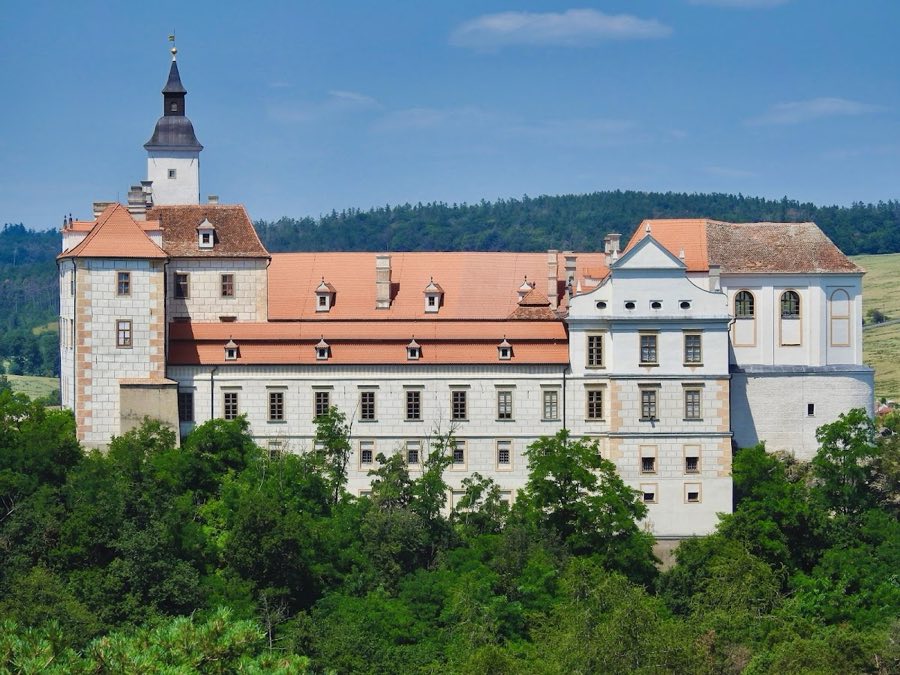
See all castles in CzechiaTřebíč Castle in Třebíč, Czechia, occupies the site of a medieval Benedictine foundation established in 1101 under the patronage of Přemyslid princes and the Benedictine order. The complex dates back to the early 12th century, with major stone building campaigns beginning in the second quarter of the 1200s and a principal church added around 1260. From its beginnings the place played an economic and residential role for the monastery, and it served as a burial place for members of the ruling Přemyslid family, giving it regional importance in the medieval landscape.
The first phase was a wooden monastic settlement founded by Oldřich of Brno and Litold of Znojmo, sons of Conrad I of Brno. The small chapel dedicated to St. Benedict was consecrated on 10 July 1104 by Gerhman, bishop of Prague. A larger church, devoted to the Assumption of the Virgin Mary, was dedicated in 1109 by John II, bishop of Olomouc. The monastery supported household and economic activity and its church contained a crypt where the two founding princes were interred.
During the 1200s the complex was rebuilt in stone, culminating in the construction of the basilica that dates to about 1260. Around the same period a settlement grew up beside the monastery and by the 13th century that cluster developed into the town now known as Třebíč. The monastic precinct thus became an anchor for local settlement and traffic, sitting on routes that linked Hungary and Austria with Moravia.
From the late 14th century the monastery entered a prolonged financial crisis, forcing sales and pledges of its estates. Those troubles deepened during the upheavals of the Hussite period, prompting reinforcement of the monastery’s defensive works and the need for funds to repair war damage. In 1468 Hungarian forces loyal to King Matthias Corvinus captured and burned the town. The defending contingent under Viktorín, son of Jiří of Poděbrady, withdrew into the monastery but the food supplies were lost, the complex suffered heavy damage and the monastery church was set on fire. The abbot was removed because of his support for Jiří of Poděbrady, and the monastery and its lands were handed to Zdeněk of Sternberg as compensation to Matthias Corvinus, a transfer that effectively secularized the house and led most of the monks to depart.
In the early 1500s the estate passed to Vilém of Pernstein, who cleared debts and carried out repairs in 1502, including removing a tower that was close to collapse. Ownership changed again in 1527 when the Osovský family of Doubravice began transforming the former monastic complex into a Renaissance residence. From 1582 the castle and town were held by the Waldstein family, who remained owners until 1945. The castle buildings received repairs in 1930–1935 and a major renovation in 1957 to accommodate the Vysočina Museum and regional archives. The complex is today recognized as a national cultural monument of the Czech Republic as part of the property centered on the former monastery and the church of St. Procopius.
The site presents a layered plan that begins with early wooden monastic structures and moves into substantial stone work from the first half of the 13th century. The surviving complex links the former monastery buildings with the later castle fabric, so that medieval monastic rooms and later residential quarters now form a continuous built ensemble. Stone replaced timber during the 1200s, and that masonry phase produced the major church that stands at the heart of the complex.
The chapel dedicated to St. Benedict is the earliest liturgical building, consecrated on 10 July 1104 by Gerhman, bishop of Prague. The larger monastery church, devoted to the Assumption of the Virgin Mary and consecrated in 1109 by John II of Olomouc, contained a crypt in which the founding princes Oldřich and Litold were buried. These early ecclesiastical spaces were integral to monastic life and to dynastic commemoration, and their foundations underlie later stone construction.
The principal aisle church built about 1260, now known as the Basilica of St. Procopius, dates to the mid-13th-century stone campaign and survives in an almost original condition. Its fabric preserves the proportions and masonry of that medieval building phase, and it remains a dominant element of the complex. Monastic ranges adjacent to the basilica survive in part and have been incorporated into what is called Třebíč Castle, so that cloistered and residential spaces have been reused in later centuries.
Defensive features became prominent during the Hussite period when the monastery strengthened its fortifications. In 1468 those works were put to the test when the site suffered heavy damage and the monastery church was burned. Repairs under Vilém of Pernstein in 1502 included the demolition of a tower that had nearly collapsed. In the 16th century the Osovský family converted substantial parts of the monastic complex into a Renaissance castle, altering internal layouts and functions. Twentieth-century repairs between 1930 and 1935 and a major renovation in 1957 adapted the buildings for the Vysočina Museum and for archival storage, preserving the basilica and the partially preserved monastic buildings within the castle complex.
No. 52778
No. 71995
No. 64128
No. 69153
Comments
Comments for Třebíč Castle will require a verified account before posting.
We'll send a verification link before your first comment is published.