No. 59704
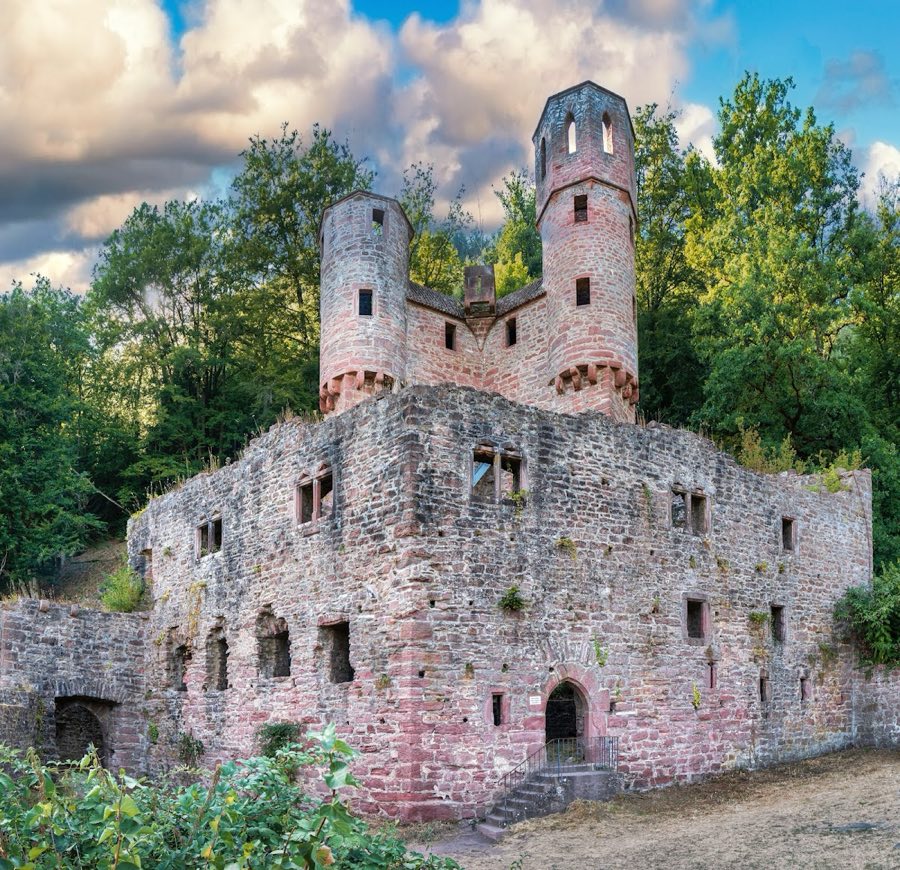
Burg Schadeck
Germany
CastleRuin14th century
No. 76649
Castle · Germany
No. 76649 · 49.339 N, 8.757 E
Quick summary
Wasserburg Gauangelloch is a castle in Germany with origins associated with the 15th century.
See all castles in GermanyWasserburg Gauangelloch stands in Gauangelloch, Leimen, Germany, and was erected in the medieval period, probably under Hans I. von Angelach‑Braubach, a member of the region’s German nobility.
The site is first mentioned in a document of 1369. During the 15th century ownership changed: in 1450 and again in 1476 the castle came into the hands of the Freiherren von Bettendorf, the family name by which the place later became commonly known as Bettendorfsches Schloss.
The castle suffered destruction during the Thirty Years’ War. After that conflict, Johann Philipp and Helena von Bettendorf undertook a rebuilding project completed in 1665, restoring the residence and its functions under their control.
Throughout the 18th century the complex gradually fell into neglect. In 1823 much of the structure was taken down, but a modest residential wing was left and subsequently repaired. In 1824 Franz Ludwig von Bettendorf arranged for the cellar of the former castle to serve as the base for a small chapel, which was erected using stones taken from the old fabric; that chapel was used as a church until the end of the 19th century and later adapted for use as a barn. One heraldic stone built into a surviving doorway bears abbreviations that the chronicler Carl Stocker read as indicating an “Electoral Palatinate councillor and stable master.” The property has remained in the possession of the Bettendorf family into the present era.
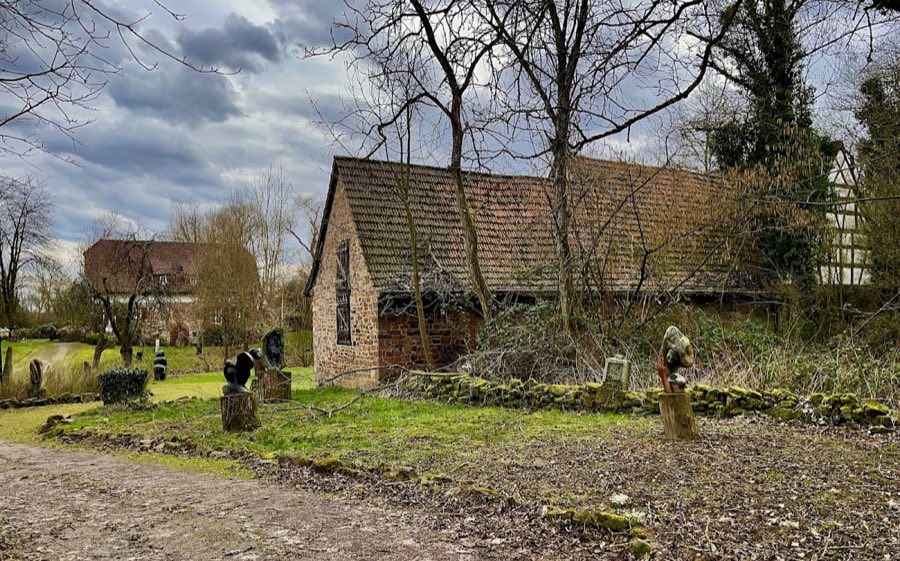
The site is the ruin of a moated castle, laid out around a former water-filled defensive ditch and built in masonry typical of late medieval estates in the area. The overall impression is of a small fortified residence whose main buildings were reworked and partly replaced over several centuries.
A simple residential building that survived the extensive demolition of 1823 stands restored today. This structure represents the later, domestic phase of the ensemble and was conserved rather than removed during the early 19th-century clearance. Its fabric reflects repair and restoration work carried out after the demolition campaign.
Beneath part of the site the original castle cellar remains and was reused in 1824 as the foundation for a chapel constructed from stones salvaged from the castle. That chapel functioned as the local church through the 19th century and was later converted to agricultural use as a barn. The cellar and the chapel’s stonework therefore show direct reuse of older masonry and remain in situ, though the chapel has been adapted from its religious function.
A pointed-arch entrance from the Gothic phase of the castle survives and has been reused as an entryway into the later residence; three Bettendorf coat-of-arms stones have been set into this opening. One of these heraldic blocks displays two interlaced rings and carries an inscription composed of abbreviated terms, which Carl Stocker interpreted as identifying an Electoral Palatinate councillor and stable master. These carved elements are preserved in their built positions within the doorway.
The defensive ditches that once surrounded the water castle were filled in long ago, and their former lines are reflected only in the site’s layout and ground plan. The combination of preserved cellar, incorporated chapel masonry, surviving Gothic entrance with heraldic stones, and the restored residential wing together constitute the archaeologically confirmed fabric visible at the site today.
No. 59704
No. 94192
No. 49675
No. 73431
Comments
Comments for Wasserburg Gauangelloch will require a verified account before posting.
We'll send a verification link before your first comment is published.