No. 92913
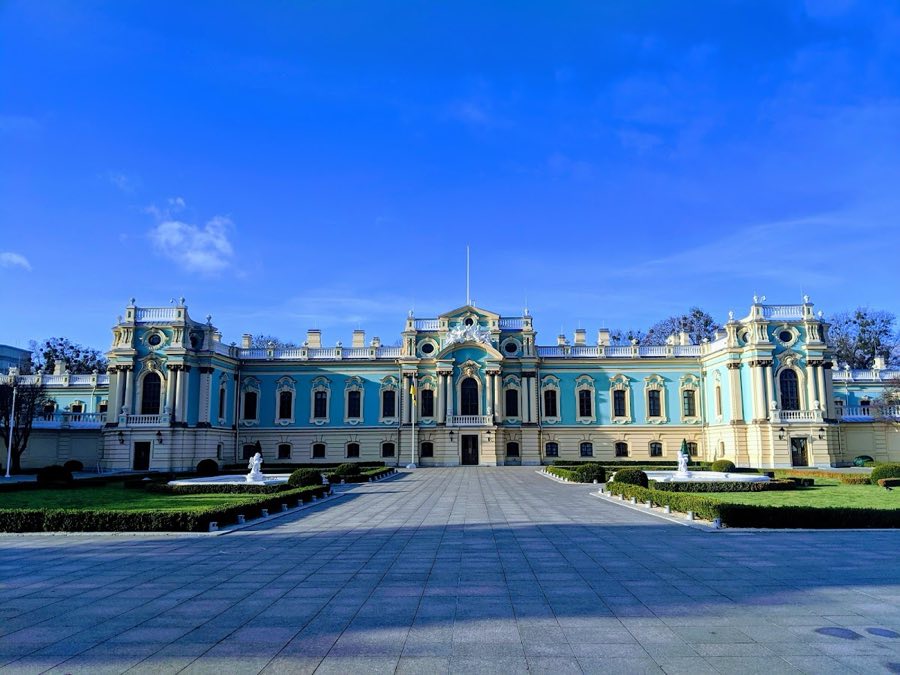
Mariinskyi Palace
Ukraine
PalaceRestoredFor events18th century
No. 86631
Manor house · Ukraine
No. 86631 · 49.793 N, 30.109 E
Quick summary
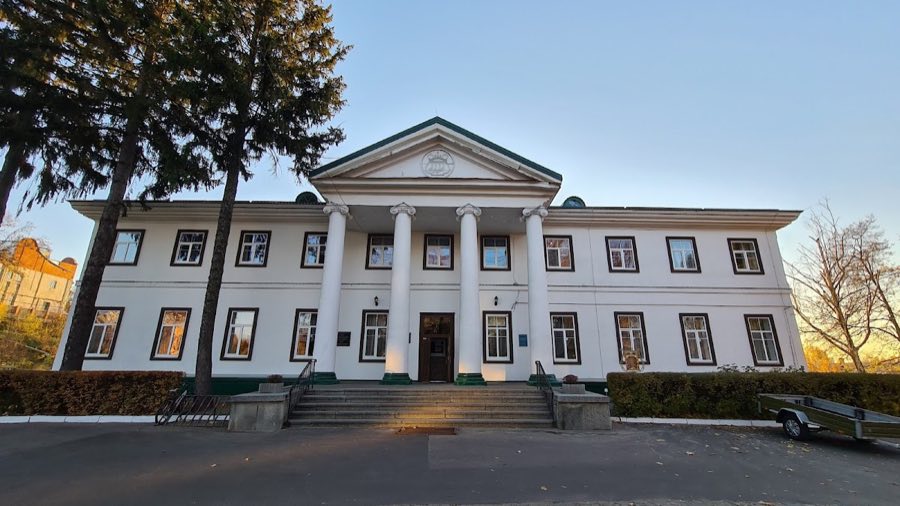
Winter Palace, Bila Tserkva is a manor house in Bila Tserkva, Ukraine with origins associated with the 18th century.
See all castles in UkraineThe Winter Palace, Bila Tserkva, in Bila Tserkva, Ukraine, is a classical-style palace erected in 1796 for the Polish noble Branicki family, commissioned by Franciszek Ksawery Branicki. Constructed as the family’s winter residence, it formed one half of the Branicki household’s seasonal pair of houses, the companion summer residence standing in the Alexandria park until that building ceased to exist. The palace served as a focal point of the Branickis’ local estate and later took on a variety of public and institutional roles that tie it to several major political changes in the region.
During the nineteenth century the palace remained linked to the Branicki household and to visitors associated with the landed elite. In 1823 the memoirist Filip Vigel stayed at the residence. By the later decades of the century parts of the building were adapted for estate management and display: at times it contained a private Branicki arms collection, and by the late 1800s it served as the commissariat or principal management office for the Branicki estate. On 22 October 1876 Róża Czacka, later beatified, was born in the palace; a plaque affixed to the building records her birth.
The palace sustained direct harm during the revolutionary turmoil of 1917, when it was looted and set on fire. In the 1920s the building accommodated local party organizations, and from 1930 until 1941 it housed the district committee of the Communist Party of Ukraine. German forces occupied the town during the Second World War and used the palace as a military hospital from 1941 to 1944. After the front moved, between 1944 and 1949 it served as Special Hospital No. 2686 for German prisoners of war. In the postwar decades the building again became an administrative centre, hosting the district executive committee and the district committee of people’s control from the 1950s until 1969. The state placed the building under legal protection in 1956, listing it as an architectural monument. Today the Winter Palace is occupied by School of Arts No. 1 and the district archives.
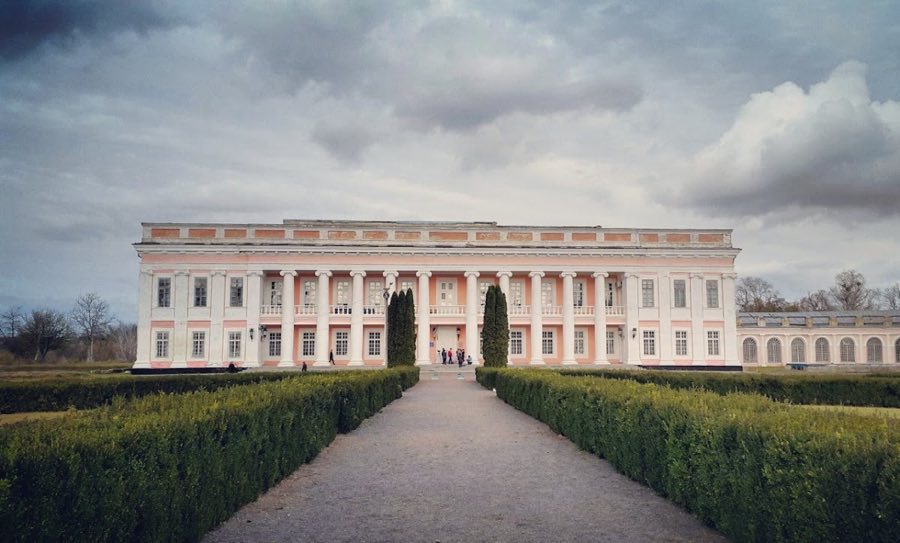
The palace stands on a rectangular plan and presents a classical façade organized into eleven window bays. The main block reads as two storeys from the front elevation but reveals a three-storey arrangement at the rear. Built in 1796, the structure rests on a raised stone foundation and its primary structure is of timber with an external plaster finish. The ground level contains a substantial stone basement that was used to store wine and food; this cellar space is a notable functional element surviving beneath the house.
The principal entrance is marked by a four-column Ionic portico, the Ionic column style meaning columns with scroll-shaped capitals, which supports a triangular pediment above the doorway. To the left of the main block sits a service wing of two storeys and thirteen bays that carries a recessed portico of eight columns. Historically there were nearby ancillary buildings including a treasury, an additional wing to the right, and a gated entrance that related to the estate’s compound. The building’s exterior shows rectangular windows and horizontal moulding between floors, a profiled stringcourse, while interior ceilings were constructed as flat surfaces.
Inside, the original suite of rooms had been laid out enfilade, an aligned sequence of rooms opening one into the next, though that arrangement no longer survives and the present plan reads as a corridor layout. Decorative elements recorded for the interior include stucco cornices and furnishings in the Empire taste; the palace formerly displayed a bust of King Stanisław August Poniatowski. The Winter Palace itself survives and is protected as an architectural monument; the Branicki summer house in Alexandria park does not survive.
No. 92913
No. 50586
No. 85822
No. 51884
Comments
Comments for Winter Palace, Bila Tserkva will require a verified account before posting.
We'll send a verification link before your first comment is published.