No. 43405
Zamek w Mielniku
Poland
CastleRuin15th century
No. 54439
Castle · Poland
No. 54439 · 52.394 N, 22.658 E
Quick summary
Zamek w Drohiczynie is a castle in Poland with origins associated with the 14th century.
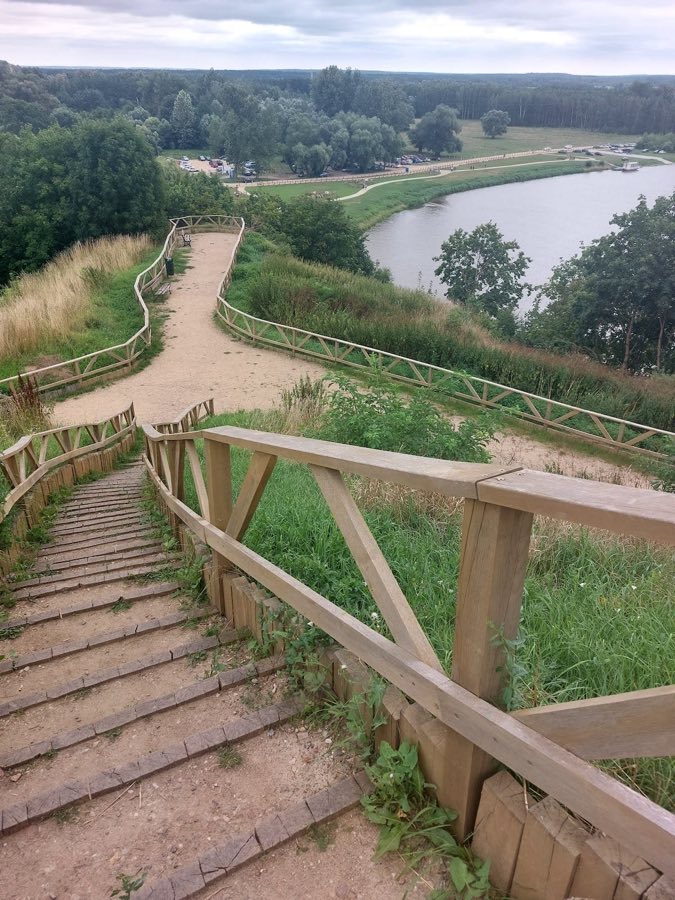
See all castles in PolandZamek w Drohiczynie stands on a hill in the municipality of Drohiczyn, Poland, originally constructed by inhabitants of the region in the medieval period. The earliest form of the castle was a wooden fortress situated within a defensive area protecting the settlement.
For several centuries leading up to the 14th century, the wooden fortress experienced repeated destruction and rebuilding. In 1382, Duke Janusz of Mazovia destroyed the castle, and the following year, in 1383, Jogaila, a prominent ruler linked to the Polish-Lithuanian union, captured the site. During this conflict, defenders of Rusyn origin, who were aligned with Mazovia, set fire to the wooden structures before retreating toward Lithuania.
Under the rule of the Jagiellonian dynasty in the 14th and 15th centuries, the castle was reconstructed and adapted, transitioning from a purely military stronghold into a center of regional administration and justice. It likely housed a local court and served as the residence of the royal starosta, the official responsible for district governance.
By the early 17th century, a visitor associated with a nearby Franciscan monastery described the town as primarily wooden with no defensive walls except for the castle itself. The fortress seemed to retain its judicial role, probably continuing to contain the district’s court functions.
The castle’s military and administrative significance ended during the mid-17th century, as it was destroyed amid the Swedish Deluge, a period of widespread warfare and destruction. Natural erosion of the castle hill along the Bug River further damaged the site, leaving only fragments of a small, square building once featuring upper and lower towers. These towers served as civil and criminal prisons, primarily for members of the nobility, but were dismantled by 1788.
Until the 20th century, a narrow entrance to an underground dungeon carved into the clayey rock of the hill could still be seen. The Polish historian Zygmunt Gloger described this underground passage as resembling a small church interior with niches along a straight corridor, likely functioning as a prison or treasury rather than a temple space.
Local tradition held that the castle hill was artificially constructed by war prisoners and contained secret underground passages connecting the castle to the Franciscan monastery nearby, although this remains part of local lore rather than confirmed history.
Archaeological research has been undertaken periodically at the site, with excavations conducted by Nikołaj Pietrowicz Avenarius between 1886 and 1888, by Krystyna Musianowicz in 1955, and by Mieczysław Bienia in 2011. A commemorative obelisk was placed on the castle hill in 1928 to mark the tenth anniversary of Poland’s regained independence. Today, the castle’s memory survives primarily in the name of Zamkowa Street.
The castle in Drohiczyn was originally positioned on Góra Zamkowa, a hill rising steeply above the Bug River, constructed in a style blending Gothic and Renaissance elements using primarily wooden structures. The elevated location provided a strategic defensive advantage, overseeing the surrounding settlement.
Present-day archaeological evidence includes worked stone blocks found at the bottom of what was once the castle’s moat, believed to be remnants of the dismantled tower. These stones illustrate components of the castle’s later masonry work, which replaced earlier wooden elements during reconstruction phases.
The hill itself consists of hard, clayey opoka rock, a type of sedimentary soil that has been gradually eroded by the Bug River’s current, leading to the partial loss of the site’s original foundation and structural stability.
One of the most distinctive features recorded by historians and archaeologists is a narrow underground dungeon hewn directly into the hill’s rock. This corridor extends a few dozen steps and contains pairs of niches opposite each other along the walls, forming a space that resembles a miniature church interior. Detailed study suggests this subterranean chamber served practical functions such as holding prisoners or storing valuable items and was not intended as a place of worship.
Atop the castle hill, a stone obelisk erected in 1928 commemorates Poland’s independence anniversary, marking a more recent phase of the site’s cultural significance. Beyond this monument, no above-ground structural remains from the castle survive.
Local accounts connect the underground passages with legends of hidden tunnels linking the castle to the Franciscan monastery, adding an element of myth to the archaeological narrative, though these tunnel connections have not been conclusively documented.
Together, the surviving stone fragments, underground spaces, and commemorative markers form the tangible legacy of Zamek w Drohiczynie, preserving its historical presence despite the ravages of time and nature.
No. 43405
No. 91227
No. 39080
No. 66896
Comments
Comments for Zamek w Drohiczynie will require a verified account before posting.
We'll send a verification link before your first comment is published.