No. 24467
Burg Lichtenfels
Germany
CastleRestored14th century
No. 42841
No. 42841 · 51.177 N, 9.002 E
Quick summary
Burg Bring is a castle in Germany with origins associated with the 12th century.
See all castles in GermanyBurg Bring stands in Edertal, Germany, and was built by medieval local nobility said to have been a member of the Brunink family.
The date when the castle was first raised on the hill is not recorded, but tradition names a Brunink as the builder and the place name shifted over time from Burg Brunink to Burg Bring. The site functioned as a defensive castle charged with securing the small settlement in the Eder valley below.
A knight styled von Bringhausen is recorded in a document of 1196, providing the first explicit documentary link to the site and its family. In the fifteenth century the Counts of Waldeck held a castle seat and maintained an estate at Bringhausen, showing the place remained part of regional lordship networks into the late medieval period.
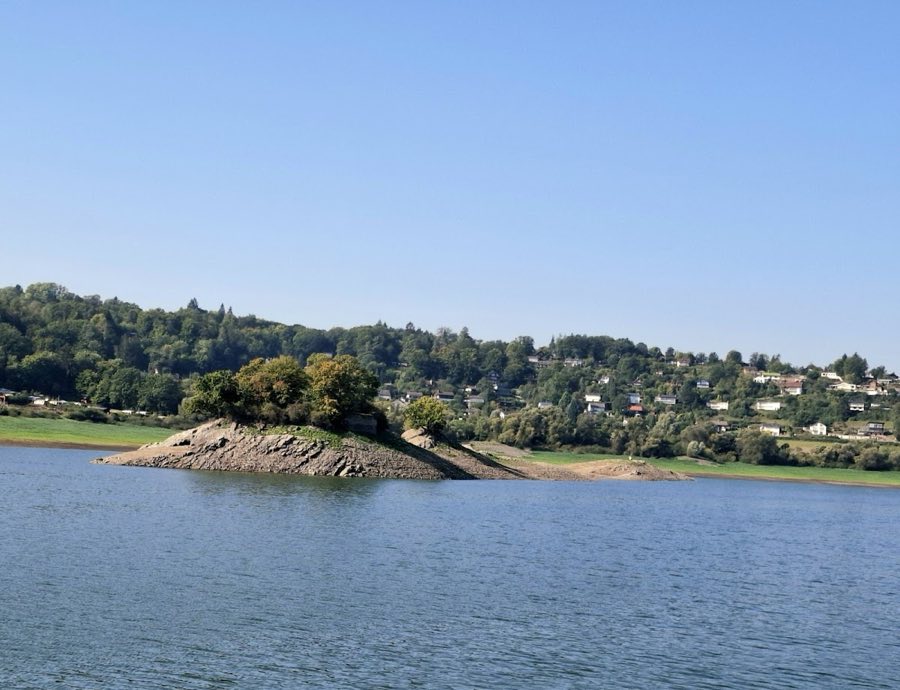
When the fortress fell out of use is not documented, yet by the nineteenth century observers recorded only a few surviving wall fragments. Construction of the Eder dam in 1914 flooded the valley and turned the old castle hill into an island now called the Liebesinsel. The valley village of Bringhausen became a submerged, deserted settlement known as Altbringhausen; before inundation its inhabitants built a new village about five hundred metres west on the slope above the reservoir. Local tradition links the ruined stones with tales of knights and with small fantastic beings, locally called Wichtel, who were said to guard the Eder’s hidden gold.
The ruin occupies the former castle hill at about 248 metres above sea level, now the Liebesinsel in the Edersee. Archaeological remains attest to a compact hilltop stronghold whose surviving fabric is sparse and concentrated at ground level. Foundations and cellar structures survive in fragmentary form and mark the footprint of the medieval buildings.
The most evident structural elements are low wall fragments, the outlines of foundations and sections of cellar walls. These features represent the basic load-bearing and subsurface parts of the former buildings; no further decorative or inscriptional details are recorded. The remains lie in situ where the castle once stood and bear the effect of long abandonment before the reservoir was created.
After completion of the dam in 1914 the structural remains became periodically submerged. At high reservoir level the island is separated from the shore and can be reached only by boat or by swimming, while at low water the ground connecting the Liebesinsel to the shore becomes passable on foot and the foundations and cellars are especially visible. Local stories attach the surviving masonry to legends of knights and of guardian creatures called Wichtel who protected the gold of the Eder.
No. 24467
No. 69244
No. 37766
No. 85930
Comments
Comments for Burg Bring will require a verified account before posting.
We'll send a verification link before your first comment is published.