No. 31797
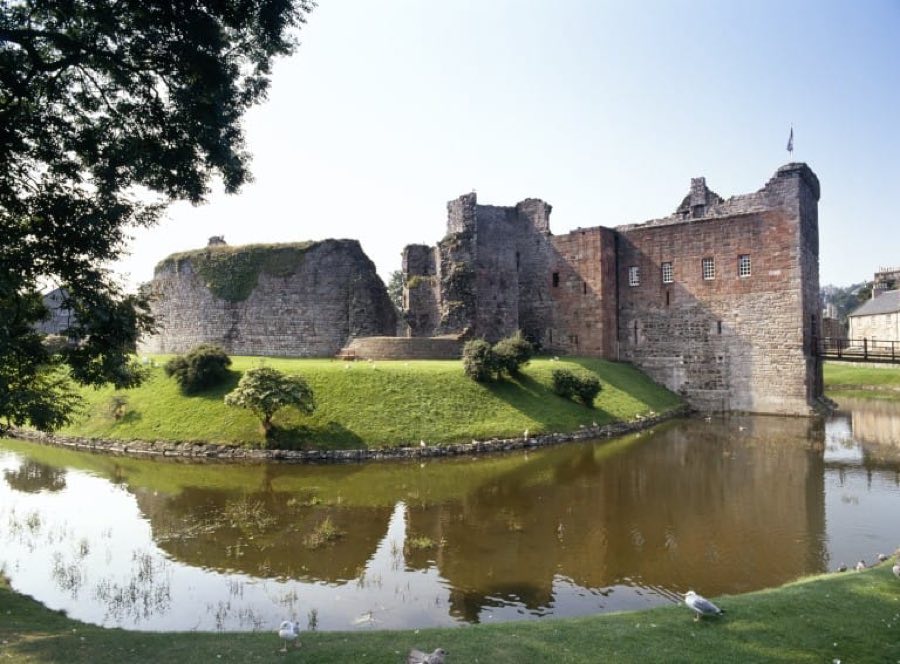
Rothesay Castle
United Kingdom
CastleRestored13th century

No. 92451
Tower house · United Kingdom
No. 92451 · 55.916 N, 4.873 W
Quick summary
Ardgowan Castle is a tower house in United Kingdom with origins associated with the 14th century.
See all castles in United KingdomArdgowan Castle stands in Greenock, United Kingdom, and its origins lie in the medieval Scottish period.
The site first appears in records from the opening decades of the 14th century, when it was known as Inverkip Castle. During the conflict later called the First War of Scottish Independence, King Edward I planned in 1301 for two royal armies to rendezvous at Inverkip. A seaborne force including the Earl of Ulster laid siege to the castle in 1303, and by early September of that year Inverkip had been taken along with Rothesay Castle. Robert the Bruce is said to have joined the action to seize Inverkip in 1303–04, and a letter of Edward I dated 16 April 1304 mentions “the great engine of Inverkip.”
In 1306 the castle was held for Edward by Sir Adam Gordon. Around mid‑March of that year supporters of Robert the Bruce, commanded by Robert Boyd of Cunningham, besieged the stronghold. On 24 July 1306 Edward ordered that Sir Thomas Randolph be imprisoned at Inverkip under Sir Adam Gordon’s care; Randolph was apparently free again by September 1307. After Sir Philip Mowbray suffered defeat in 1307 he fled to Inverkip, and English men later left the castle by sea.
The lands took a different turn in 1403 when King Robert III granted Ardgowan to his natural son Sir John Stewart. Within the footprint of the earlier fortress a late 15th‑century tower house was raised, forming the standing tower that survives. In 1667 Archibald Stewart received a baronetcy that has continued in the line now known as the Shaw Stewart family. The third baronet married Helen Houston in 1730; their son, Sir John Shaw Stewart, 4th Baronet, commissioned a design for a new house from the architect Hugh Cairncross. Building of Ardgowan House began in 1798 and finished around 1801, after which the older castle fell out of use and was abandoned. The ruined tower was stabilised with repair work in 1936, and the structure is officially recorded as a Category B listed building. The castle stands within the private gardens of Ardgowan House and is not open to the public, though it can be seen from a public path that runs below the site.
The surviving fabric is a three‑storey ruin identified as a late 15th‑century tower house set within the footprint of an earlier castle. The tower occupies the southern edge of a raised beach promontory and perches above a cliffline, its ruined mass marking the medieval re‑use of an older defensive site.
The promontory itself rises roughly 60 feet, about 18 metres, above the surrounding coastal flats and has a level top flanked by steep slopes or cliffs on either side, offering natural defensive advantage to the building placed there. The standing tower is the archaeological expression of the late medieval rebuilding phase that reused the earlier castle’s location.
Tradition records that before the stone tower a wooden watch tower stood on this point, erected to guard against Viking raiders; this detail survives as a local account linked to the site’s earliest defensive role. The tower was abandoned after Ardgowan House was completed around 1801. The ruin was stabilised by repair work carried out in 1936 and today remains in a ruinous but secured state within the private grounds, visible to passersby from the path below.
No. 31797
No. 58294
No. 78027
No. 98372
Comments
Comments for Ardgowan Castle will require a verified account before posting.
We'll send a verification link before your first comment is published.