No. 78027
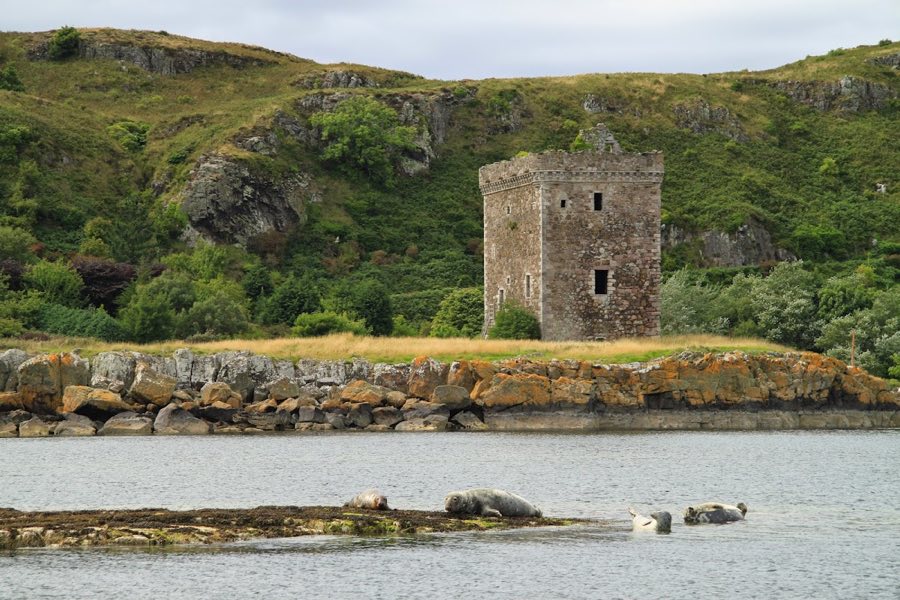
Little Cumbrae Castle
United Kingdom
Tower houseRuin13th century
No. 77321
Castle · United Kingdom
No. 77321 · 55.642 N, 4.810 W
Quick summary
Ardrossan Castle is a castle in United Kingdom with origins associated with the 12th century.
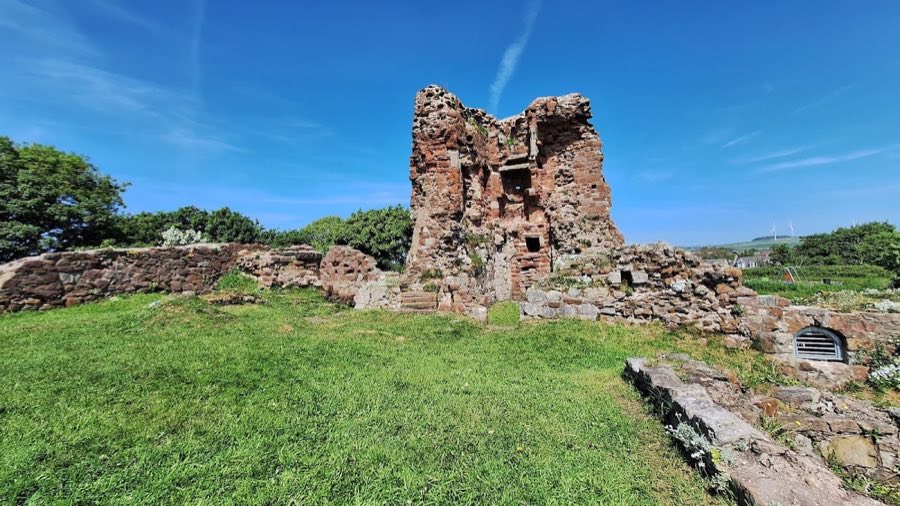
See all castles in United KingdomArdrossan Castle stands on a rocky hill overlooking the town of Ardrossan in Scotland. The site takes its name from Gaelic roots, with “ard” meaning height and “rossan” referring to a rocky promontory. The original stronghold was constructed by settlers associated with the Clan Barclay during the 12th century.
By the 13th century, the castle passed into the hands of the Ardrossan family, who maintained ownership into the turbulent period of the Wars of Scottish Independence. During this conflict, the castle suffered partial destruction in a violent episode later called “Wallace’s Larder,” when the English garrison stationed there was killed. This event left behind vaulted chambers that continue to bear the name.
In the 15th century, control shifted to Clan Montgomery, who undertook a significant rebuilding of the fortification, including the erection of a keep typical of that era. The castle’s use continued under the Earls of Eglinton into the early 17th century, with records from 1617 noting repairs conducted by stonemasons, indicating ongoing maintenance.
The mid-17th century brought further damage when Oliver Cromwell’s forces demolished parts of the castle in 1648. Much of the stonework was removed to support the construction of the nearby Ayr Citadel. Since this partial destruction, Ardrossan Castle has remained in ruins, losing its function yet gaining recognition as a regional landmark from at least the 19th century onward.
Local folklore enriches the history of the castle. Tales speak of the spirit of William Wallace wandering the ruins. Another legend recounts the story of Sir Fergus Barclay, known as “the De’il of Ardrossan,” who was reputed to have made a pact with the Devil. His burial site is in a chapel lying a few hundred meters downhill from the main castle remains, linking the family’s legacy closely to both the location and its myths.
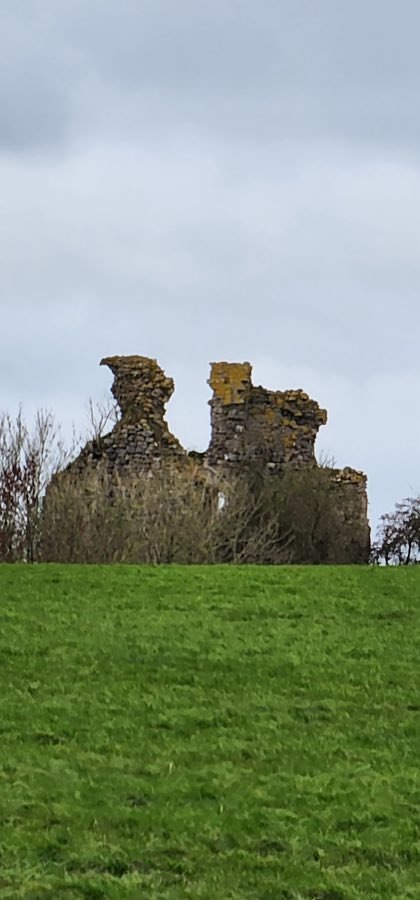
The castle’s ruins occupy a ridge overlooking Ardrossan, strategically defended by a surrounding moat. Constructed primarily with local stone, the remains include a 15th-century keep, typical of Scottish medieval defensive architecture. Though weathered and partly ruined, sections of the keep still reach up to the corbels that once supported the parapet walk.
Notable surviving features include the vaulted range, which originally housed the castle’s kitchen and cellars. These vaulted chambers have maintained a distinct historical identity, known as “Wallace’s Larder,” a name commemorating the tragic event during the Wars of Independence when the English garrison met its end.
Within the castle’s confines, a deep passage contains a well, crucial for providing water during sieges. The structure’s internal layout shows remnants of defensive and domestic spaces that evolved through successive rebuildings over centuries.
After Oliver Cromwell’s troops dismantled much of the structure in 1648 to repurpose its stone for the Ayr Citadel, the castle entered a state of ruin. Nearby stands an old churchyard, and several hundred meters inland and downhill lies the chapel where Sir Fergus Barclay is interred, connecting the site both to religious practice and family heritage.
Today, the castle is recognized as a Scheduled Monument, underscoring its archaeological and historical significance despite its fragmentary and hazardous condition. The remains continue to offer tangible links to Scotland’s medieval and early modern past, reflecting layers of military, familial, and legendary history embedded within their stone walls.
No. 78027
No. 76326
No. 35976
No. 64366
Comments
Comments for Ardrossan Castle will require a verified account before posting.
We'll send a verification link before your first comment is published.