No. 61214
Stockholm Palace
Sweden
PalaceRuin16th century
No. 36578
Palace · Sweden
No. 36578 · 59.329 N, 18.068 E
For events
Arvfurstens palats is marked as a château or castle venue lead. Capacity, indoor/outdoor spaces, catering rules, and accommodation options are published only after public verification.
Event types: Private events, Cultural gatherings, Filming and photography
Quick summary
Arvfurstens palats is a palace in Sweden with origins associated with the 18th century.
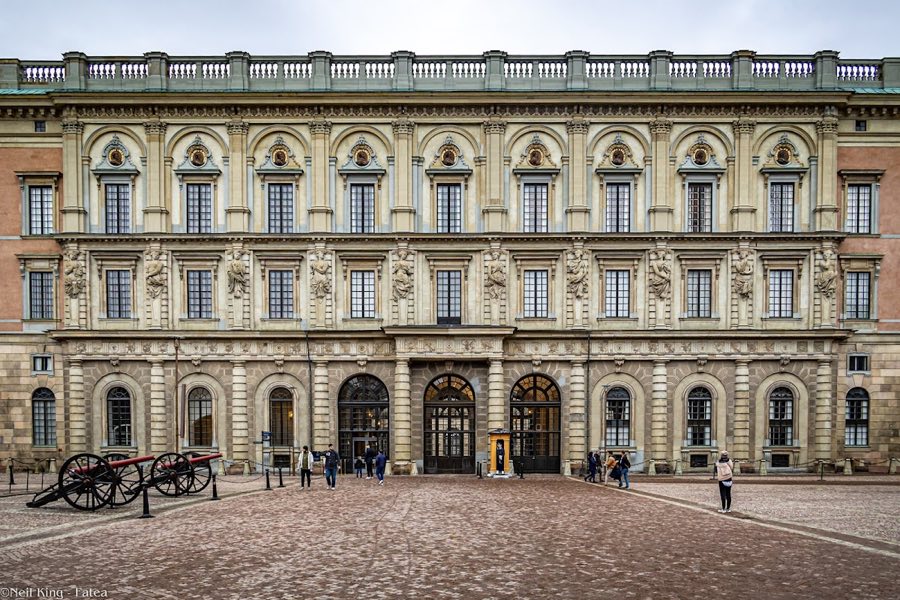
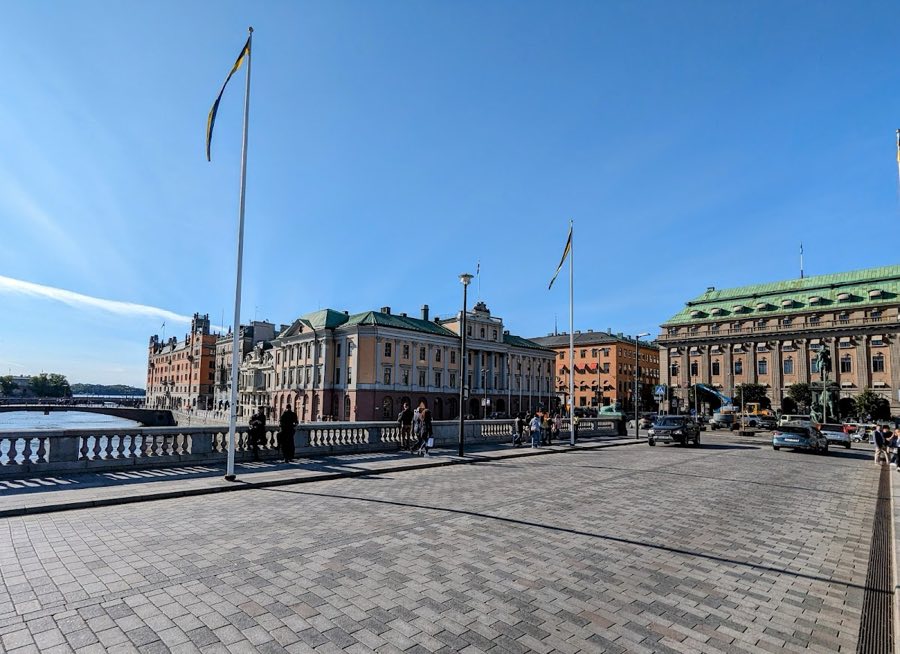
See all castles in SwedenArvfurstens palats in Stockholm, Sweden, is a palace built under the Swedish monarchy that takes its present form from late 18th-century construction in a late Baroque phase with strong Neoclassical influence. The site matters for its long occupation by high-ranking members of the Swedish royal household and, since the early 20th century, as the seat of the national Ministry for Foreign Affairs. Its fabric records both a 17th-century Renaissance house and the late-18th-century reshaping that sought to harmonize the square north of the Royal Palace with contemporary plans.
The first major building on this plot was a brick palace erected between 1646 and 1651 in a northern European Renaissance manner for the noble Lennart Torstensson. That brick structure, characterised by sandstone elements and Renaissance proportions, survived and was folded into later rebuilding rather than being entirely demolished.
During the years 1783 to 1794 a much larger palace was executed, incorporating the earlier Renaissance block so that the old building became a side wing while a new wing was added facing the quay. The enlargement was commissioned by the crown as part of an effort to shape the urban ensemble around Gustav Adolfs torg, and the main façade was conceived to echo the opera house opposite the square. Princess Sophia Albertina acquired the property in 1793 and later left it to the heir presumptive, the hereditary prince.
Throughout the 19th century the palace fulfilled a variety of court and bureaucratic roles. It housed officials and offices, and for a period before 1872 a royal couple used it as their residence; members of their family, including a future king, spent parts of their childhood there. The Swedish state bought the building in 1902 for 2.25 million kronor. The foreign ministry established itself in the palace in 1906 with a small initial staff and continued to share the premises with other authorities until 1936. The building gained formal protection as a listed historical monument in 1935. A large-scale restoration and adaptation took place between 1948 and 1952, including the insertion of a new structure within the courtyard to meet administrative needs.
The palace as it stands is an accretion of a mid-17th-century brick Renaissance house and a late-18th-century extension. The earlier brick building, done in the German–Dutch Renaissance manner, was retained as a side wing when the later expansion added a quay-facing wing and reoriented the principal façade toward Gustav Adolfs torg. The principal elevation rises from a unified block with smooth surfaces and large simple motifs that reflect the period taste of the late 1700s.
A prominent Renaissance sandstone portico on the northern side survives as a restored element. The portico dates to the 1640s and was returned in the 20th century to the appearance it had in the mid-17th century; an identical portico stands at the courtyard elevation. Both porches were executed in carved sandstone and have been conserved as architectural statements linking the later palace to its Renaissance ancestor.
One interior space preserves a direct physical link to the Torstensson house. The former kitchen from the 17th-century building remains and is in use as the office of the Chief of Protocol. The room retains its original sequence within the older wing, and its continuity demonstrates how an operational service space was adapted for modern administrative use.
The dining suite known today as Matsalen was formed by uniting three rooms that once belonged to the Torstensson layout. This joining took place in the mid-18th century to create a single large chamber intended for formal dinners and conferences. The space has therefore shifted function from domestic rooms to a representative assembly hall and continues to read as a ceremonial dining or meeting room.
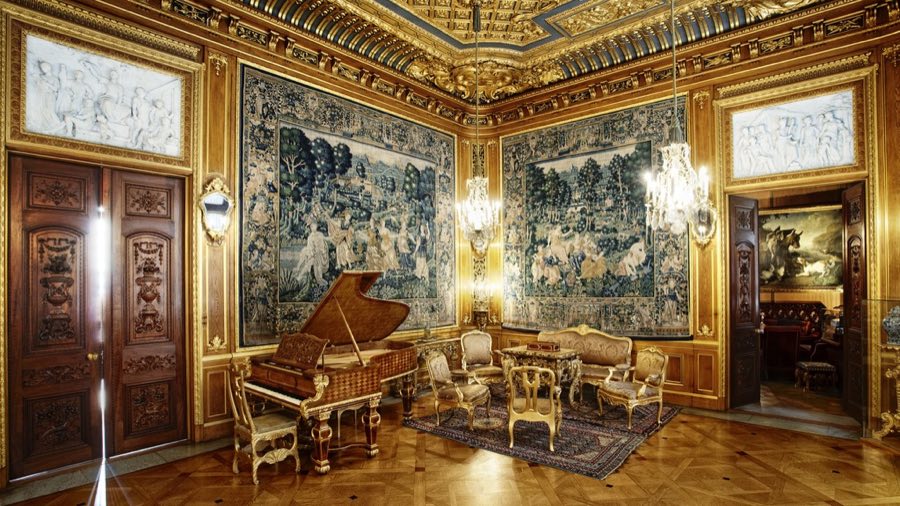
Several principal reception rooms on the piano nobile preserve period fittings and decorative schemes. The Great, or Blue, Salon occupies the central position and contains cut-glass chandeliers, two stoves carved from sandstone, and textiles in a blue-and-white scheme that date to the palace’s late-18th-century furnishing phase. Sculptural portrait busts of the royal patrons and four donated sculptures are installed in the room; during the Second World War the chamber was used for archival storage and was later restored for formal receptions.
The Audience or Red Salon retains carved wood ornament executed by known 18th-century craftsmen and carries a historic ceremonial arrangement: the princess once received visitors while seated on a gilt throne beneath a draped canopy, and a royal coat of arms surmounted by a princess’s crown is placed above the four doorways. Today this salon serves as an office for the ministry’s press function, its carvings and spatial hierarchy preserved within an administrative setting.
The drawing room preserves wall frameworks originally produced to surround the princess’s needlework and now fitted with wallpaper, and it contains two desks from the 17th century, one of which includes an elaborate inkstand that was once intended as a courtly gift. Since the ministry moved in, this room has been used by the Minister for Foreign Affairs, combining historic furniture with contemporary office use.
The former private chamber that served as the princess’s bedroom and later as a waiting room is now the office of the Under‑secretary of State for Foreign Affairs. It retains period furnishings from the princess’s time, a painting titled Belshazzar’s Banquet, and a Rococo cabinet bearing the Swedish coat of arms in bronze, all of which attest to continuity of interior decoration from the palace’s aristocratic phase into its present governmental role.
No. 61214

No. 24249
No. 70406
No. 44606
Comments
Comments for Arvfurstens palats will require a verified account before posting.
We'll send a verification link before your first comment is published.