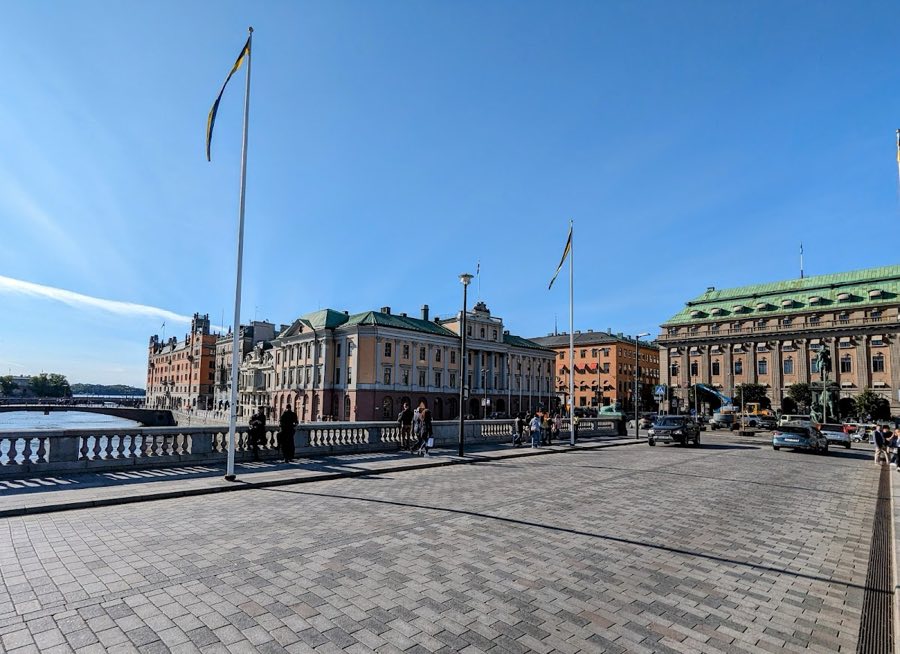
No. 36578
Arvfurstens palats
Sweden
PalaceRestoredFor events18th century
No. 70406
Palace · Sweden
No. 70406 · 59.333 N, 18.075 E
Quick summary
Hallwyl Museum is a palace in Sweden with origins associated with the 19th century.
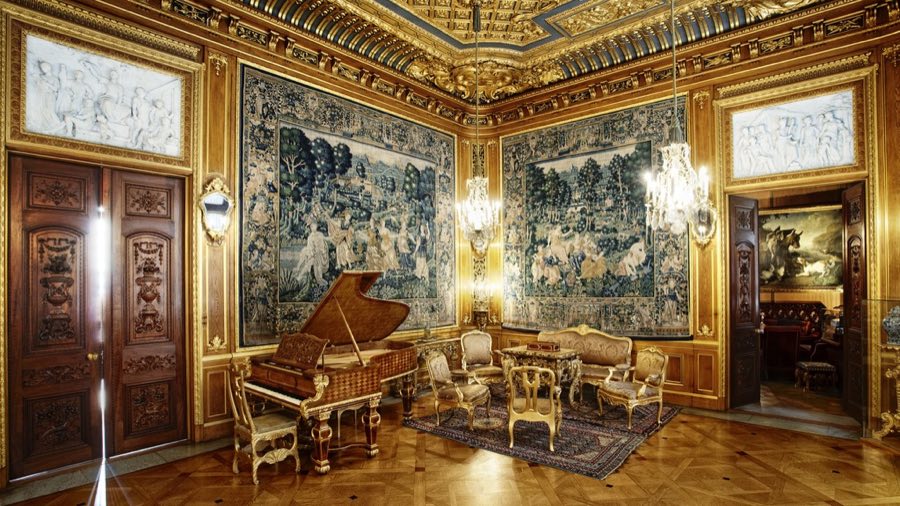
See all castles in SwedenHallwyl Museum in Stockholm, Sweden, is a late nineteenth‑century city palace built for Count Walther von Hallwyl and his wife Wilhelmina by Swedish patrons between 1893 and 1898, created in a style inspired by Hispano‑Venetian models that draw on medieval and Renaissance Venice. Completed in 1898, the house combined a private family home with the count’s business offices and became notable for its richly furnished interiors and the couple’s extensive collections, which later formed the basis of a preserved house museum.
Construction and private use began with the building’s completion in 1898 and continued through the couple’s lifetime. The house functioned as the family’s Stockholm residence and accommodated the count’s office within one wing. From the moment it opened the interiors reflected the decorative tastes of around 1900 and the building was fitted with contemporary comforts including electricity, central heating, telephones, and bathrooms; an elevator was installed at a later date.
In 1920 the couple transferred ownership of the house and its collections to the Swedish State, stipulating that the rooms remain unchanged and be shown “non perturbée,” meaning displayed without alteration from the way the family had lived there. The count died in 1921. After his death the countess, together with her staff, undertook a systematic inventory, numbering and describing every object in the house. The countess died in 1930 and the full catalogue of the holdings was completed in 1955, presented in 78 volumes produced in 110 copies.
The house opened to the public as a museum in 1938. The collection, today known as the Hallwyl Collection, comprises roughly 50,000 catalogued items, including paintings and other art, antiquities, arms, porcelain, Asian objects and chinoiseries, silver, toys and a wide array of everyday household objects. Museum statutes require that the director be a woman, hold a doctorate in philosophy, and be of the Protestant faith; the first director, an art historian, led the museum until 1973. Administratively, the museum has been associated with other state museum agencies, having links with the Royal Armoury and Skokloster Castle under the Hallwyl Museum Foundation and, from 1 January 2018, forming part of the National Historical Museums. The house itself gained legal protection in 2015 through classification as a historic monument. Many rooms are preserved exactly as they were at the time of the donation and period fittings and furnishings remain in place, while attendants who interact with visitors wear early twentieth‑century dress and hairstyles to reflect the original domestic setting.
The building presents a compact urban plan of roughly forty rooms stacked on five levels around a formal entrance and a square inner courtyard. The street frontage is faced in red sandstone and combines medieval and Venetian Renaissance references, with a carriageway leading from the street into the main entry and courtyard. The exterior materials and the layout reflect the late nineteenth‑century fashion for historicist town palaces.
Below street level the basement contains the service heart of the house, with the kitchen and ancillary rooms laid out for household work and staff functions. The ground floor was arranged for public and semi‑public use, containing richly appointed reception rooms and cloakrooms, and in one wing a suite of offices originally used by the family’s business. These floors retain their original fittings and decorative treatment to convey the appearance of an upper‑class urban home around 1900.
The floors above the ground floor hold a succession of reception salons on the principal levels, while private sleeping rooms and a bathroom are positioned two storeys above street level. The attic was adapted for leisure and personal pursuits, incorporating a bowling lane, a photographic studio or gallery, and a small gym equipped with a stall bar for exercise. Many of these interior spaces preserve their original installations and the classical furniture remains in place to illustrate household arrangements of the period.
The house was equipped from its opening with modern utilities for its time, including electric lighting, central heating, a system of telephones and indoor bathrooms; an elevator was added at a later date. The combination of original technical installations, in situ furnishings and completed object inventories gives the building a high degree of preservation, with rooms kept as they stood when ownership passed to the State. The site sits on Hamngatan facing Berzelii Park in the Skravelberget quarter of central Stockholm, where the palace’s urban setting and protected status contribute to its present condition.
No. 36578
No. 61214

No. 24249
No. 44606
Comments
Comments for Hallwyl Museum will require a verified account before posting.
We'll send a verification link before your first comment is published.