No. 64747
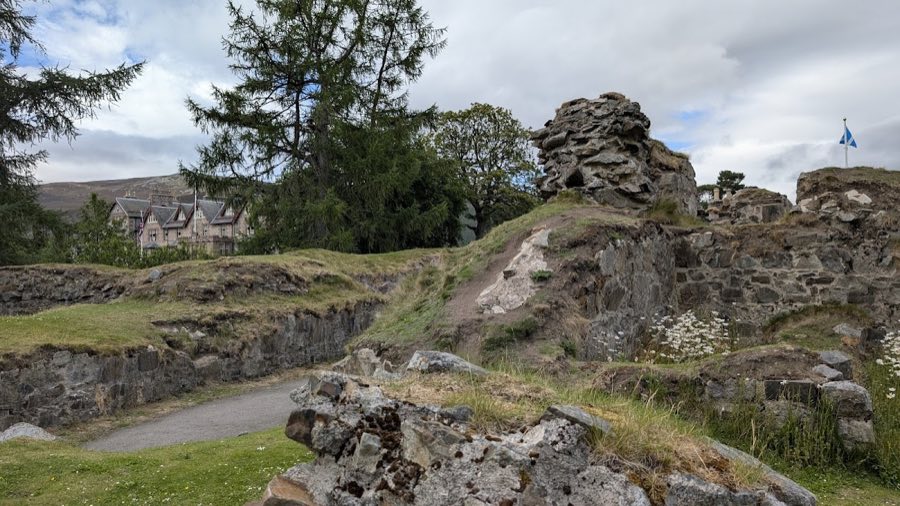
Kindrochit Castle
United Kingdom
CastleRuin11th century
No. 20140
Castle · United Kingdom
No. 20140 · 57.015 N, 3.391 W
For events
Braemar Castle is marked as a château or castle venue lead. Capacity, indoor/outdoor spaces, catering rules, and accommodation options are published only after public verification.
Event types: Private events, Cultural gatherings, Filming and photography
Quick summary
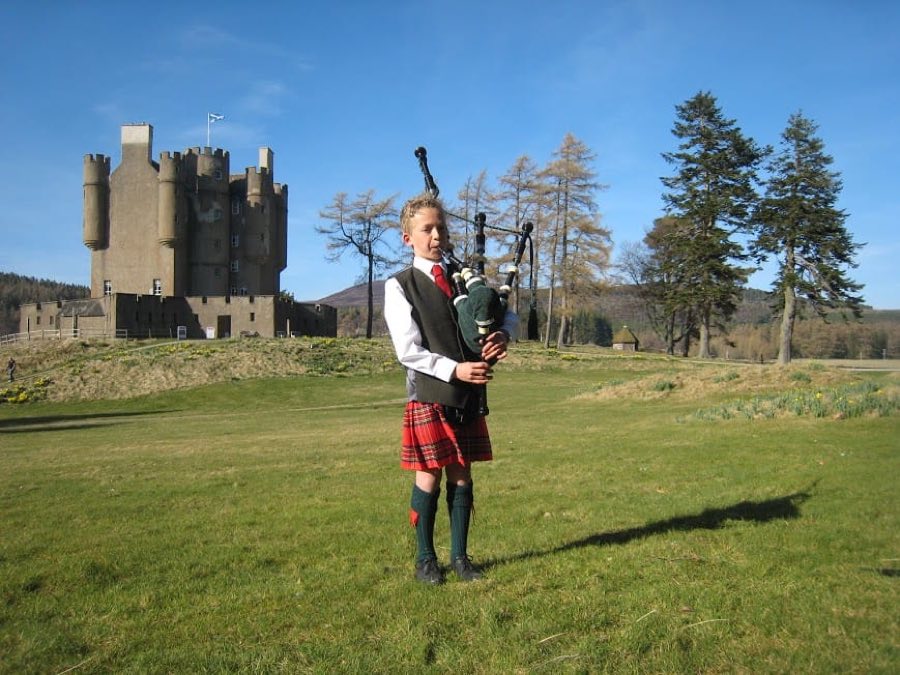
Braemar Castle is a castle in United Kingdom with origins associated with the 17th century.
See all castles in United KingdomBraemar Castle is located in the village of Braemar, within modern Scotland. It was built by Scottish nobility during the early 17th century.
The site’s history begins with an earlier royal fortress, known as Kindrochit Castle, erected in the 11th century under King Malcolm Canmore. This original structure stood nearby and formed part of the early medieval defensive network in the region. Centuries later, in 1628, John Erskine, Earl of Mar, constructed the present Braemar Castle on a hill overlooking the River Dee. Serving mainly as a hunting lodge and a fortified residence, it allowed the Earls of Mar to oversee their lands and control passage through the area.
The castle played an active role during the turbulence of the Jacobite risings. In 1689, amid the first uprising, John Farquharson, known as the Black Colonel of Inverey, deliberately set fire to the castle to prevent government troops from using it as a military stronghold. Later, during the 1715 rebellion led by the 6th Earl of Mar, several clans gathered at Braemar, using the castle as a rallying point before the uprising was quashed.
Following these events, the British army assumed control of Braemar Castle in 1748. The military repaired the building, which had been partly ruined, and established a garrison with the aim of suppressing further unrest in the Highlands. The castle remained an active military post for several decades. However, by the 1820s, the army reduced its presence, and it took several years of negotiation before ownership was returned to the Farquharson family in 1831.
After regaining the property, Catherine Farquharson, heir of Invercauld, led renovation efforts to transform the castle back into a family home. She employed architect John Adam to oversee the rebuilding. Throughout the 19th century, Braemar Castle gained royal association by hosting Queen Victoria during the traditional Braemar Gatherings, reinforcing its status as a notable residence.
Since 2006, stewardship of Braemar Castle has passed to the local community through a lease agreement with Braemar Community Ltd. The castle reopened to the public in 2008, with restoration efforts continuing to preserve its historic fabric.
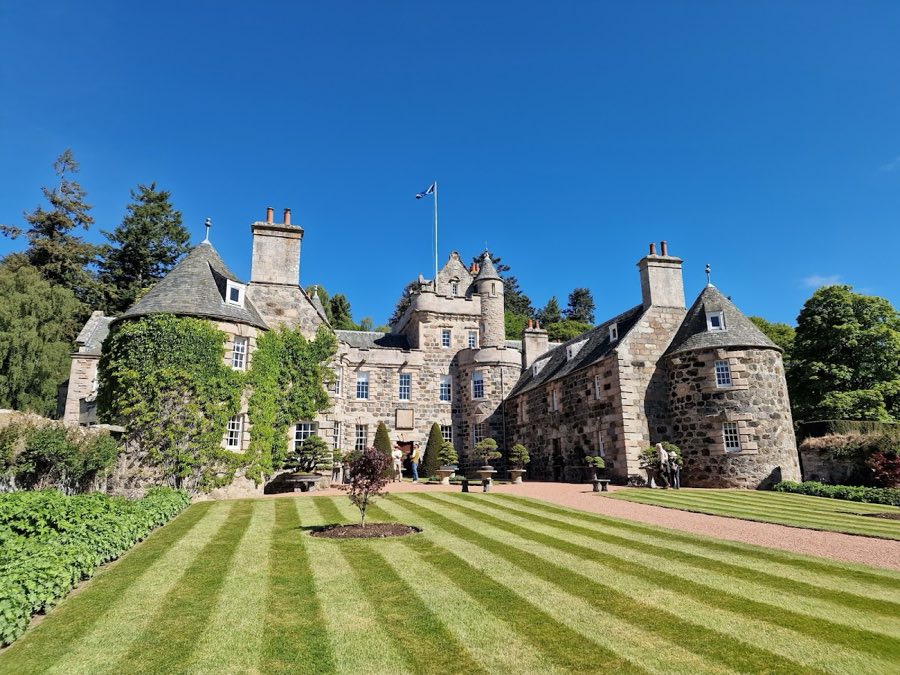
Braemar Castle is a granite-built, five-storey structure arranged in an L-shape. It is surrounded by a star-shaped outer wall featuring six sharply angled projections called salients. This curtain wall, influenced by French military designs, was added during army repairs after 1748 to strengthen its defenses. Several corner turrets rise three storeys high, and the main tower includes a round stair tower facilitating vertical access within the castle.
The original entrance still retains an iron yett, which is a latticed metal gate designed for added security. Many windows are protected by heavy iron grilles, underscoring the castle’s defensive nature. On the ground floor, stone-vaulted rooms occupy the wall projections; these spaces served functional roles such as the guardroom, ammunition store, and the initial kitchen area. A second kitchen was introduced in Victorian times beside rooms used by staff, reflecting the castle’s evolution into a family residence.
Inside, each upper floor’s arms contain two main rooms. The first floor accommodates the Dining Room and Morning Room, while the second floor houses the Laird’s Day Room, the Rose Room, and a small bathroom installed in 1901. Higher floors include bedrooms such as the Four Poster Bedroom on the third level and several guest and principal bedrooms on the fourth floor.
One notable interior feature is found in the Drawing Room on the second floor, where soldiers once stationed at the castle left carved graffiti on window shutters. Among these marks is the inscription “John Chestnut, Sergeant, 1797,” providing a tangible link to the British army’s occupation period. Additionally, a passageway contains an iron grill that offers access to the Laird’s Pit, a dungeon hole that was likely used for detention within the castle.
Before British military repairs, Braemar Castle had suffered partial ruin, including damage that exposed it to the elements. The 1748 restoration addressed roofing and defensive walls but did not fully resolve all issues, as soldiers continued to complain about persistent chimney smoke problems well into the 20th century.
Nearby, the ruins of Kindrochit Castle remain visible opposite a butcher’s shop in Braemar village. Recent stabilization work on this site suggests it could be Scotland’s oldest stone castle, which contextualizes Braemar Castle within a longer tradition of medieval fortifications in the area.
No. 64747
No. 42584
No. 60523
No. 61507
Comments
Comments for Braemar Castle will require a verified account before posting.
We'll send a verification link before your first comment is published.