No. 87755
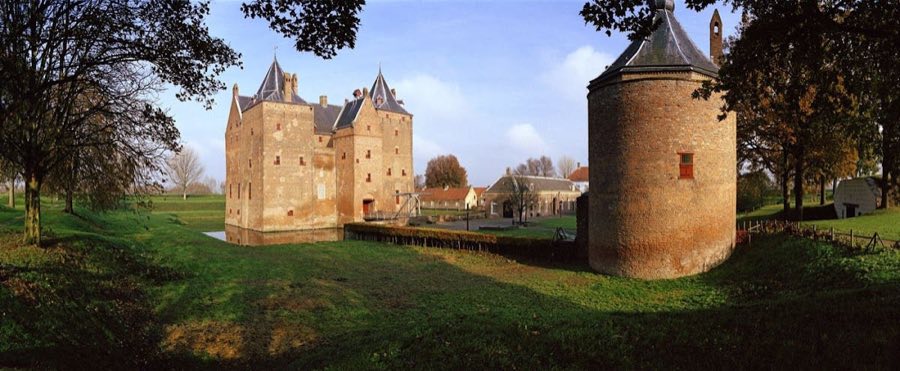
Slotje De Blauwe Camer
Netherlands
CastleRestored14th century
No. 29745
Castle · Netherlands
No. 29745 · 51.591 N, 4.776 E
For events
Breda Castle is marked as a château or castle venue lead. Capacity, indoor/outdoor spaces, catering rules, and accommodation options are published only after public verification.
Event types: Private events, Cultural gatherings, Filming and photography
Quick summary
Breda Castle is a castle in Netherlands with origins associated with the 14th century.
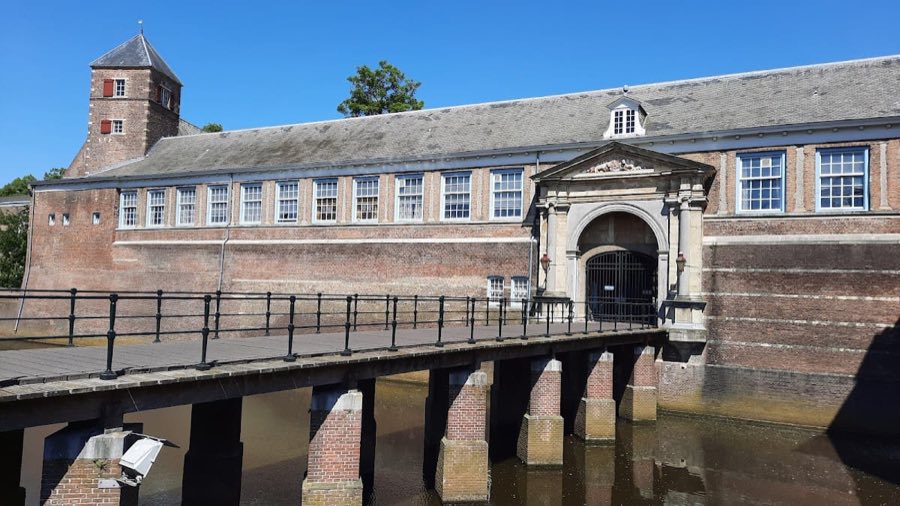
See all castles in NetherlandsBreda Castle is located in the municipality of Breda in the Netherlands. It was originally built by the medieval Dutch nobility as a fortified stronghold to protect the city and its surroundings.
The castle’s origins date back to the mid-14th century, when Jan II van Polanen, Lord of Breda, constructed a defensive fortress between approximately 1335 and 1350. This early structure featured a water-filled moat and four corner towers, which were integrated into the city’s overall fortifications. The castle served as a key military and administrative center during this period.
In 1403, the castle and the lordship of Breda passed into the hands of the House of Nassau through the marriage of Johanna van Polanen, Jan II’s granddaughter, to Engelbrecht I of Nassau-Siegen. This union marked the beginning of the Nassau-Oranje family’s long association with the Netherlands. Shortly after 1460, Johan IV of Nassau-Siegen expanded the castle, adding an accounting chamber and the Nassau Tower, which remains a prominent feature today.
During the 16th century, the castle underwent a significant transformation from a medieval fortress into a Renaissance-style palace. Hendrik III of Nassau-Breda initiated this renovation in 1536, and his son René of Chalon completed it by 1540. René also commissioned the construction of the court chapel, known as the Hofkapel, which gained historical importance. After René’s early death without heirs, the castle was inherited by his cousin William of Nassau-Dillenburg, later known as William of Orange. William used the castle as a military base during his campaigns against Spanish rule in the Netherlands.
In 1667, Breda Castle was the site of the signing of the Treaty of Breda, which ended the Second Anglo-Dutch War. Representatives from England, the Dutch Republic, and France gathered at the castle to conclude the agreement. Later, between 1686 and 1695, Stadtholder-King William III expanded the castle and renamed it Prinsenhof, or “Prince’s Court.” Despite these enhancements, William III and his successors seldom lived there.
During the late 18th century, when French forces occupied the region, the castle was repurposed as a barracks and military hospital. In the 19th century, King William I assigned the castle to the Koninklijke Militaire Academie (Royal Military Academy) in 1826, with the first group of cadets arriving two years later. Around 1900, restoration work was carried out to repair parts of the castle, including the southern forebuilding and the Nassau Tower, as well as to renew the Spanjaardsgat gate and two towers known as the Duiventoren and Granaattoren.
Since 1990, Breda Castle has been recognized as a protected cultural heritage site and is listed among the Top 100 monuments by the Dutch Rijksdienst voor de Monumentenzorg.
Breda Castle’s layout reflects its origins as a medieval fortress combined with later Renaissance palace elements. The original defensive design included a water moat surrounding the castle and four corner towers, which were part of the city’s broader fortifications. These features established the castle’s role as a stronghold within Breda’s defenses.
One of the most notable surviving elements is the Nassau Tower, constructed during the mid-15th century expansion by Johan IV of Nassau-Siegen. This tower, along with the adjacent accounting chamber, represents the castle’s growth during that period and remains largely intact. The tower’s sturdy construction and historical significance make it a key architectural feature.
The Renaissance transformation of the castle in the 16th century introduced the Hofkapel, or court chapel, built in 1540 under René of Chalon. This chapel holds considerable historical value and reflects the castle’s shift from purely military use to a residence with religious and ceremonial functions.
The Spanjaardsgat gate is another important feature, retaining two heptagonal (seven-sided) towers. These towers are among the few original defensive structures still standing and illustrate the castle’s medieval military architecture. The gate’s distinctive shape and design have been preserved through restoration efforts.
Around the turn of the 20th century, restoration work focused on several parts of the castle. The southern forebuilding’s exterior walls and the Nassau Tower underwent repairs, including the removal of old plaster to reveal the original masonry. Additionally, the Duiventoren (Dove Tower) and Granaattoren (Grenade Tower) were renewed, maintaining their historical forms while stabilizing their structures.
The Huis van Brecht, a section of the castle complex, was reopened in 1993 after a five-year restoration project. Its cellar now houses an exhibition displaying archaeological finds uncovered during excavations, providing insight into the castle’s long history and the lives of its former inhabitants.
Situated centrally in Breda’s Valkenberg district, the castle remains a prominent historical monument. While much of the structure has been preserved or restored, access is generally limited, with certain events and guided tours allowing closer examination of its features.
No. 87755
No. 37740
No. 93065
No. 46511
Comments
Comments for Breda Castle will require a verified account before posting.
We'll send a verification link before your first comment is published.