No. 21468
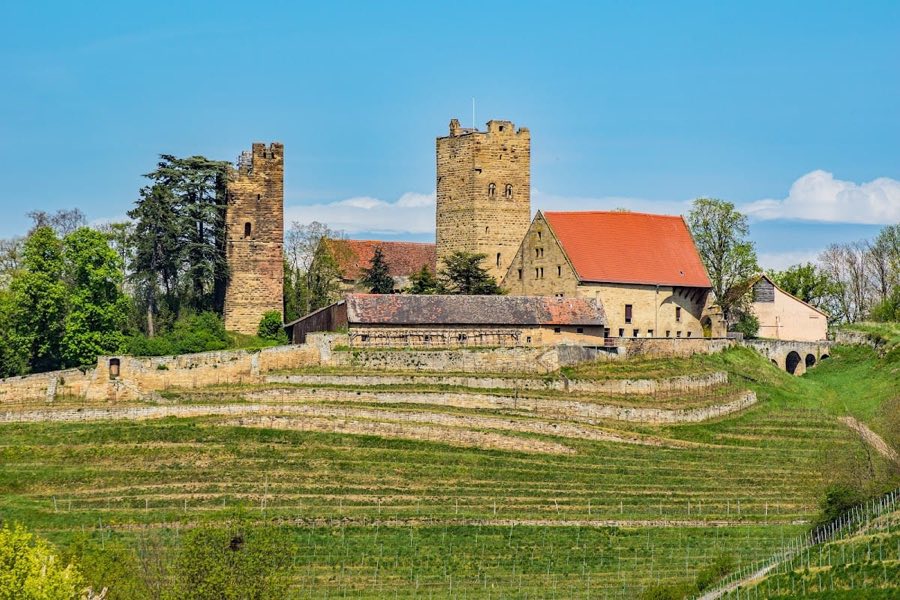
Burg Neipperg
Germany
CastleIntact12th century
No. 59124
No. 59124 · 49.041 N, 8.991 E
Quick summary
Burg Blankenhorn is a castle in Germany with origins associated with the 13th century.
See all castles in GermanyBurg Blankenhorn in Güglingen, Germany, was erected in the early 13th century by medieval German nobles, most likely the Herren von Neuffen. Construction took place around 1220–1230, and the site is first recorded in a document of 1241. The castle’s modern name likely refers to the Neuffen family heraldry, which included three horns. The initial owner named in the surviving record was Heinrich II von Neuffen; the estate passed to his son Gottfried and was then divided between Gottfried’s heirs, Rudolf and Maria.
Maria’s share passed through marriage to the Herren von Magenheim and later by inheritance to Burkard von Hohenberg, who transferred that half to the counts of Württemberg in 1321. Rudolf’s portion was pledged to Konrad von Weinsberg and in 1296 sold to Gerlach von Breuberg; that interest subsequently came into the hands of Konrad von Flügelau and in 1313 was inherited by the Counts of Eberstein. By 1327 both parts of the estate had come under Württemberg control.
Under Württemberg administration the property was at times pledged to the Archbishopric of Mainz. In 1472 the duke enfeoffed the castle to Hermann von Sachsenheim; he failed to keep the upkeep required by his tenure and the structure began to deteriorate. During the 15th century the ridge-way known as the Rennweg lost importance, and the castle’s condition worsened. From 1479 Forstmeister Bartel Luz sanctioned partial dismantling and the sale of roofing timber and tiles. In later years the ruin served as a source of building stone. The remains were depicted in Andreas Kieser’s forest and district drawings of 1684 and have survived as a ruin into the present day.
The castle occupies a rectangular plot on a north-projecting, heavily wooded spur of the Stromberg ridge above Eibensbach, with its shorter sides facing north and south. The defensive layout emphasizes protection on the landward, southern side where two successive ditches separate the site from the main ridge. The inner of these trenches is backed on its higher side by an obliquely set escarpment wall that both supports the ground and acts as an added barrier.
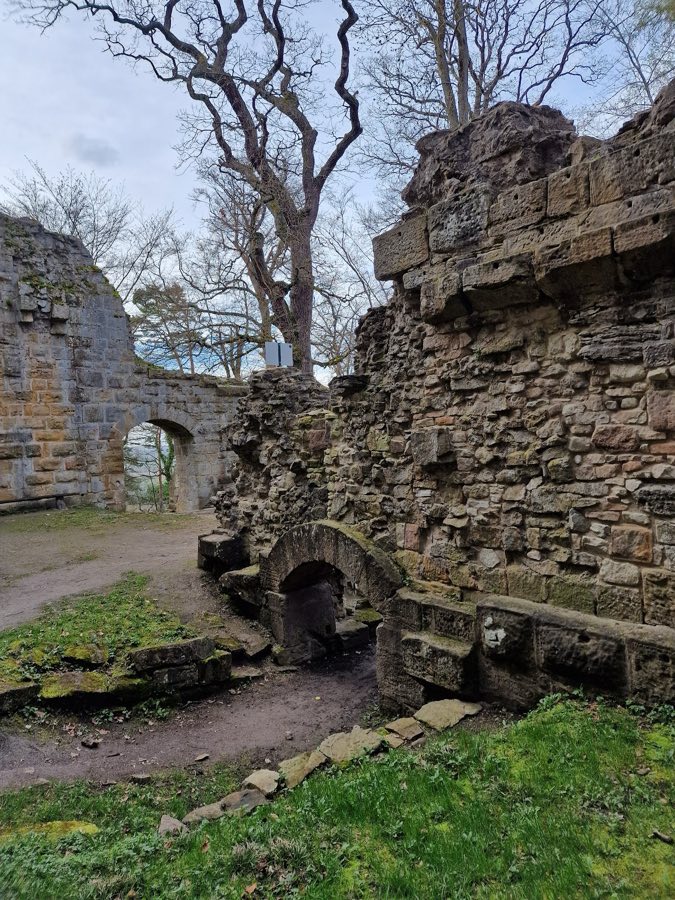
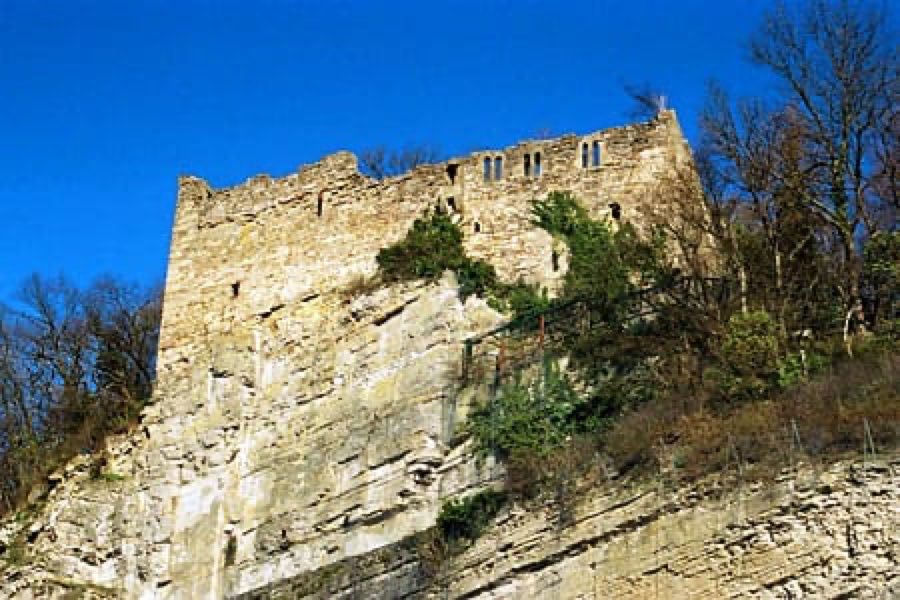
The most striking surviving element is the southern shield wall, built of squared sandstone blocks with a roughly finished, projecting face. This wall once rose to a height of about 18 metres and reached roughly three metres in thickness. Many of the facing stones still show the marks of the craftsmen who cut them. The wall dominates the southern elevation and remains the clearest expression of the castle’s original defensive design.
Attached to that southern defense is a multi-storey residential structure, a palas, set against the shield wall and rising to four levels. The building’s internal floor heights, about 2.2 to 3 metres each, are read from surviving corbels and from beam sockets cut into the masonry. The original approach to the inner area entered from the western long side through a simple round-arched doorway, which led directly into the courtyard.
The northern portion of the site survives only in fragmentary form, reflecting later destruction and the historical removal of building materials. The masonry throughout is predominantly sandstone dressed into large squared blocks, and several faces preserve the identifying marks left by stonemasons. Historical demolition and later quarrying altered and dispersed much of the fabric, but the shield wall, the palas remains, the escarpment wall and other ruined elements are still visible. In the inner courtyard a covered barbecue shelter has been placed in recent times.
No. 21468
No. 11063
No. 73319
No. 91736
Comments
Comments for Burg Blankenhorn will require a verified account before posting.
We'll send a verification link before your first comment is published.