No. 54368
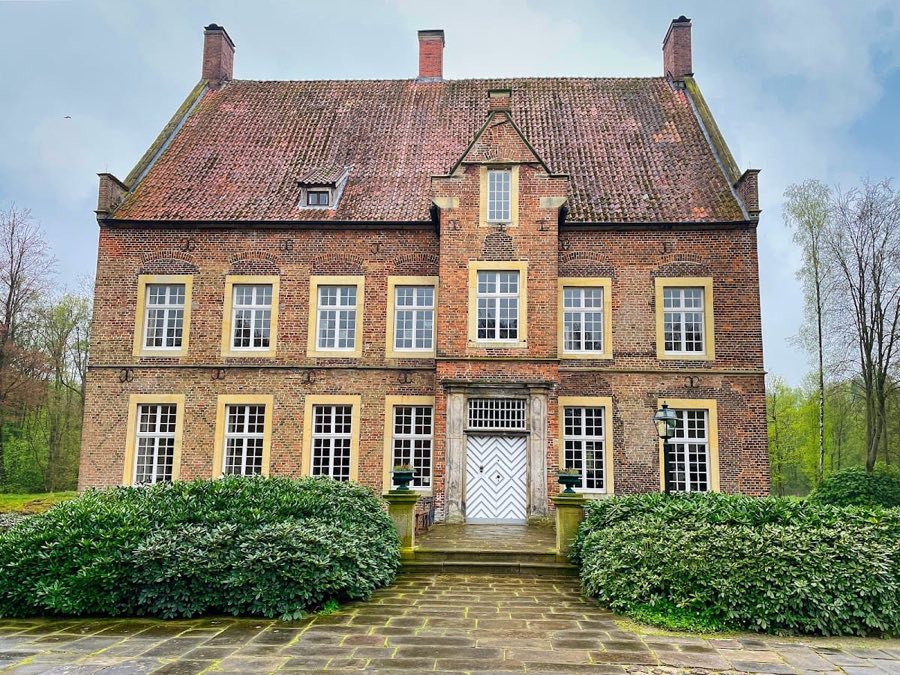
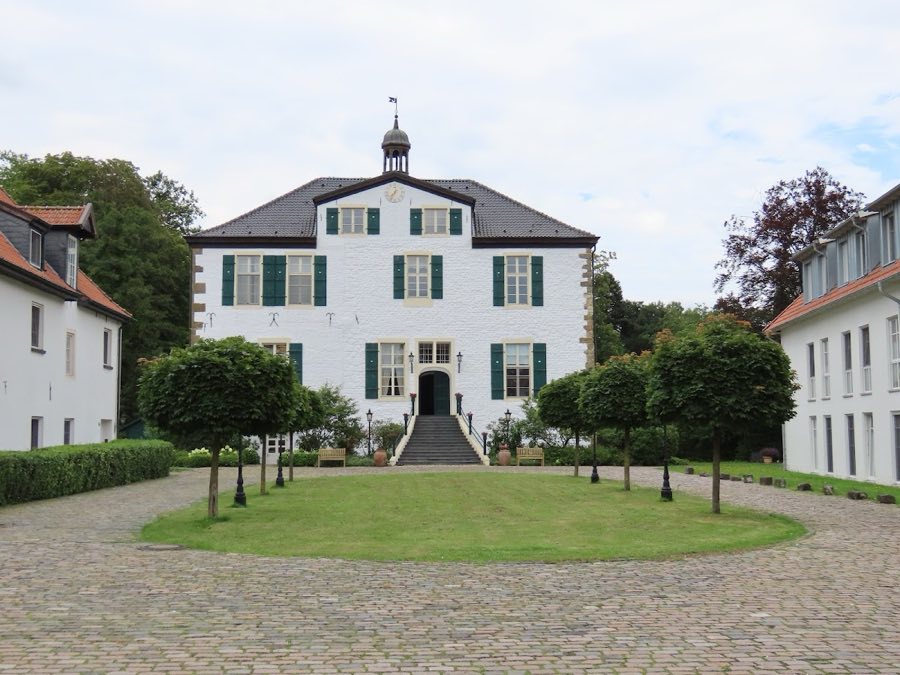
Wasserburg Haus Welbergen
Germany
CastleRestoredFor events13th century
No. 88530
Castle · Germany
No. 88530 · 52.132 N, 7.101 E
Quick summary
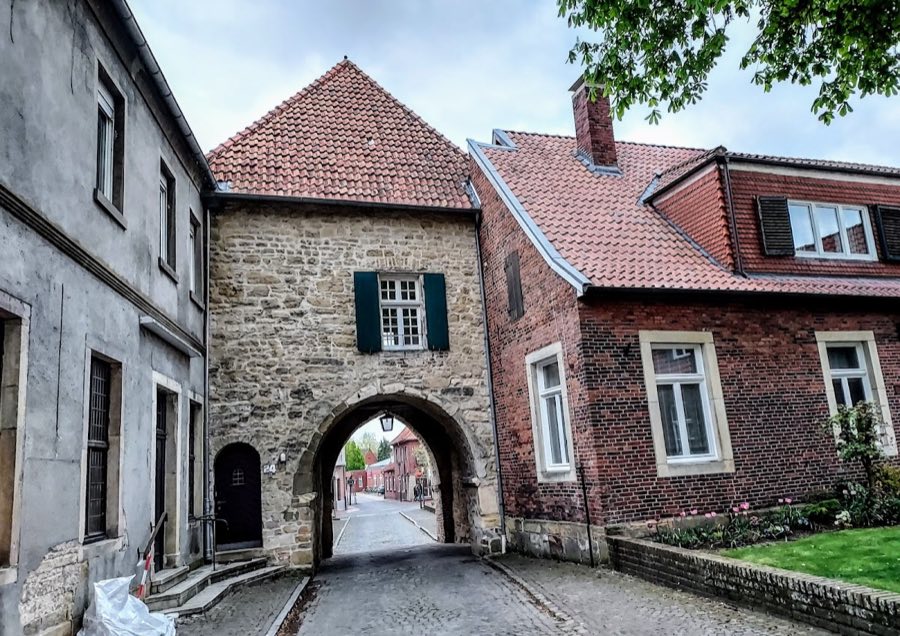
Burg Nienborg is a castle in Germany with origins associated with the 13th century.
See all castles in GermanyBurg Nienborg is in Heek, Germany, and it was built by Hermann II von Katzenelnbogen, Prince-Bishop of Münster.
The castle’s origins lie at the turn of the 13th century. A chronicle by Heinrich von Hövel gives the foundation year as 1198, and the site first appears in a document of 1203. By the mid-13th century the place-name is recorded as Nyenborch or Nienborch. Early speakers also called the fortress Novo Castro, literally “new castle,” and in the local Low German vernacular it was known as “up der nien borch.”
From its foundation the castle served the Prince-Bishopric of Münster as a fortified stronghold to protect the river and road traffic between Münster and Deventer. It grew into one of the most important episcopal fortifications in the region and came to host a formal company of castle retainers. This body included ministeriales and other service-men attached to the bishop’s household; they acted under a shared seal and swore an oath of service.
Strategic importance declined from the 15th century as trade and communications shifted. During the Spanish–Netherlands war the complex was destroyed in 1593. Reconstruction work took place around 1600, after which the site went into gradual decline during the 1600s. In 1765 parts judged unsafe were ordered taken down, and the institutional body of castle retainers, the Corpus Burgmannorum, was officially dissolved in 1812.
Ownership passed through several hands from the early 18th century. The castle became part of the Gut Haus Bevern estate and later transferred by Amalie von Reeden to Heinrich Wilhelm Droste zu Hülshoff; members of the Droste family used the place as a secondary residence. One principal residence known as the Hohes Haus has a core that dates to the 14th century, probably built around 1345 by Heidenreich von Sasse. That house was likely burned in the 1593 destruction and rebuilt about 1600 by the Torck family, and it underwent renovation in 1957–1966. In the 20th century the Hohes Haus served varied civic functions, including as a Hitler Youth home at the start of the Second World War, as the first Nienborg kindergarten in 1941, and after the war as a police station and housing for displaced people. The Hohes Haus later passed into ownership of Lodewyk von Bönninghausen and is now held by a Dutch family foundation of the von Bönninghausen family; part of the building is used as a café, and municipal plans envision new housing between that house and the main road.
Another former retainer’s court, Keppelborg, dates to the 15th or 16th century and moved by inheritance through the families von Sasse, von Münster, von Keppel (from about 1560) and von Heyden (from 1729). After extensive work it now operates as a guesthouse, and local testimony records that the property has passed down by inheritance for some seven centuries without being sold. The Langes Haus, also called Raesfelder Hof or Delwigsches Haus, bears a von Raesfeld coat of arms dated 1554, was altered in the 18th and 19th centuries, had its west stepped gable rebuilt in 1966, and following renovation has housed the North Rhine–Westphalia Music Academy since 1989.
Burg Nienborg occupies a sandy rise within a large bend of the river Dinkel, with low, marshy ground on the opposite bank that could be flooded as part of the castle’s defenses. The complex is laid out as a ring castle made up of an upper and a lower bailey together covering roughly 2,500 square metres. The upper enclosure is documented in 1311 and functioned as the principal inner ward, while the lower, oval-shaped enclosure was separately defended and contained the only historic entrance to the site.
A substantial ring wall once surrounded the castle, built in the Romanesque manner and reaching up to about ten metres in height in places. Around both the upper and lower wards a broad, water-filled ditch cut from the surrounding swamp follows the circuit of defenses; the moat was supplied by a nearby stream and could be up to fifteen metres wide. A mill gave the occupiers means to control water levels, and earthworks on three sides provided an additional outer rampart.
The entrance was a heavily fortified gateway complex set behind an outer forebuilding and fitted with a drawbridge. Tall towers flanked the double gate in the medieval plan, and the tower to the right was linked to one of the retainer houses and described in records as a keep. The present gatehouse survives as a visible remnant of this once more elaborate approach.
Within the circuit of walls stood numerous homes for the castle’s retainers; medieval records refer to roughly thirty such houses. Three of these retainers’ houses remain today and are known by name as the Hohes Haus, the Langes Haus, and Keppelborg. The Hohes Haus preserves very robust foundations that reach up to three metres in thickness and had an upper‑floor doorway that once gave access to the curtain wall. Its roof storey shows two three-stage stepped brick gables surrounding a saddle roof, features dated to around 1600 that reflect post‑destruction rebuilding.
Keppelborg presents a house form typical of the 15th or 16th century and shows the results of later renovation and reuse; it is occupied now as a guesthouse. The Langes Haus includes a coat of arms associated with the von Raesfeld family dated 1554, experienced alterations in the 18th and 19th centuries, and had its west stepped gable reconstructed in 1966, with later refurbishment allowing institutional use from 1989 onward.
The surviving historic fabric at Burg Nienborg therefore comprises the gatehouse, fragments of the Romanesque curtain wall, and the three named retainer houses. Other parts of the medieval ensemble were damaged or taken down during successive episodes of destruction and demolition, and the surviving buildings demonstrate both medieval origins and phases of early modern rebuilding and 20th‑century repair.
No. 54368
No. 61670
No. 18556
No. 98809
Comments
Comments for Burg Nienborg will require a verified account before posting.
We'll send a verification link before your first comment is published.