No. 18556
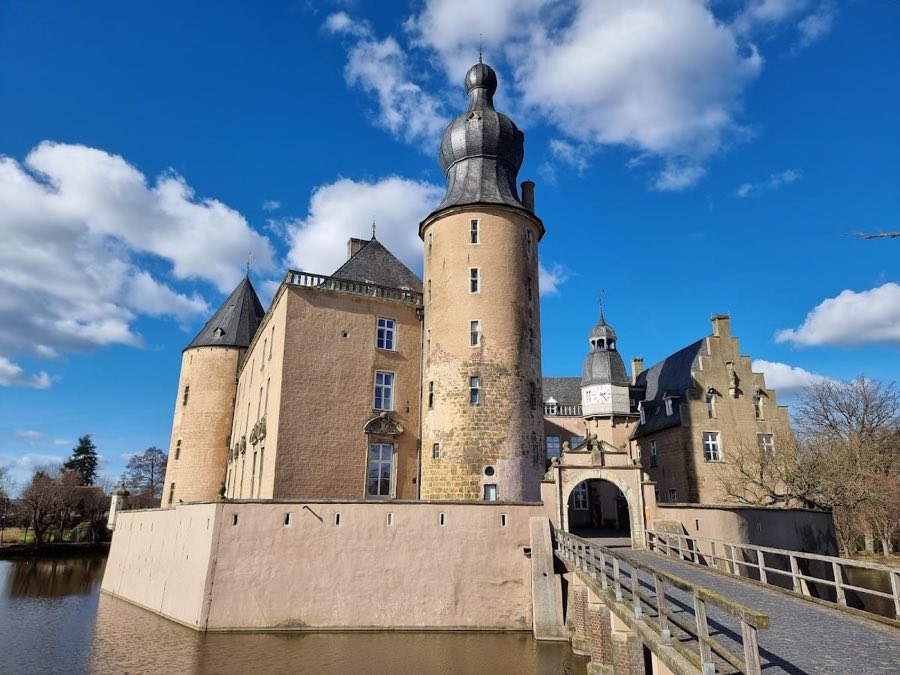
Burg Gemen
Germany
PalaceRestored12th century
No. 98809
Manor house · Germany
No. 98809 · 51.840 N, 6.807 E
Quick summary
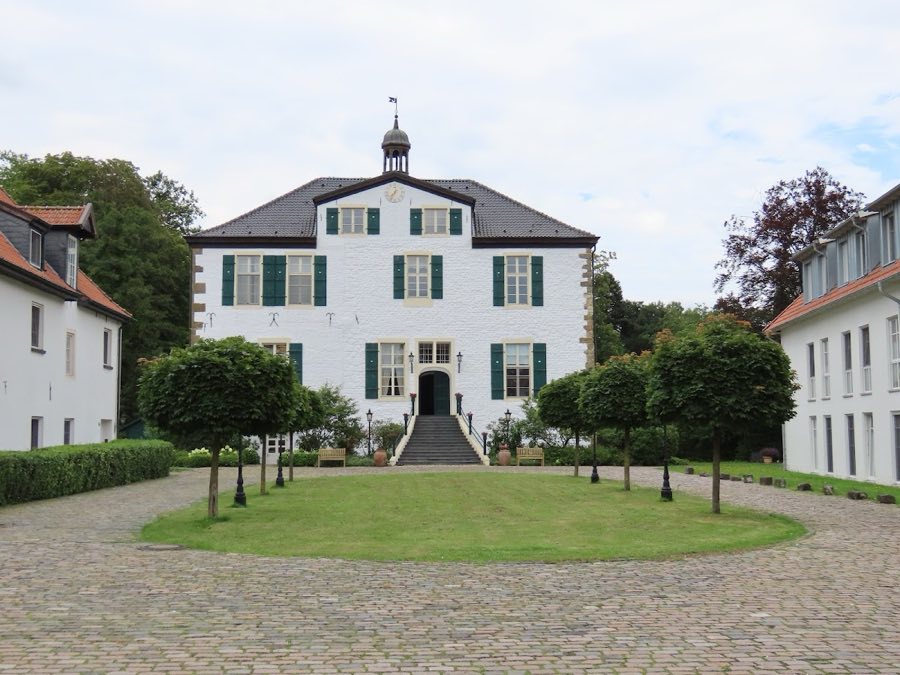
Haus Pröbsting is a manor house in Germany with origins associated with the 20th century.
See all castles in GermanyHaus Pröbsting stands in the municipality of Borken, Germany, and its origins lie in the medieval Christian institutions and local noble families of the region.
The site first appears in records around 1221 as the provost’s estate belonging to the religious foundation Stift Vreden. Early custodians came from a lateral branch of the noble von Gemen family. In 1345 Goswin von Gemen obtained permission from Bishop Ludwig II of Münster to build a stone defensive building, described at the time as a “Steinwerk.” In return the manor was formally designated as an Offenhaus, that is, a house held for use by the Bishop of Münster.
After Goswin’s death his son received the estate as a fief from the Abbess of Vreden. Over time the property remained with the von Gemen line known as von Gemen gen. Pröbsting and was treated as their private residence. The Pröbsting line ended in 1559, and ownership passed to the von Willich family. In 1714 the manor entered the household of Georg Bernhard von Keppel zu Öding through marriage. From the mid-1700s ownership changed several times, including transfers to the Basse family and later to the Counts of Landsberg-Velen.
The principal house underwent expansion and alteration during the 1800s, and a chapel that had burned was replaced in this period. In the 20th century the building declined into decades of disrepair before being restored to an earlier appearance and subjected to major renovation in 1988. The building is protected as a historic monument, remains in private ownership, and today accommodates a clinic. The writer Ilse von Stach, born at the house in 1879, later published recollections of her time there.
The surviving complex sits in water and was originally arranged as a manor set within an enclosed pond and outer defensive works. The principal residential block and the forecourt to its west shared a common house-pond; today that pond survives only along the southern edge. The northern segment of the former outer moat was formed by the Bocholter Aa river, which provided part of the water-defence arrangement.
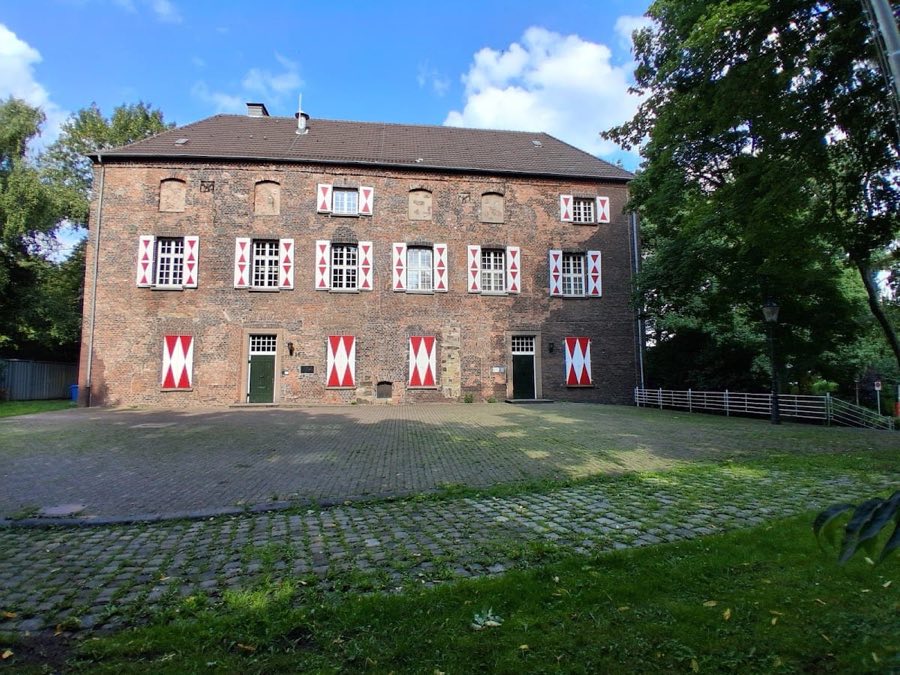
Archaeological and architectural evidence shows the core of the residence to be a rectangular building of brick with dressed stone used at the corners. This central masonry block is recorded as the oldest non-religious brick building in the wider Münster region. In the 1800s the house was enlarged northward so that the plan became roughly square, with sides of about twenty metres, and a new chapel annex was added on the south side to replace an earlier chapel that had burned.
The forecourt area to the west, which once functioned as the service and approach zone, was later extended further west. Buildings on this forecourt include a gatehouse and a remise, and in the south-west corner there is a projecting square brick tower built in the 1700s. An east-side cattle stable on the forecourt was widened toward the river in more recent times. The main building was conserved and comprehensively restored in 1988 and today stands as a protected monument in private use.
No. 18556
No. 98903
No. 23421
No. 76145
Comments
Comments for Haus Pröbsting will require a verified account before posting.
We'll send a verification link before your first comment is published.