No. 62234
Wildenstein Castle
Switzerland
CastleIntactFor events13th century
No. 70091
Castle · Switzerland
No. 70091 · 47.401 N, 7.702 E
Quick summary
Burg Rifenstein is a castle in Switzerland with origins associated with the 12th century.
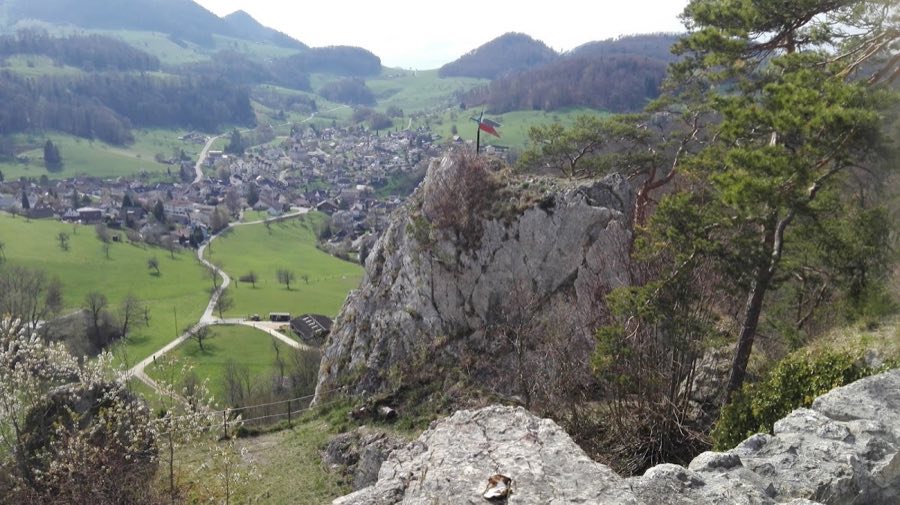
See all castles in SwitzerlandBurg Rifenstein stands above the villages of Reigoldswil in Switzerland and was a medieval hilltop castle used during the High Middle Ages.
The site is recorded in a document attributed to the Schönthal monastery dated 1145, but that particular record is considered likely to be a forgery. Archaeological surface finds date the castle’s main period of use to roughly the years 1200 until about 1350. During this time the hilltop stronghold functioned as a feudal residence and local seat of authority.
A powerful seismic event in 1356, the Basel earthquake, is the most probable cause of heavy damage to the castle. After that event no significant repair work was carried out; contemporary explanations point to a lack of funds or the local nobility directing their interests toward the nearby city of Basel. Local tradition preserves a story of a siege in which attackers caused an access bridge to collapse under their weight, a tale preserved as legend rather than as confirmed fact.
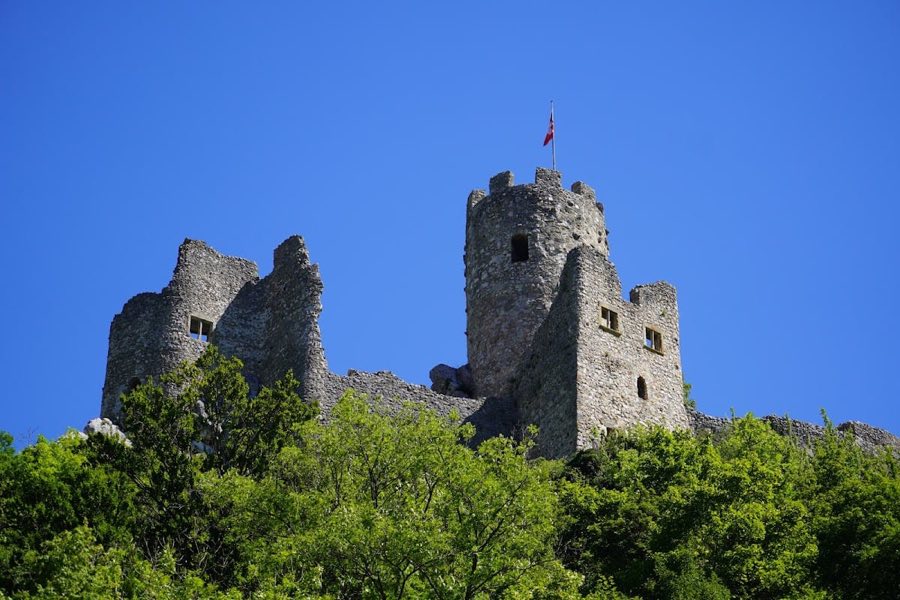
In 1394 Thüring von Ramstein formally conveyed Burg Rifenstein and associated rights, including jurisdiction over Reigoldswil and Lauwil, to Duke Leopold of Austria and received the castle back as a fief from him. Centuries later the ruin underwent a major sanitation campaign in the 1930s. From 2003 a conservation plan was drawn up for the municipal owner and further excavations were scheduled for 2009–2010; after funding was secured the site was cleared of vegetation, its walls were substantially repaired, and the restored ruin was made accessible again by 2014.
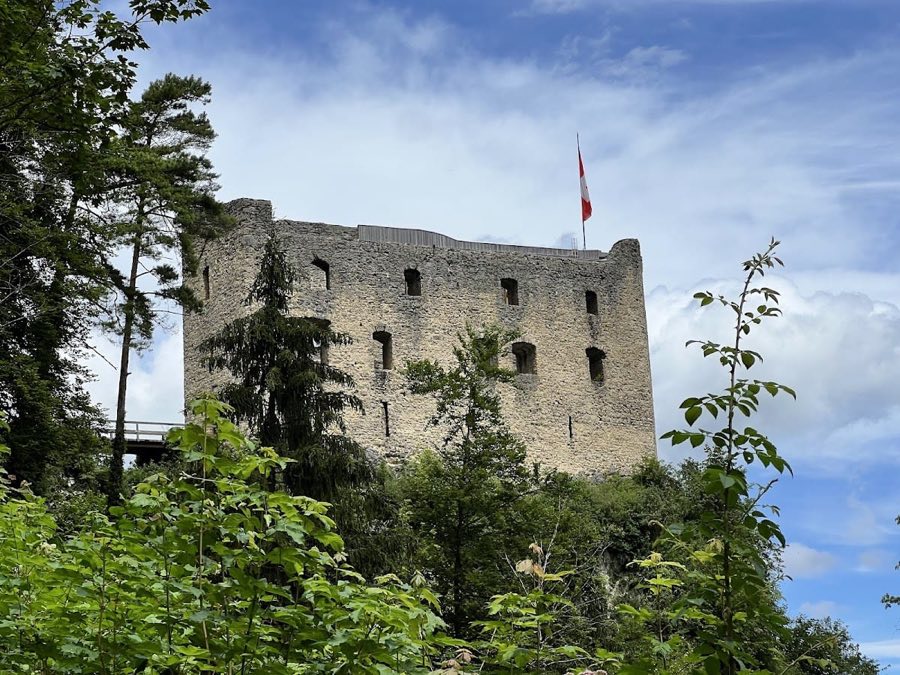
The ruin occupies a rocky spur and is divided naturally into three main parts: a residential tower at the tip of the rock, a terraced courtyard to the east, and a series of overbuilt rock clefts to the west. Construction combines dressed walling with large, unworked stones set into the tower wall. Much of the surviving masonry has been partly reconstructed and consolidated in recent conservation campaigns.
The residential tower is an irregular quadrilateral measuring about 11 to 16 metres across, with a surrounding wall roughly two metres thick. The wall contains many large, roughly hewn blocks. The original entrance to the tower lay on the side opposite the present opening. The tower once supported a timber superstructure, estimated to have risen through about three upper floors beneath a wooden roof; these upper levels no longer stand.
The eastern terrace is bounded by a curtain wall that follows the rock’s uneven edge. Entering through the gate brings you onto this enclosed terrace, and in its lower southern portion there was very likely a cistern for collecting water. The oldest terrace wall has largely collapsed and much of the masonry visible today represents later rebuilding and repair.
To the west the rock is cut by clefts that were built over and roofed. Careful chiselling in the rock has left beam sockets for timber beams, and fragments of masonry attest to a complex of wooden rooms or halls once inserted into these clefts. From that overbuilt area an original stairway led up into the residential tower, and a narrow path once wound around the rock nose to reach the western structures, carried on a built-up ramp rather than by bridge.
Access to the site originally relied on a bridge that spanned a projecting rock spike from the opposite slope, a defensive arrangement recorded in local tradition. The present route up to the tower is a modern installation. Today the ruin shows traces of both medieval fabric and modern intervention; original masonry is in places nearly destroyed while other stretches have been carefully repaired. Recent consolidation work required the transport of substantial building materials, including several tonnes of stone and thousands of kilograms of mortar moved by helicopter, after which vegetation was removed and the repaired walls were secured.
No. 62234
No. 97107
No. 27157
No. 39869
Comments
Comments for Burg Rifenstein will require a verified account before posting.
We'll send a verification link before your first comment is published.