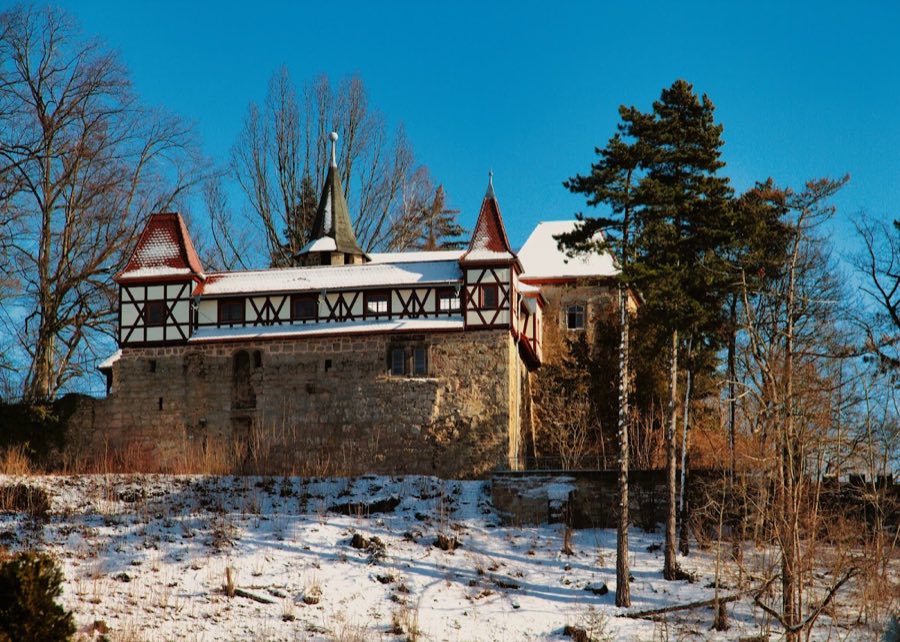
No. 54171
Burg Neuhaus
Germany
CastleRuinFor events13th century
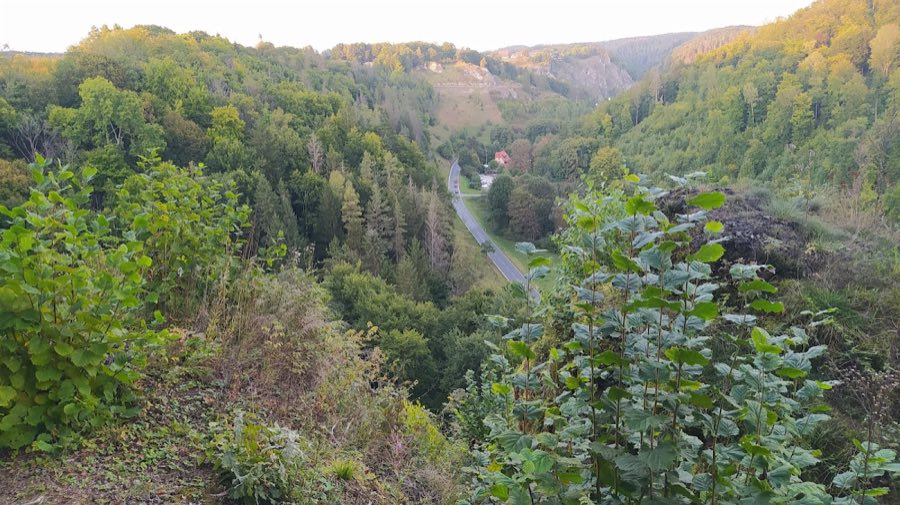
No. 59709
Castle · Germany
No. 59709 · 50.035 N, 11.202 E
Quick summary
Burgstall auf dem Heideknock is a castle in Germany with origins associated with the 12th century.
See all castles in GermanyThe Burgstall auf dem Heideknock is located near the municipality of Weismain in modern-day Germany. The site was originally settled by Celtic peoples, evident from its origins as a fortified promontory that later served as the foundation for a medieval castle.
The earliest traces at Heideknock reveal a prehistoric hill settlement from the Late Bronze Age through the Early Iron Age, known as the Urnfield culture and the subsequent Hallstatt and La Tène periods. Archaeological finds, such as pottery shards and cave artifacts, confirm human activity here during these times long before the medieval castle was established.
During the 12th century, a castle known as Leuchnitz was built on the site. This stronghold became the ancestral residence of the noble Edelfreien von Leuchnitz family. Historical records first mention this family in 1118. The castle itself is documented in 1165 as belonging to Stevinc and Ludewig de Luchinze, with further evidence from 1232 mentioning Conrad de Luochenz as a ministerial under the Meranian dynasty, confirming the castle’s continued occupation through the early 13th century. Excavations uncovered a bronze belt fitting dating back to the Salian period (11th–12th centuries), supporting this timeframe for the castle’s construction and use.
By around 1340, local oral tradition maintains that the castle had fallen into ruin, indicating it was likely abandoned or destroyed during the late Middle Ages. Since then, the site has remained as a historical remnant, preserving traces of its complex past under layers of natural growth and time.
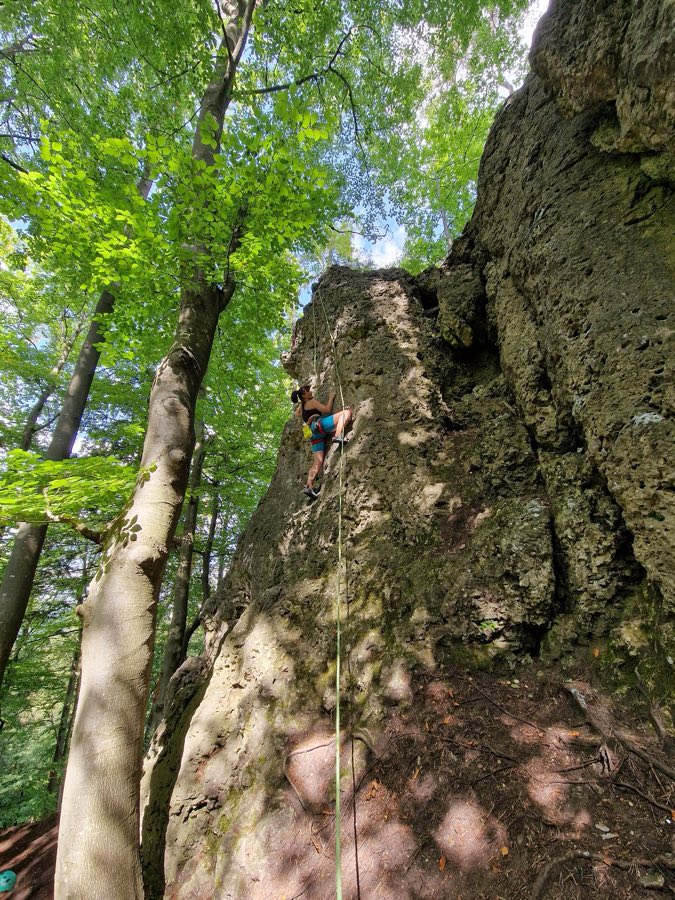
The Burgstall auf dem Heideknock is arranged upon the Heideknock, a rocky spur extending eastward into the Kleinziegenfelder Tal. The terrain divides into two small plateaus and the position is naturally defended on three sides by steep cliffs, with its highest elevation reaching approximately 465 meters above sea level.
On the western plateau lies the prehistoric fortification, evidenced by earthworks including a flattened embankment about three meters wide. Adjacent to this is a neck ditch—an excavated trench designed to hinder attackers—measuring roughly 21 meters across and about 3 to 4 meters deep. Iron Age pottery fragments found in this area attest to longstanding settlement during the late Bronze and early Iron Ages.
The medieval castle is situated on the inner plateau, roughly 97 meters long (north to south) and 40 meters wide on average. Its edges to the north, east, and southeast fall sharply toward the valley, enhancing natural defenses. The castle’s defensive system is complex: an inner neck ditch cutting 21 meters wide and 4 to 5 meters deep separates the ramparts, and a contiguous inner rampart, still visible in parts, runs alongside it. Surrounding the entire site is an outer rampart about 100 meters long, while a narrow, rock-cut ditch around 10 meters wide remains preserved primarily along the southern face.
A third rampart divides this castle plateau from the second lower plateau, further strengthening the enclosure. At the southeastern edge, where the slope is steep, a gap roughly 2.5 meters across pierces all the ramparts. This break in the defenses is interpreted as the original entrance to the castle, allowing access while preserving security. Close to this entrance, excavations uncovered two rectangular pits and a sloping edge within what was once a leveled courtyard, suggesting building foundations or other structural features related to the castle’s interior.
Throughout its history, the site functioned as a fortified center from the Celtic period into the Middle Ages. The remnants visible today—earthworks, ditches, and plateaus—offer tangible links to its prehistoric origins and medieval occupation, preserved under Bavarian heritage law as a protected monument.
No. 54171
No. 36771
No. 16460
No. 66521
Comments
Comments for Burgstall auf dem Heideknock will require a verified account before posting.
We'll send a verification link before your first comment is published.