No. 27132
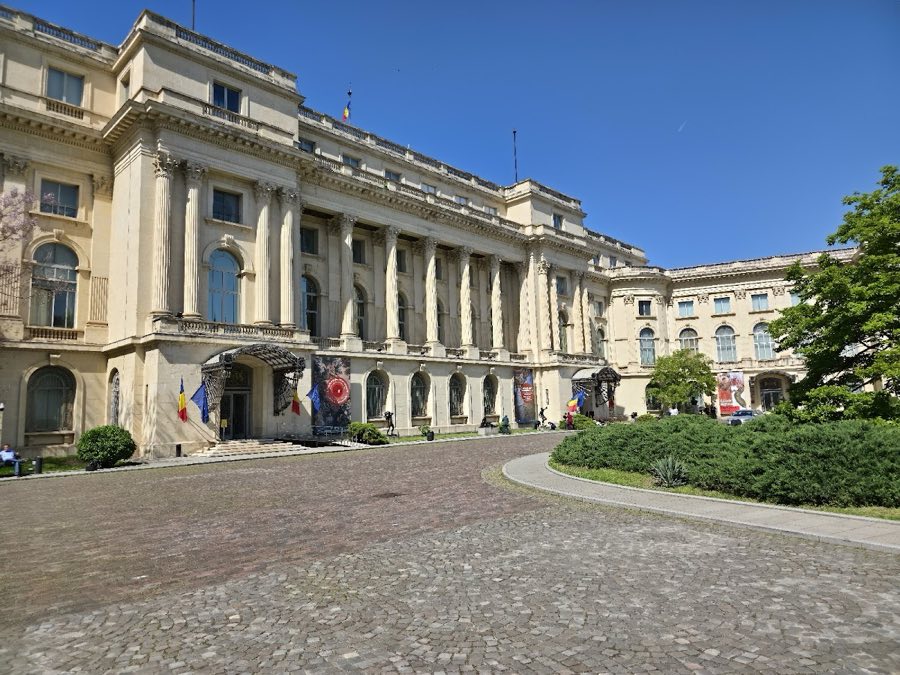
Royal Palace of Bucharest
Romania
PalaceRestoredFor events19th century
No. 80404
Palace · Romania
No. 80404 · 44.449 N, 26.088 E
For events
Cantacuzino Palace is marked as a château or castle venue lead. Capacity, indoor/outdoor spaces, catering rules, and accommodation options are published only after public verification.
Event types: Private events, Cultural gatherings, Filming and photography
Quick summary
Cantacuzino Palace is a palace in Romania with origins associated with the 20th century.
See all castles in RomaniaCantacuzino Palace in Bucharest, Romania, is an early 20th-century urban palace erected in 1901–1902 for the Romanian statesman Gheorghe Grigore Cantacuzino and executed in the French Beaux-Arts manner. Built for a leading figure of Romanian public life, the house quickly became part of the city’s political and social scene and later served as the setting for events of national consequence.
Construction and social use, 1901–1913. The house was completed at the beginning of the 20th century and was fitted out with lavish interior decoration commissioned by its owner. During these years the palace gained a reputation as one of Bucharest’s locations for high-society balls and private entertainments, reflecting its role in the capital’s cultural life.
Treaty and political role, 1913–late 1930s. On 10 August 1913 the Treaty of Bucharest was signed in the palace, bringing the Second Balkan War to an end; that conflict involved rival Balkan states contesting territory in 1913. In the years that followed the property remained a site associated with Romania’s ruling families and political elites.
Family succession and wartime administration, 1929–1940s. The palace passed to Gheorghe Grigore Cantacuzino’s son, Mihail G. Cantacuzino; Mihail died in 1929. His widow, Maria, later married the composer George Enescu in December 1939. In the period immediately before the Second World War the building, then known as Cantacuzino Palace, housed the Presidency of the Council of Ministers, giving it a formal governmental function on the eve of the conflict.
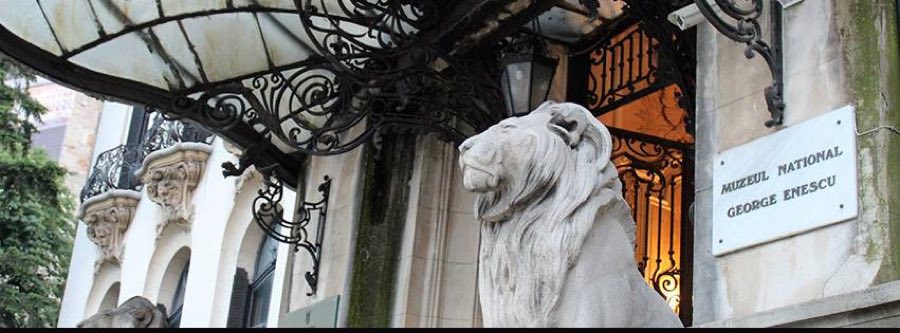
Museum conversion, 1955–present. After George Enescu’s death in 1955, his wife stipulated in her will that the palace be given over to a museum in his memory. In 1956 the National Museum George Enescu was established, and the palace today contains the George Enescu museum, combining the building’s residential and political history with a commemorative cultural purpose.
The palace presents a coherent layout combining a Beaux-Arts exterior with most principal rooms finished in that same French-inspired manner, while other interior spaces display later Rococo Revival ornament. The main entrance is notable for a glass-and-metal doorway set within the street facade, and a pair of sculpted lions frame the approach. Gates and fences are executed in the Louis XIV manner, lending the property a deliberately princely appearance.
Interior decoration includes work by several named artists commissioned by the original owner. Among these are six medallions made in oil on canvas and fixed into the wall surface so they read as raised panels; three of those carry signatures and the date 1907. Five of the medallions sit above doorways along the corridor that led to the rooms on the right of the entrance. Two medallions bear the titles Shepherd with Sheep and Peasant Woman with Vessel and draw direct inspiration from the painter Nicolae Grigorescu.
Several rooms preserve richly modelled Rococo Revival features. A stone chimney in the ticket-and-souvenir room is carved and decorated with festoon motifs, and the same room contains delicate stucco ornament typical of the Rococo manner. Doors incorporate stucco-filled panels, and the main salon retains an elaborately decorated ceiling. On the first floor, the corridor doors and their metal handles remain visible as part of the preserved interior fittings.
Today the building continues to function as a museum and institutional space. About five rooms are open for public display, while other parts of the building are occupied by various institutions, leaving many of the decorative elements visible in situ and accessible in those exhibited areas.
No. 27132
No. 45194
No. 21431
No. 93012
Comments
Comments for Cantacuzino Palace will require a verified account before posting.
We'll send a verification link before your first comment is published.