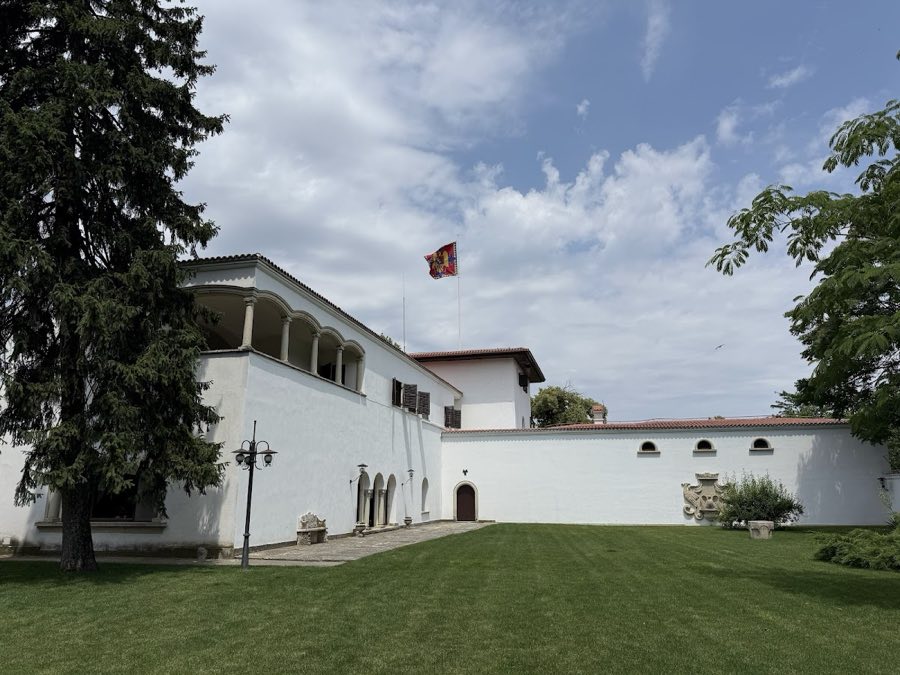
No. 45194
Elisabeta Palace
Romania
PalaceIntactFor events20th century
No. 21431
Palace · Romania
No. 21431 · 44.528 N, 25.993 E
Quick summary
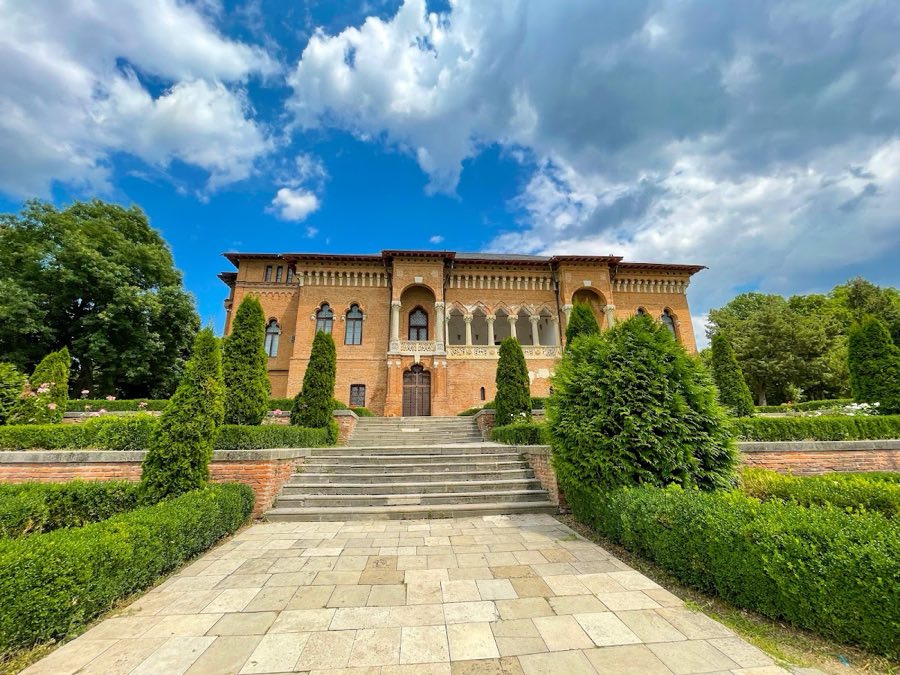
Mogoșoaia Palace is a palace in Romania with origins associated with the 18th century.
See all castles in RomaniaMogoșoaia Palace in Mogoșoaia, Romania, is a residence built by the Wallachian ruler Constantin Brâncoveanu in the Brâncovenesc, or Romanian Renaissance, style and completed on 20 September 1702. Erected at the turn of the 18th century, the complex and its church served as a princely household and a center of religious patronage, reflecting the tastes and power of a leading Wallachian family. An inscription on the palace records the completion date, and the ensemble has remained a visible witness to political change and warfare in the region.
Construction and early use belong to Constantin Brâncoveanu’s lifetime, with the Church of Saint George on the grounds finished in 1688 and adorned with frescoes that include a dedicatory painting of Brâncoveanu with his four sons. After Brâncoveanu’s execution in Constantinople in 1714, Ottoman authorities confiscated the family’s assets and converted the palace to an inn. The property later returned to family hands when Prince Ștefan Cantacuzino repurchased it and restored it to Brâncoveanu’s grandson, also named Constantin.
The estate remained with Brâncoveanu descendants for roughly 119 to 120 years, but it suffered severe damage during the Russo‑Turkish War of 1768–1774 when Ottoman forces devastated parts of the complex. Further destruction followed in the 1821 revolution, when the last direct descendant, Grigore Brâncoveanu, fled and armed pandurs occupied the buildings. After Grigore’s death in 1832 the property passed to his adopted daughter Zoe Mavrocordat; because she had married Prince George Bibescu in 1826, the palace became part of the Bibescu family holdings.
Members of the Bibescu family undertook several phases of repair and improvement. Nicolae Bibescu carried out restorations around 1860 to 1880 and established a family burial chapel in the park, along with the nearby Elchingen villa. After 1890 new greenhouses were built by French architects. Princess Martha Bibescu began a further campaign of restoration from 1912. During World War I the palace sustained damage from German aerial bombing in November 1916; work resumed after 1920, the complex reopened in 1927, and some interior projects continued until 1935. In World War II the house was briefly rented to the Swiss mission in Romania and at times served as a meeting place for Allied diplomats.
The estate underwent forced appropriation under the communist regime, with actions beginning in 1945 and formal nationalization recorded in 1949. The owners Valentina and Dimitrie Ghika‑Comănești were arrested and family collections were looted by 1957. In that year the palace became the headquarters of the feudal department of the National Museum of Art. Large‑scale conservation work began again in 1977. In the post‑communist period the complex has functioned as the Brâncovenesc Art Museum. Descendants of Martha Bibescu living in the United Kingdom have pursued legal claims for restitution or compensation since 2010, and one report indicates the palace will be open to visitors from 1 November 2025.
The complex presents a courtyard-centered palace built in the Brâncovenesc manner, with a clear separation between service areas on the ground floor and princely apartments above. The main residence rises above a vaulted cellar and faces a lake on one side, where a covered gallery opens onto the water. Over centuries the ensemble has been altered and repaired, but the older core survives alongside later additions from the 19th and 20th centuries.
The principal building dates to the Brâncoveanu period and was completed in 1702. The upper floor contained the family apartments, reached by an external staircase that leads to a balcony on the façade, while the ground level housed service rooms. The basement serves as a cellar whose ceiling is formed by four domes, a structural choice that creates separate vaulted bays below the house. These spaces have been subject to successive restorations but remain an integral part of the palace plan.
The lakeside façade features a Venetian-style loggia (a covered gallery open to one side) with rounded arches facing the water; descriptions of the arcade differ, variously noting three arcades or five arches. The courtyard contains the Brâncoveanu kitchen, described as having four ventilation chimneys or towers, and a gate tower that guards the entrance. Both the kitchen and the gate tower were restored under Princess Martha Bibescu between 1922 and 1930, and the gate tower is reached by an external staircase.
Religious and funerary elements stand close to the main house. The Church of Saint George stands just outside the palace walls near the gate tower and is decorated with frescoes that include the dedicatory portrait of Constantin Brâncoveanu with his four sons; the church porch holds the grave of George‑Valentin Bibescu. In the park the George Bibescu chapel, constructed after 1880, serves as a family mausoleum and contains burials of Bibescu members, including princes Mihai and George Basarab‑Brâncoveanu and aviators who died in World War II.
Late 19th‑century additions include greenhouses erected after 1890 by French architects. These structures were renewed in recent conservation work and have been returned to use for growing flowers and for an art‑education workshop for children. An icehouse on the grounds was employed to store ice cut from the adjacent Mogoșoaia lake. Overall, the older part of the complex has endured despite substantial 20th‑century alterations, with major restoration campaigns recorded around 1860–1880, 1922–1930, and from 1977 onward, while interior spaces have continued to undergo reconstruction.
No. 45194
No. 80404
No. 27132
No. 93012
Comments
Comments for Mogoșoaia Palace will require a verified account before posting.
We'll send a verification link before your first comment is published.