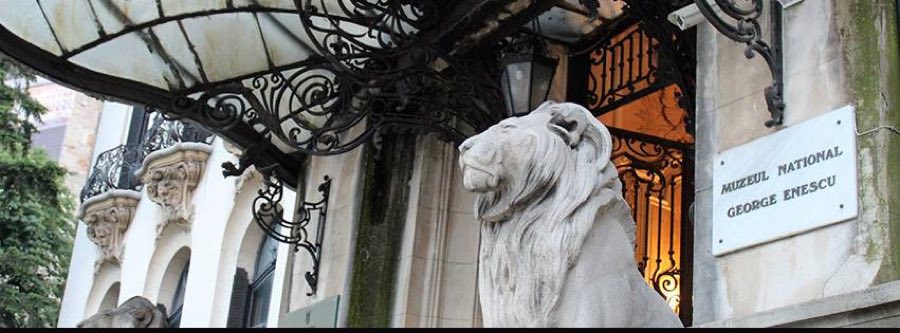
No. 80404
Cantacuzino Palace
Romania
PalaceIntactFor events20th century
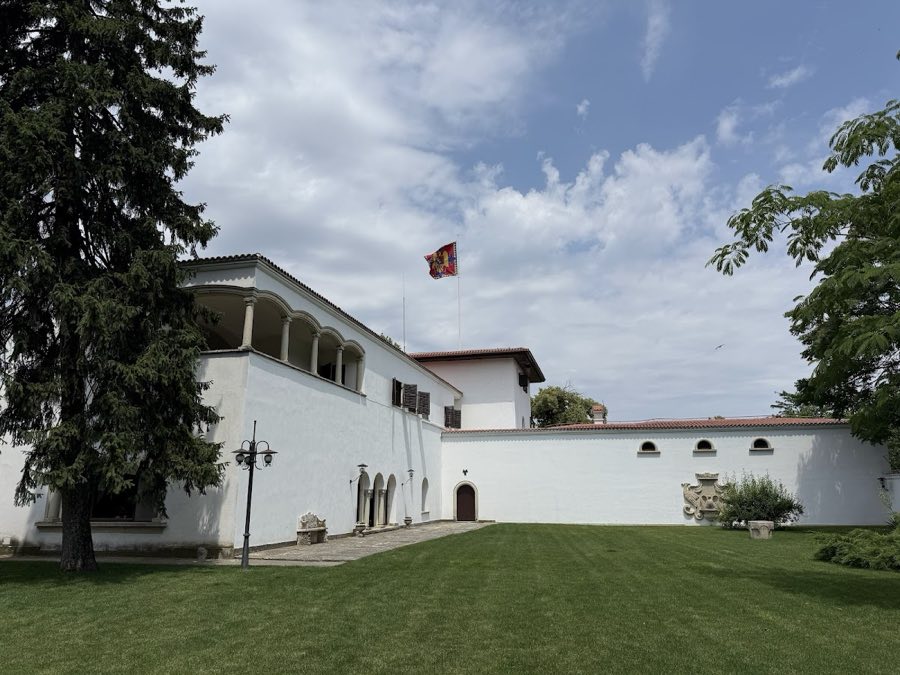
No. 45194
Palace · Romania
No. 45194 · 44.471 N, 26.080 E
For events
Elisabeta Palace is marked as a château or castle venue lead. Capacity, indoor/outdoor spaces, catering rules, and accommodation options are published only after public verification.
Event types: Private events, Cultural gatherings, Filming and photography
Quick summary
Elisabeta Palace is a palace in Romania with origins associated with the 20th century.
See all castles in RomaniaElisabeta Palace in Bucharest, Romania, was built for the Romanian royal household in the 1930s as a private royal residence. Erected during the interwar decades, the building opened to occupants on 19 December 1937 and quickly became part of the capital’s cluster of cultural sites along Kiseleff Road, near the Romanian Village Museum and the Summer Theatre in what is now King Mihai I Park. Its placement and use linked it directly to the monarchy’s presence in the city during a turbulent period in Romanian politics.
The palace was commissioned for Princess Elisabeth, a daughter of King Ferdinand I and Queen Marie, who returned to Romania from exile while her new home was completed. She occupied the house only briefly, soon retreating to another family estate after disputes at court over the influence of Elena Lupescu, the mistress of King Carol II. The building therefore began life as a royal dwelling with only a short initial period of full-time residence by its intended occupant.
In the final years of the Second World War and its immediate aftermath the palace took on a more central public role. After the Royal Palace in Bucharest was bombed in the days following 23 August 1944, King Michael I requested permission to move his court temporarily to Elisabeta Palace and established his residence there. On 6 March 1945 the king met with the Soviet representative Andrey Vyshinsky inside the palace; the exchange became heated, Vyshinsky reportedly lashed out at the table and slammed the door, causing a piece of ceiling plaster to fall. Despite this confrontation, Petru Groza was named prime minister and King Michael responded by ignoring successive government and parliamentary acts in a period that came to be called the “royal strike.” King Michael I signed his abdication on 30 December 1947.
Following the end of the monarchy the palace remained under Princess Elisabeth’s ownership until the state nationalized the property in 1948. During the Socialist Republic that followed the building was not employed as a royal residence. Ownership returned to the Royal Family in 1997. A law passed in 2001 granted use of the palace as a residence to the former king for the remainder of his life, and members of the royal household have lived there since. Today Elisabeta Palace serves as the official Bucharest residence of Her Majesty Margareta, Custodian of the Romanian Crown, and is the setting for official receptions, state visits, investitures, formal dinners and national commemorations, including an annual garden reception held on 10 May to mark Monarchy Day. The palace also houses the offices of Her Majesty’s Household Association, an NGO recognized by the Romanian government for public utility, and since 2020 the building has been opened seasonally for guided tours.
The palace was completed in the late 1930s and its plan combines formal reception rooms and private living quarters set within a planted garden close to the parkland along Kiseleff Road. A roof-mounted flagstaff remains in place; by royal practice the personal royal standard is raised while the sovereign or highest-ranking family member is in residence and is lowered immediately upon their departure, while the national flag bearing the large royal coat of arms is displayed when no senior royal is present. From positions in the adjacent park, including the bridge on Rose Alley near the Triumphal Arch, the flag on the roof is visible.
The principal entrance retains its original gate, which bears a plaque inscribed in three languages. Inside, the palace preserves public rooms used for formal dining and reception; a dining room is part of the sequence of public spaces. A balcony survives that has been used for public greetings by members of the royal family. The building’s interiors bear evidence of the wartime episode of March 1945, when a falling fragment of ceiling plaster was caused by a violent outburst during negotiations held in one of the palace rooms.
Overall, the structure endures as an occupied official residence of the Romanian Royal Family and continues to serve ceremonial and administrative functions while preserving key external and internal elements—the gate and trilingual plaque, the flagstaff visible from the park, formal reception rooms, and the balcony—from its original late 1930s construction. The palace and grounds are maintained in active use and are accessible for guided visits on a seasonal basis.
No. 80404
No. 27132
No. 21431
No. 93012
Comments
Comments for Elisabeta Palace will require a verified account before posting.
We'll send a verification link before your first comment is published.