No. 77282
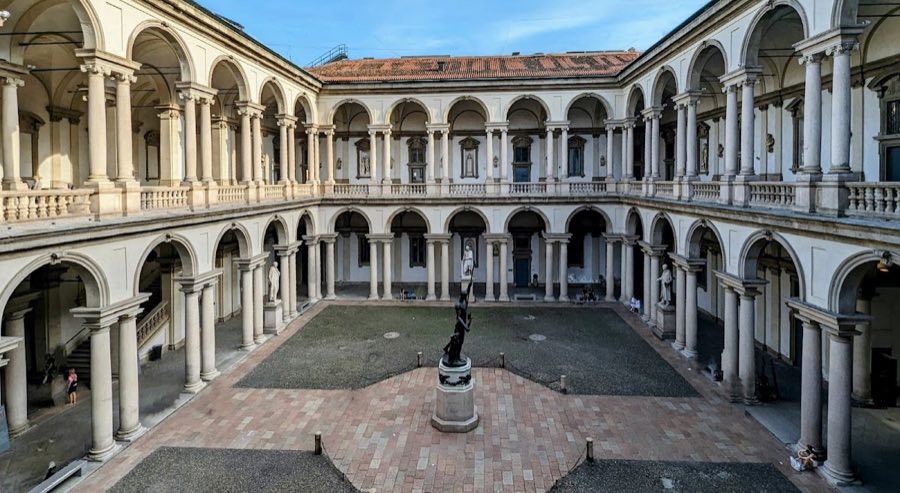
Palazzo Brera
Italy
PalaceRestored12th century
No. 49682
Palace · Italy
No. 49682 · 45.466 N, 9.171 E
For events
Casa Atellani is marked as a château or castle venue lead. Capacity, indoor/outdoor spaces, catering rules, and accommodation options are published only after public verification.
Event types: Private events, Cultural gatherings, Filming and photography
Quick summary
Casa Atellani is a palace in Italy with origins associated with the 15th century.
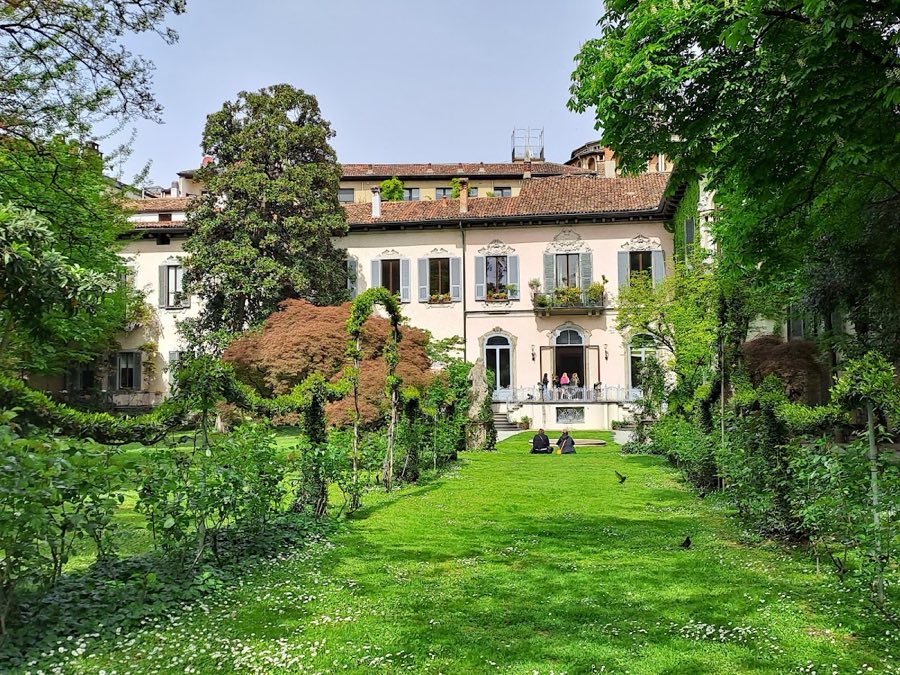
See all castles in ItalyCasa Atellani in Milan, Italy, is a fifteenth‑century Renaissance residence that belonged to the circle of the Sforza dukes and stands as a remaining element of the old Borgo delle Grazie, historically within the Porta Vercellina quarter. Erected in the quattrocento (the 1400s), the house entered the orbit of Ludovico Sforza, known as Ludovico il Moro, and its association with the Sforza court gives the building its principal historical significance.
The house passed into Ludovico il Moro’s hands in 1490, when he purchased the property from the Landi, counts of Piacenza, and bestowed it on the Atellani family, members of his retinue. During the late fifteenth century the residence became a setting for large banquets and court entertainments attended by prominent figures of the Sforza household, events recorded in contemporary chronicles of the duchy.
Over the following centuries the palace changed hands several times and came under the ownership of the Conti family by the early twentieth century. Ettore Conti, an industrial entrepreneur active in that period, took up residence there and in 1922 the family carried out an extensive restoration that greatly altered the building’s outward appearance while also bringing to light surviving fifteenth‑century mural work. At the same time the garden was reshaped in a neo‑Baroque manner and, in partnership with the local university, replanted to revive the vineyard associated with Leonardo da Vinci; roots uncovered during careful excavation allowed identification of the original vine as Malvasia of Candia.
The house remained in private hands through the twentieth and early twenty‑first centuries, later belonging to the Castellini Baldissera family. In December 2022 the property was acquired by the LVMH group, headed by Bernard Arnault, marking the most recent change in ownership.
The complex centers on a fifteenth‑century courtyard that preserves its original plan with a portico surrounding the open space. The portico vaults are formed as umbrella‑type ceilings divided into eight segments, a characteristic ceiling pattern that dates to the building’s quattrocento origins. Portions of mural decoration from this courtyard survive in situ.
A number of painted lunettes that once decorated the house survive as movable fragments. Fourteen of these lunettes bear portraits of members of the Sforza family and are attributed to a painter working in the Leonardesque circle; these panels now figure among the rooms of the Castello Sforzesco museums. Additional small fragments of fifteenth‑century fresco work from the courtyard also remain within the palace.
The principal interior space known as the Zodiac Room shows layered intervention from different periods. It contains fourteen lunettes that illustrate zodiac motifs, a count that reflects a twentieth‑century enlargement of the room when two extra lunettes were added. In the two added lunettes there are two inscriptions: the French motto “Faire sans dire” and the letters H and J, which represent the initials of Ettore Conti and his wife Giannina Casati. The western wall of this chamber bears traces of heavy retouching and modification, while the eastern walls preserve panels considered authentic and were restored during the 1922 campaign.
The building’s street face was reshaped during the early twentieth‑century works and now includes four medallions with sculpted portraits of the Sforza family executed by Pompeo Marchesi. Inside, Ettore Conti’s study opens toward the replanted vineyard and contains an inlaid wooden surround for a fireplace that displays coats of arms and insignia tied to the marriage between Christina of Denmark and Francesco Sforza. Above the hearth are painted figures and heraldic emblems: three crowns associated with Sweden, an eagle and the “biscione” linked to Visconti and Sforza authority (the eagle also representing the Empire), a golden lion tied to Norway, and a golden dragon connected with the King of Vendi. Several rooms are lined with eighteenth‑century boiserie (wood panelling), which enclose a substantial library collection still preserved within the house.
No. 77282
No. 85870
No. 79019
No. 49673
Comments
Comments for Casa Atellani will require a verified account before posting.
We'll send a verification link before your first comment is published.