No. 86912
Bagatti Valsecchi Museum
Italy
Manor houseIntact19th century
No. 49673
Manor house · Italy
No. 49673 · 45.469 N, 9.192 E
Quick summary
Museo Poldi Pezzoli is a manor house in Italy with origins associated with the 19th century.
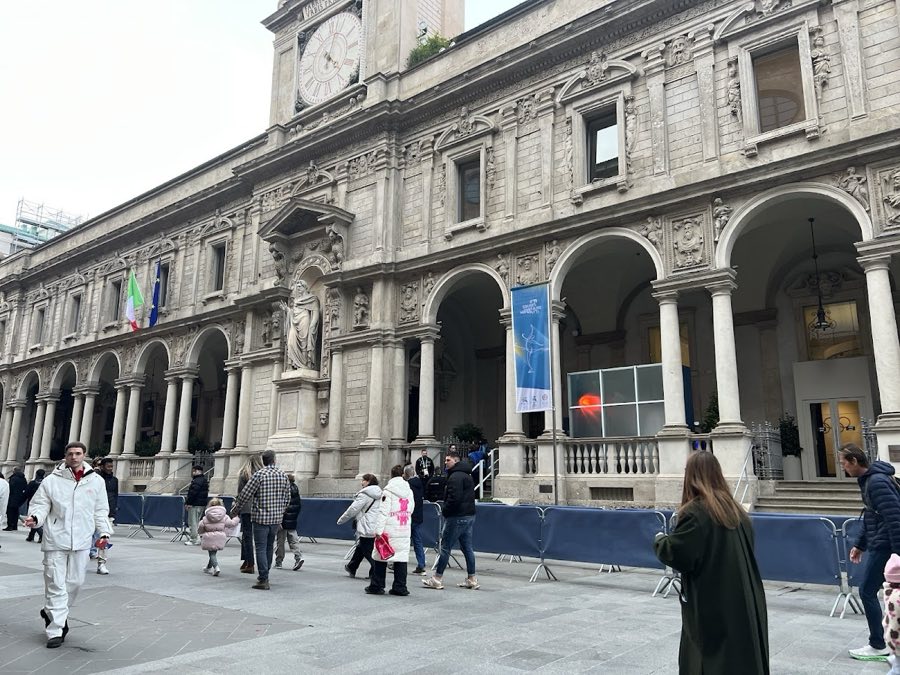
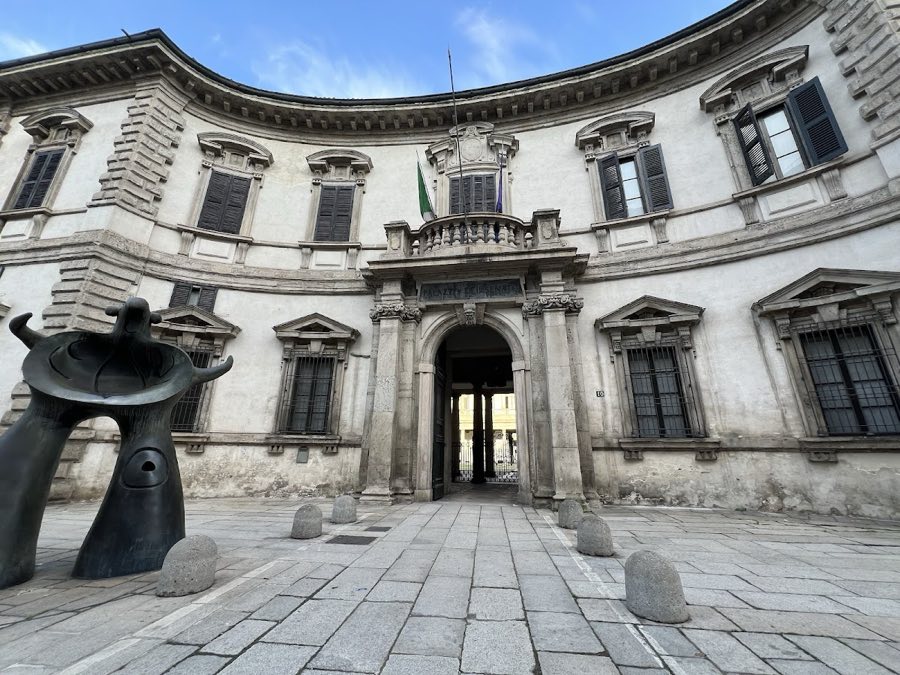
See all castles in ItalyMuseo Poldi Pezzoli in Milan, Italy, occupies a historic city palace whose current identity grew from a nineteenth‑century private art collection and apartment. The main façade carries a late‑classicist decoration applied around the turn of the eighteenth to nineteenth centuries, and the building stands near the Teatro alla Scala in the heart of Milan. The site gained lasting importance because its owner provided by will for the creation of an autonomous artistic foundation to keep his assembled works together and open them beyond his lifetime.
During the collector’s life the palace was reshaped to house a purposefully arranged apartment for paintings, decorative arts, and furniture. The owner supported the 1848 Milan revolutionary movement. When Austrian authority returned he was fined and forced into exile, and he spent about a year travelling through Europe, enlarging his collection and meeting other collectors. By testament of 1871 he established the foundation that would preserve the home and its contents, and at his death on 6 April 1879 he left the apartment and its holdings to that foundation.
The house opened as a public museum on 25 April 1881. The museum’s first long‑term director was a friend of the founder, who produced the initial catalogue of the collection and then a revised edition five years later, while also expanding the holdings. A consultative commission of artists and Milanese notables later advised the museum, and the founder provided that, by testamentary or institutional arrangement, future direction should pass to presidents of the Brera Academy. In 1887 the foundation received legal recognition as an Ente Morale, a legally recognized moral entity.
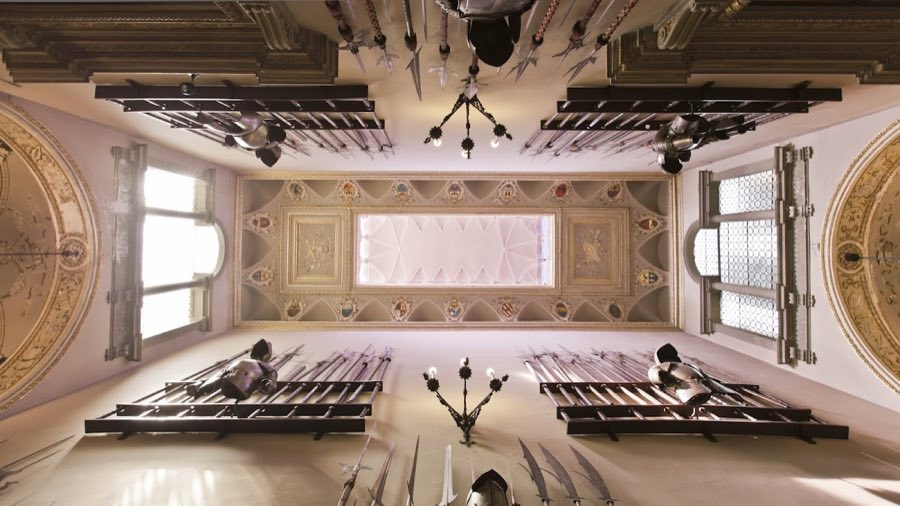
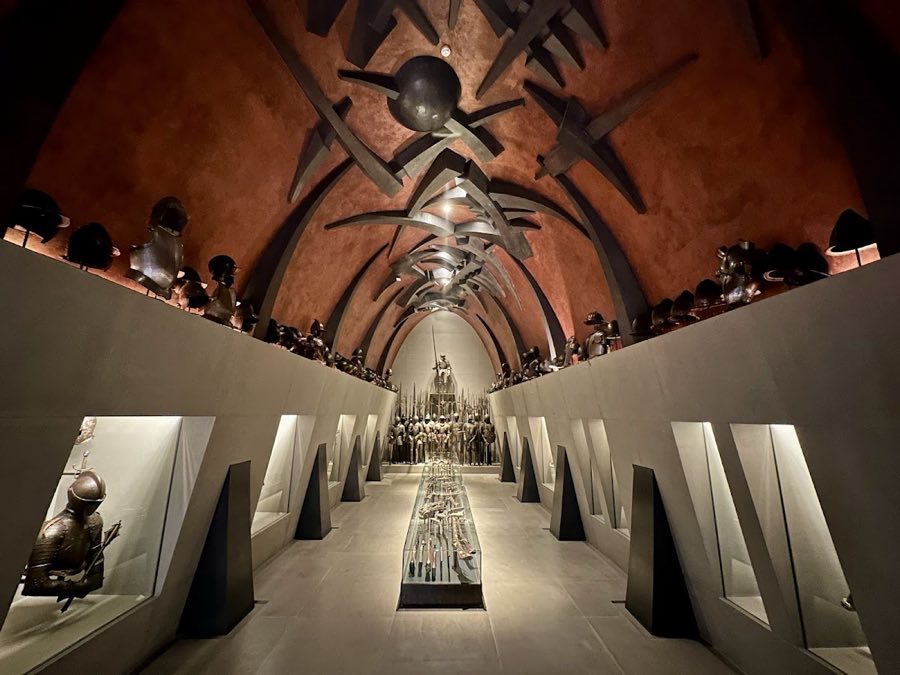
In August 1943 Allied bombing of Milan caused severe damage to the palace and destroyed much of the interior decoration and the original topographic inventory. Most of the artworks had been moved to safety in advance, and after the war the interiors were recreated and the museum reopened in 1951. The museum’s historic armory was reorganized and reinstalled in the year 2000 according to a later design by the sculptor Arnaldo Pomodoro. Today the institution functions as a non‑profit organization (Onlus) governed by a board that includes the city’s director of artistic heritage, delegates from the national ministry of culture, regional and municipal representatives, and an heir of the founding count.
The building presents the layout of a mid‑town noble residence adapted into a house‑museum, with a façade that keeps the late‑classicist treatment applied at the turn of the eighteenth and nineteenth centuries. A small private garden was given a landscaped, picturesque character in the early nineteenth century. Inside, the sequence of rooms was conceived in the mid‑nineteenth century specifically to display collected works and precious furniture rather than to serve only as private domestic chambers.
Beginning in the 1840s the collector had his apartment remodelled in an eclectic manner that drew on Baroque and Renaissance models and evoked fourteenth‑century forms. Each room received a name and a place in a room‑based numbering system that later guided the museum’s first catalogues. A first‑floor space was adapted as an armory and completed around 1850 in a neo‑Gothic manner. A bedroom took inspiration from Lombard Mannerism and a small Dante‑inspired study, the studiolo, was executed about 1853–1856, forming part of a decorative program intended to unify display and setting.
A series of nineteenth‑century interior highlights formed a clear sequence leading from richly furnished salons to a monumental staircase finished in 1857, later enriched with a baroque‑style fountain. Two distinctive parlors, known in the historic arrangement as the Yellow Room and the Black Room, were integral to the display plan. Decorative fittings and painted ornament for several rooms were produced by the workshop circle associated with the museum’s early director and by cabinetmakers and painters active in the same period.
The palace’s original interior decoration and many room fittings were heavily damaged by bombing in August 1943 and were subsequently recreated during postwar reconstruction. Most movable works had been placed in safety before the attack, and restored interiors now present the nineteenth‑century conceived sequence. The armory was reinstalled and reordered at the turn of the twenty‑first century, completing a long history of adaptation that links the collector’s mid‑nineteenth‑century display concepts to the building’s present museum arrangement.
No. 86912
No. 79019
No. 85870
No. 18435
Comments
Comments for Museo Poldi Pezzoli will require a verified account before posting.
We'll send a verification link before your first comment is published.