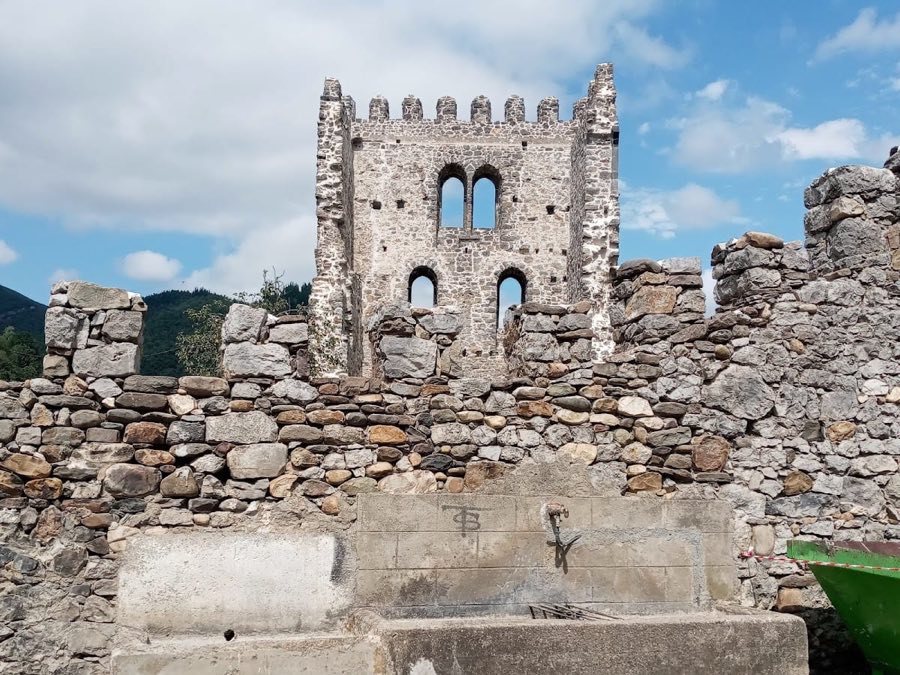
No. 18867
Castle of Soto
Spain
CastleRuin12th century
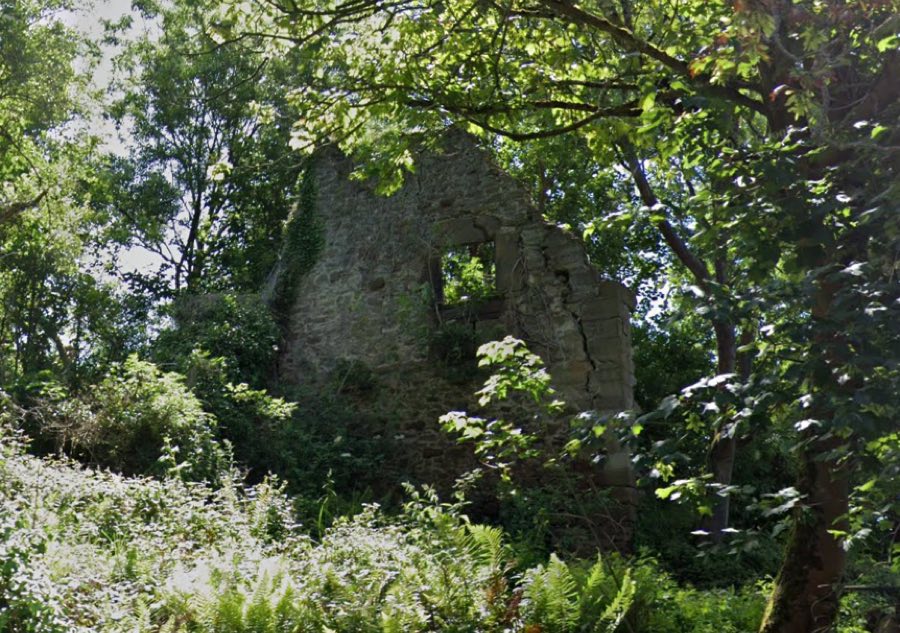
No. 29781
Castle · Spain
No. 29781 · 43.276 N, 5.588 W
Quick summary
Castillo de Campogrande is a castle in Spain with origins associated with the 15th century.
See all castles in SpainCastillo de Campogrande stands in the municipality of San Martín del Rey Aurelio, Spain, and its earliest defensive work is attributed to Roman builders.
A line of watch and defensive towers once ran through the Nalón valley, and the oldest fabric at this site is said to derive from one of those Roman towers. During the medieval period, around the fourteenth century, a castle was established that made use of that earlier fortified position.
Families connected with the estate appear in local records over many centuries. Ancestors of the Fernández Miranda family, coming from the concejo of Quirós, settled first at the Casona del Bravial between the eleventh and twelfth centuries, and in 1496 their descendants moved their residence to the spot later occupied by the castle at La Cabezada; the year 1496 is the last documentary mention of the Fernández Miranda in the surviving record. Later occupants included Garci González and Teresa Fernández de Ciaño, who established the mayorazgo known as the García Argüelles of La Cabezada; that line left no descendants, and their possessions passed to the Fernández Miranda and the Llano Ponte families of Grado.
In the late nineteenth century the ruin was rescued by Álvaro Fernández de Miranda, Viscount of Campogrande, who rebuilt the old casona and made it his home, a reconstruction commonly dated to 1897. That rebuilding added battlements and a tower meant to echo the primitive defensive tower on the site. During the Revolution of 1934 the property was attacked, and it was attacked again during the Spanish Civil War; some testimonies attribute orders to carry out looting of furniture and artworks to the socialist Belarmino Tomás, and later the residence’s library suffered an assault by the rebels. The building remained occupied until the 1970s and was then abandoned; only a few fragments endure.
Damage to the structure has been linked to nearby industrial and road works, in particular exploitation at the San Mamés mine in Sotrondio and the construction of the road to the cemetery, and a heraldic shield that once crowned the battlements, which predated the nineteenth-century rebuilding, fell and disappeared. The town council later produced a reproduction of that shield. In February 2014 the town organized an exhibition titled “El Castillo de Blimea. Historia, leyendas, abandono,” curated by Belén González Collado from documents donated to the Museo de la Memoria (kept at the Casona del Bravial); the exhibition ran from 7 February to 7 March 2014 and was arranged in three parts covering the families, the building’s history, and the shield, and it included bibliographic material, photographs, and local memories.
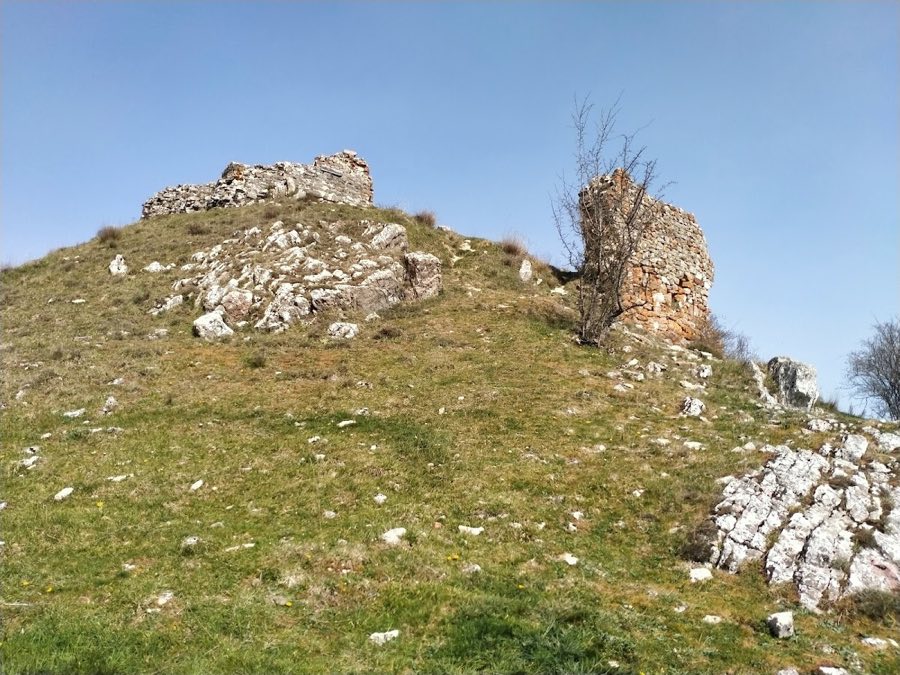
The site occupies a raised position at La Cabezada near Blimea and reflects a sequence of reuse rather than a single construction episode, beginning with a Roman defensive tower, followed by a medieval castle, and later altered in the nineteenth century when a rural manor house was transformed into a castellated residence. What survives today is fragmentary, with only a few portions of the complex remaining in place.
The element identified as Roman served a defensive purpose as part of the valley’s system of towers. Archaeological references link the earliest built fabric directly to that Roman tower and note that the medieval castle was erected using that earlier settlement. These earliest components were later incorporated rather than wholly removed, and the vestiges attributed to that phase now survive in fragmentary form.
The medieval castle, dated to about the fourteenth century, occupied the reworked site and provided the core around which later domestic and noble functions developed. That medieval phase was adapted over time into a noble residence and remained part of the dwelling’s historic layering until the nineteenth-century restoration.
The nineteenth-century intervention by the Viscount of Campogrande converted the existing casona into a residence styled as a castle, adding battlements and a tower designed to imitate the original defensive tower. The building housed a library, which is recorded as having been attacked during the twentieth-century conflicts. A heraldic shield stood on the battlement line before the 1897 rebuilding; it later fell and vanished, and a reproduction was executed by the municipal authorities.
Today the complex exists as ruins, with only limited structural fragments surviving in situ. Historical testimony links damage to nearby mining activity at San Mamés and to works to build the road to the cemetery, and wartime assaults in 1934 and during the Civil War further affected the property. The surviving elements thus bear evidence of long use, nineteenth-century remaking, violent incidents in the twentieth century, and subsequent loss.
No. 18867
No. 38009
No. 99427
No. 31370
Comments
Comments for Castillo de Campogrande will require a verified account before posting.
We'll send a verification link before your first comment is published.