No. 87960
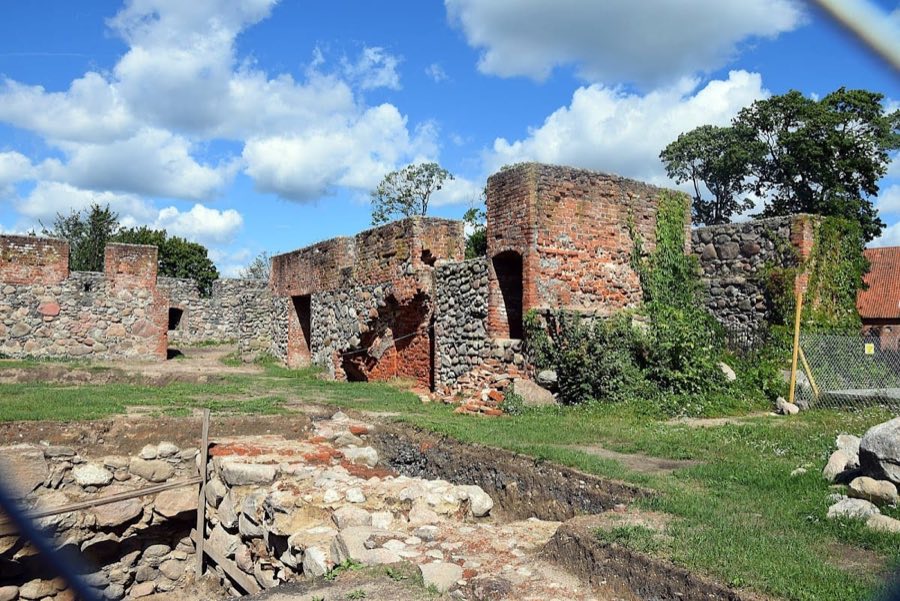
Castle in Szczytno
Poland
CastleRuin19th century
No. 43908
Castle · Poland
No. 43908 · 53.778 N, 20.474 E
For events
Castle of Warmian Bishops in Olsztyn is marked as a château or castle venue lead. Capacity, indoor/outdoor spaces, catering rules, and accommodation options are published only after public verification.
Event types: Private events, Cultural gatherings, Filming and photography
Quick summary
Castle of Warmian Bishops in Olsztyn is a castle in Poland with origins associated with the 14th century.
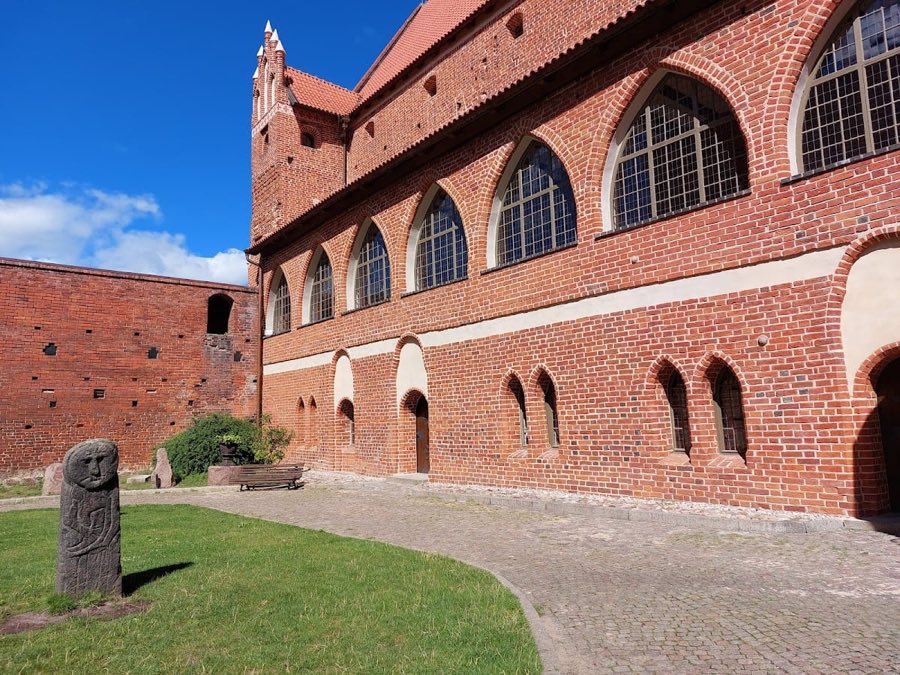
See all castles in PolandThe Castle of Warmian Bishops in Olsztyn, located in the town of Olsztyn in modern-day Poland, was constructed by the Warmian Cathedral Chapter. The chapter, a religious institution of the medieval Teutonic and later Polish eras, built the castle as a fortified residence and administrative center in the mid-14th century.
Construction of the castle began in 1346 and was completed by 1353, replacing an earlier wooden-earth guard post from approximately 1334. This earlier structure stood on a hill overlooking the Łyna River, serving as a lookout and defense point. The new brick Gothic fortress was intended both to protect the chapter’s estates in the region and to provide a residence for its officials managing these properties. The castle remained under the ownership of the Warmian Chapter for over four centuries, until 1772.
During the conflicts between Poland and the Teutonic Order, known as the Polish-Teutonic Wars, the castle played a strategic role. In 1410, during the Polish-Lithuanian campaign against the Teutonic Knights, the castle surrendered to Polish forces without resistance. It was besieged and captured again in 1414 amid renewed hostilities. Later, throughout the Thirteen Years’ War that lasted from 1454 to 1466, the castle changed hands multiple times as both sides fought for control over Warmia and surrounding areas.
One of the castle’s most renowned administrators was Nicolaus Copernicus, who served here from 1516 to 1521. During his tenure, Copernicus organized the castle’s defense during a Teutonic siege in 1521 and carried out important astronomical observations. He created an astronomical table in 1517 which has been preserved to this day. Besides his scientific work, Copernicus wrote economic essays and undertook an inventory of the castle’s archival records.
In the 16th century, the castle became the residence of Warmian bishops who also acted as prominent writers and intellectuals. Among them were Johannes Dantiscus and Marcin Kromer. Around 1580, Bishop Kromer consecrated the Chapel of Saint Anne within the castle grounds, adding a religious dimension to its use.
Over time, the castle’s defensive importance decreased. In 1758, a new palace wing was constructed with an entrance opening toward the town, while many of the original fortifications were dismantled. Following the First Partition of Poland in 1772, the castle passed under Prussian state ownership. It was adapted for various secular purposes, including housing an evangelical parish.
In 1807, during the Napoleonic Wars and specifically the Eylau campaign, Napoleon Bonaparte himself stayed at the castle. This event highlighted the site’s lingering strategic relevance in European military affairs.
Between 1901 and 1911, extensive renovation works transformed the castle into the seat of the regional president. These works involved changing the floor levels and incorporating neo-Gothic elements, reflecting architectural tastes of that period.
Since 1921, the castle has served as a museum dedicated to the history and culture of Warmia and Masuria. It contains archaeological and ethnographic collections, alongside artworks, and hosts cultural events such as the Olsztyn Artistic Summer. The castle was officially recognized as a historic monument in 1953 and was designated a national historic monument in 2023. Notably, in 2010, the remains of Copernicus were temporarily placed here prior to reburial in Frombork. The castle’s cultural significance was also commemorated on a Polish postage stamp issued in 1971 that celebrated Copernicus’s legacy.
The Castle of Warmian Bishops in Olsztyn is a Brick Gothic structure arranged around a rectangular courtyard. Its original design featured a single main wing on the north-east side, with two-story cloisters facing the courtyard. In the 15th century, an additional south-west wing was constructed, expanding the living and administrative space.
Defensive features of the castle included thick fortification walls encircling the complex, strengthened in the early 16th century by raising their height to about 12 meters. A second, lower wall with bastions was added to enhance protection. Surrounding these walls was a ditch connected to the nearby Łyna River, which functioned as a water-filled moat. Access from the river side was provided by a bascule or drawbridge, allowing controlled entry.
A distinctive tower stood at one corner of the courtyard—sources vary on its exact location but agree it dates from the 14th century. Rebuilt in the early 16th century, this tower was transformed into a circular form set on a square base, rising approximately 40 meters tall. Its conical roof was removed in 1821 but later restored in 1926, maintaining its historic silhouette.
Inside, two halls display notable architectural vaulting techniques. The refectory and the administrator’s chamber are decorated with diamond, also called crystal, vaults dating from around 1520. These intricate ceiling structures add artistic character and demonstrate advanced masonry skills of the period. The Chapel of Saint Anne, consecrated near 1580 by Bishop Marcin Kromer, is adorned with a star-shaped vault, enriching the castle’s religious spaces.
Nicolaus Copernicus’s living quarters were situated in the north-east wing in a large room featuring windows with views over the Łyna River, the inner courtyard, and the adjacent mill. These rooms originally had low ceilings with crystal vaults. During later renovations, floors in parts of the castle were lowered, changing the spatial proportions within these chambers.
The castle’s defensive works were partially integrated with the town’s outer walls, effectively forming a bastion guarding the entrance to Olsztyn. By 1845, significant changes occurred: the original drawbridge was removed and replaced by a levee that connected the castle directly to the town, and the ditch was drained, marking the castle’s transition from fortress to a more civilian role.
During early 20th-century renovations, floor levels in the refectory were raised, and the cloisters were outfitted with window frames to improve usability and comfort. A neo-Gothic staircase was added, blending historic style with contemporary design trends of the period.
Today, the castle remains well-preserved and continues to host permanent exhibitions. Among these is a dedicated Copernican exhibition displayed within the cloister and the former administrator’s chamber, featuring the original astronomical table crafted by Copernicus in 1517. This artifact connects the site directly to one of history’s most influential astronomers and showcases the castle’s role as both a defensive stronghold and center of scientific inquiry.
No. 87960
No. 28903
No. 61818

No. 32081
Comments
Comments for Castle of Warmian Bishops in Olsztyn will require a verified account before posting.
We'll send a verification link before your first comment is published.