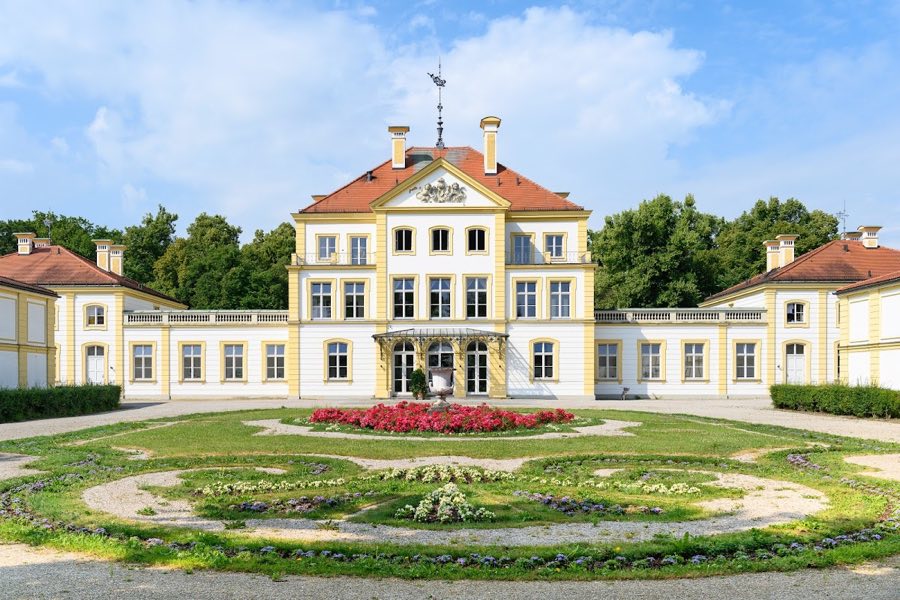
No. 55421
Fürstenried Palace
Germany
PalaceRestored18th century
No. 40118
Château · Germany
No. 40118 · 48.160 N, 11.590 E
For events
Castle Suresnes, Munich is marked as a château or castle venue lead. Capacity, indoor/outdoor spaces, catering rules, and accommodation options are published only after public verification.
Event types: Private events, Cultural gatherings, Filming and photography
Quick summary
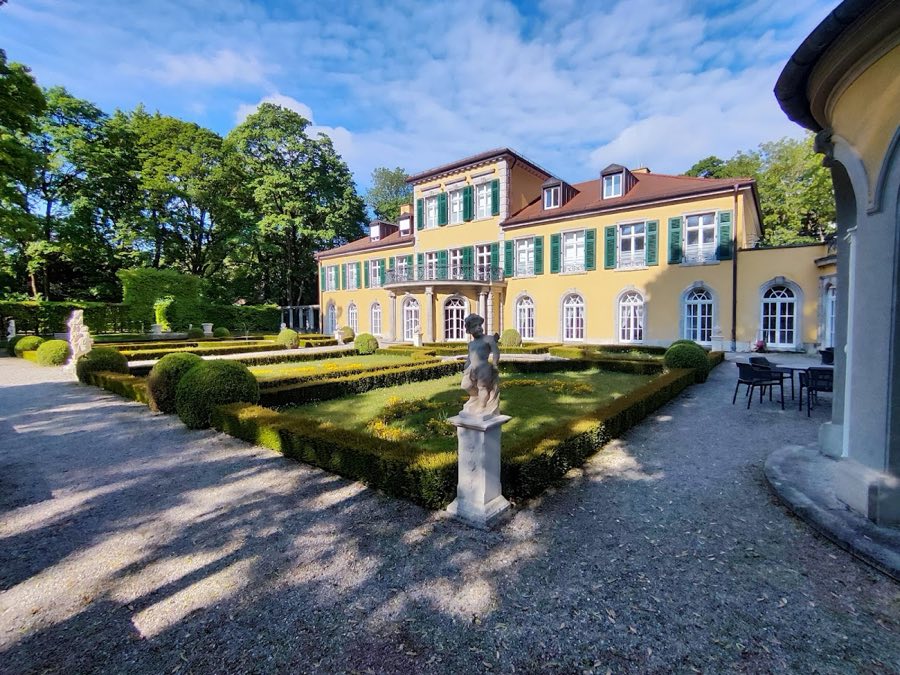
Castle Suresnes, Munich is a château in Munich, Germany with origins associated with the 18th century.
See all castles in GermanyCastle Suresnes in Munich, Germany is an early 18th-century French‑inspired small château built for a senior official of the Electorate of Bavaria between 1715 and 1718. Its design follows a Parisian model, reflecting the taste for French country houses among Bavarian court circles after the Elector’s period in exile, and the house quickly became a notable private residence in the Schwabing area.
From the mid-18th century the property passed through many private hands. Named owners after 1756 include Johann Leopold Ignatius Freiherr Manteuffel and his wife Maria Clara, Maria Theresia Caroline, Countess von Preysing‑Moos, Friedrich Reichsgraf von Vieregg, Wilhelm Friedrich von Jordan, Ludovica, Reichsgräfin von Kesling, the court appraiser Franz Xaver Haslinger, and Ferdinand von Döllinger. During the early 1800s the house fell into neglect before being bought in 1823 by Friedrich Wilhelm von Jordan, a royal Bavarian chamberlain and lieutenant general; he disposed of the property again in 1839.
Members of the Jordan family maintained links with the house into the 19th century. Mathilde von Jordan is reported to have spent part of her youth there and was portrayed in 1837 for King Ludwig I’s Gallery of Beauties. In 1855 the residence was occupied by Carl August von Steinheil, and the sculptor Elisabet Ney lived and worked at the house in 1869–1870. By the late 19th century the small château had become a favored meeting place for young artists.
In the turbulent years around the First World War the building accommodated artists and politically engaged figures. Painter Hans Reichel took an atelier apartment there in 1918 and became a friend of Paul Klee; Klee used an atelier in the house for three months and is reported to have rented space there until his appointment to teach at the Bauhaus in October 1920. During the short-lived Munich Soviet Republic, Hans Reichel concealed the left‑wing revolutionary writer Ernst Toller in his apartment; Toller had lodged there from May and was arrested on the morning of 4 June 1919 after a denunciation.
At the end of the 1940s the house served as the final workplace of Leo Samberger. The Archdiocese of Munich and Freising acquired the property in 1937, and from 1967 it has been used as the conference centre of the Catholic Academy of Bavaria. The building later served as the residence of Archbishop Reinhard Marx until renovations to the episcopal palace were completed in 2012. The site is listed as a protected architectural monument of Schwabing under file number D‑1‑62‑000‑7428.
The house stands as a compact, two‑storey building with an overall ground plan of roughly 10 by 15 metres, reflecting its origin as a small private château of the early 18th century. The front is organised into nine bays (bay, a vertical division of a building’s facade), with a central projection that rises an extra storey across three of those bays, giving the entrance a vertical emphasis that dates to the original build period.
On the garden side the central projection carries a one‑storey rounded projecting bay, a curved external room that serves as a terrace for the first upper floor. The structure sits within a park of about one hectare, and directly behind the house a formal French garden measures approximately 20 by 40 metres. The building survives in standing condition and continues in institutional use within its park setting, while the parcel and house remain protected under the municipal monument filing noted above.
No. 55421
No. 11948
No. 66555
No. 90537
Comments
Comments for Castle Suresnes, Munich will require a verified account before posting.
We'll send a verification link before your first comment is published.