
No. 13401
Château du Haut Rosay
France
ChâteauIntact17th century
No. 11463
Château · France
No. 11463 · 48.992 N, 1.793 E
Quick summary
Château d'Issou is a château in France with origins associated with the 18th century.
See all castles in FranceChâteau d’Issou in Issou, France, is an early 18th-century classical-style château built by French noble owners on the footprint of an older medieval stronghold. The place has a continuous recorded history from a late medieval fortress erected around 1399 through major rebuilding in the 1700s, and it served at times as a fashionable residence for high-ranking figures and diplomatic visitors.
A fortified house stood here by the end of the 14th century. In the 1500s that medieval stronghold was replaced by a feudal manor; only traces of a square defensive tower and a round pigeon house survive from that phase. From the 1400s into the 1600s the fief belonged to the De Dampont family, and one member of the family served as governor of the town of Pontoise in 1612. In 1665 Nicolas de Dampont, who left no heir, sold the estate to his son-in-law Charles de Gaillarbois.
During the early 1700s the property changed hands several times. It passed in 1720 for 160,000 livres to François‑Gédéon de Giffart and was resold on 3 August 1724 for 70,000 livres to Pierre‑François de Seré de Rieux, an officer of the French Guards. Soon after his marriage, Pierre‑François commissioned the present classical-style château. The recently completed house was transferred in 1728 to François‑Nicolas Fillion de Villemur, receiver general of finances in Paris.
Further sales followed: the château was sold in 1743 to Claude Pierre, marquis de Sabrevois, and in 1751 it became part of the holdings of the Duke of Bouillon, whose representative Charles‑Godefroy de la Tour d’Auvergne used Issou as a residence visited by ambassadors and by Madame de Pompadour. In 1764 the marquis de Mathan bought the property and kept it until his death in 1790. The estate passed through five owners after the revolution before being acquired in 1850 by Boreel de Mauregnault, chamberlain to the King of Holland.
Under nineteenth-century ownership the house was enlarged and raised with two pavilions in 1857. Auctioned in 1865, it was purchased in 1873 by Gaston‑Marcellin Dejean (Vicomte de Jean), who later served as mayor of Issou from 1884 to 1892. In 1903 Paul and Marie Chaperon bought the château, carried out a full renovation that year, installed electric power, and established a chemistry and photography workshop using the new film method developed by Georges Balagny. In 1904 Marie Chaperon acquired the final lot of orange trees from the Hôtel Héron de Moulins, a feature visible in contemporary photographs.
German forces requisitioned the property during the Second World War. The Chaperon family kept legal title until Marie Chaperon’s death in 1976; she bequeathed the estate to an association, and the commune of Issou later took definitive ownership. With limited municipal funds the house fell into neglect. In September 2018 the château was selected among sites eligible for proceeds from the national Heritage Lottery and received a €50,000 transfer via the Stéphane Bern mission, money that paid for a waterproof tarpaulin and the protection of openings. The château is listed on the project roster of the Fondation du patrimoine. Filmmakers have also used the site: parts of the film Camille Claudel were shot there in 1987, and later productions including Le Pacte des loups and many short films employed the estate as a location.
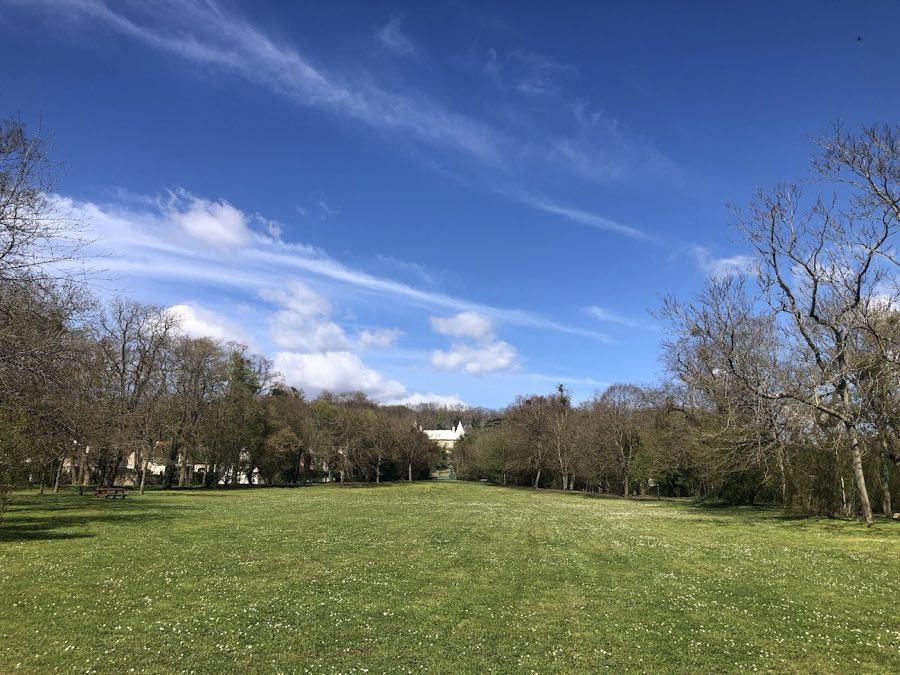
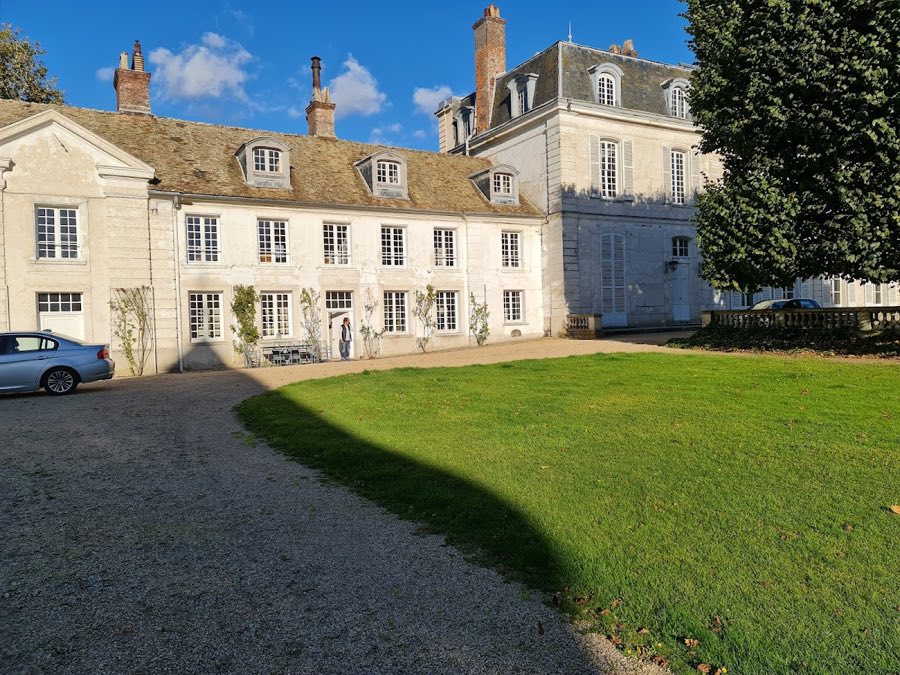
The present building reflects the early 18th-century classical plan that replaced the earlier manor, and the house underwent an interior and exterior renovation in 1903 intended to evoke eighteenth-century taste. The park surrounding the château covers about eleven hectares and has been registered with the departmental heritage authorities since 1974. Mid-nineteenth-century alterations enlarged the house and added two pavilions above the main block.
Elements surviving from the sixteenth-century manor include fragments of a square tower and a round dovecote (pigeon house). These vestiges are the tangible links to the site’s feudal past. The dovecote is associated in local tradition with Madame de Pompadour and bears the motto Horas Non Numero Nisi Serenas, translated as “I count only the serene hours.”
The building’s physical condition is presently very poor. Floors have collapsed, the roof leaks, the façades show pronounced cracking, and window openings are broken. Conservation actions recorded in recent years include the comprehensive 1903 renewal that introduced electricity and a photographic chemistry workshop, and the 2018 emergency measures paid for with a €50,000 transfer, which provided a protective tarpaulin over the roof and secured the openings to limit further weather damage.
No. 13401
No. 85787
No. 90375
No. 59435
Comments
Comments for Château d'Issou will require a verified account before posting.
We'll send a verification link before your first comment is published.