No. 11463
Château d'Issou
France
ChâteauIntact18th century

No. 13401
No. 13401 · 48.913 N, 1.680 E
Quick summary
Château du Haut Rosay is a château in France with origins associated with the 17th century.
See all castles in FranceThe Château du Haut Rosay stands in Rosay, France, and was built by French hands in the 17th century.
The settlement at Rosay is recorded as the seat of a castellan in 1036, and a fortified castle on the slope above the Vaucouleurs valley is reported to have played a military role during the Anglo‑Norman campaign led by William the Roux in 1098. Over the centuries the locality was divided into separate lordships, known as Bas Rosay and Haut Rosay.
In 1513 the lordship of Bas Rosay passed into the Courtin family by the marriage of Jean Guillaume I Courtin to Geneviève du Bois. The two parts of the estate were reunited in 1597 when Jean III Courtin acquired the remainder of the seigneurie; he was later recorded as a knight and as a royal councillor in 1612. In early 1615 Jean III gave his eldest son François permission to build a château described as a fortified house enclosed by ditches, following a long‑standing plan whose design has been linked to mid‑sixteenth‑century architectural engravings.
Around 1660 Nicolas François Courtin carried out additions, inserting small turrets and creating the surrounding park. In 1671 Louis XIV raised the fief, together with that of Villette, to the marquisate of Rosay‑Villette in favor of François Briçonnet, president of the Paris Parlement and heir to the Courtin line by marriage.
Later owners continued to reshape the estate. René‑Joachim de Chénedé, marquis de Rosay‑Villette, undertook significant works to the outbuildings and added a castle chapel dedicated to Saint Anne, which was blessed on 26 July 1719, and a large dovecote erected in 1721. The property passed in 1748 to Charles Savalette, a fermier général; some works of this period are associated with the architect François II Franque. In 1760 Jacques‑Louis de Brétignières acquired the domain and commissioned interior fittings from Denis Antoine, who also helped transform the grounds into a picturesque garden filled with ornamental structures over a period of roughly forty years, into the early decades of the nineteenth century.
The estate later belonged to Marie Charlotte de Brétignières du Rosay (1756–1833), vicomtesse de Tourdonnet by marriage to Jacques Georges de Joussineau de Tourdonnet (1748–1829). A private family purchased the property in 1896. The château and its park, together with their commons, dependencies, ornamental constructions, moats, terraces, boundary walls and the recorded hydraulic arrangements, received legal protection as a listed site in 1946 and were classified as historic monuments on 19 February 1992.
The château occupies a raised platform and presents a compact, rectangular massing built principally of brick with stone dressings at the corners. The main residential block sits within a defensive arrangement formed by four projecting bastions placed at the platform’s angles and a surrounding dry moat, a composition that reflects the building’s fortified intentions when it was constructed.
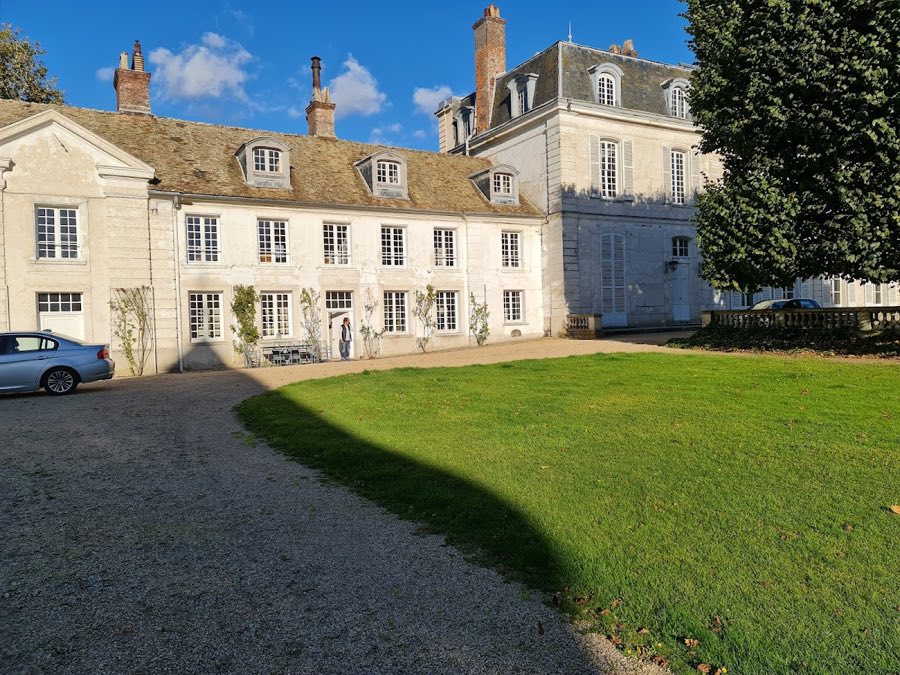
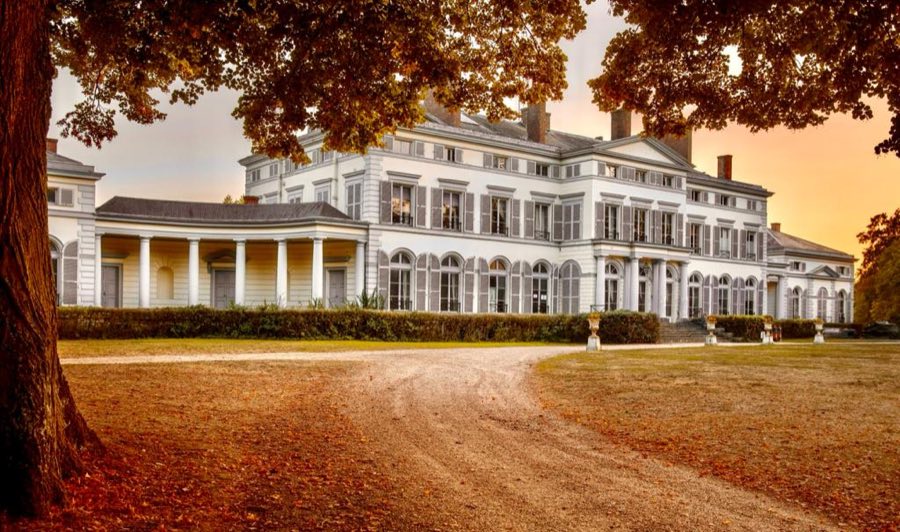
The principal house is a simple, rectangular block flanked by two pavilions that step back on the garden side, creating a subtle change in the façade line. The walls show the deliberate contrast between clay brick and stone quoins at the corners, and small turrets added around 1660 punctuate the silhouette above the roofline, marking that later campaign of works.
Beyond the main building, a range of dependencies and estate features survive in the recorded plan. A castle chapel dedicated to Saint Anne was completed and solemnly blessed on 26 July 1719, and a substantial dovecote was built in 1721. The grounds contain commons, service buildings and a series of ornamental constructions installed during the late eighteenth and early nineteenth century transformation of the park into a picturesque garden. Terraces, boundary walls and formal arrangements for water management are documented within the estate’s mapped parcels (cadastre B 189–198).
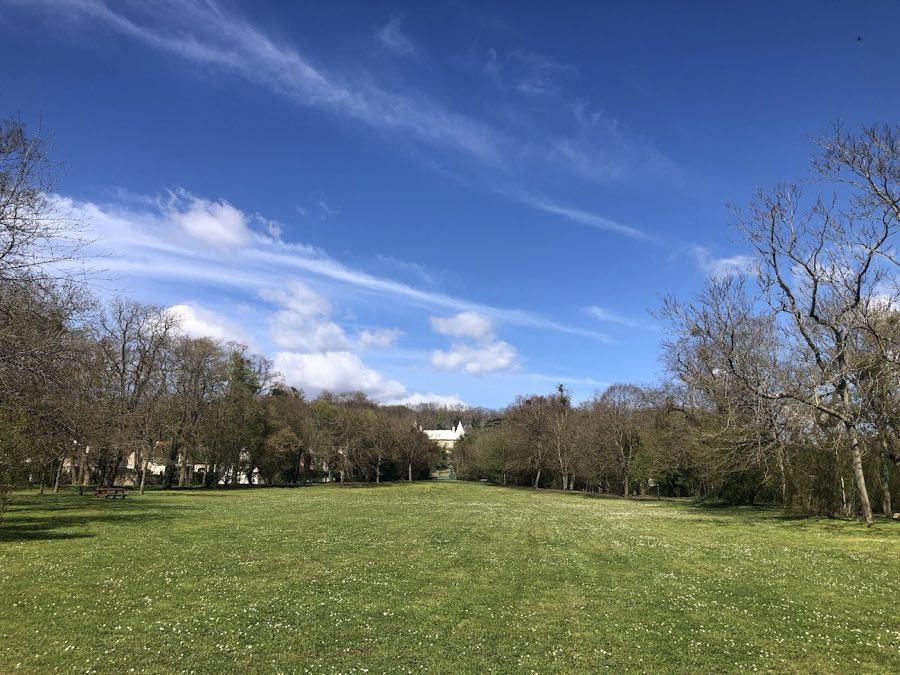
The park reflects the long phase of landscaping led by Denis Antoine, which introduced numerous garden follies and reimagined the setting over several decades. The ensemble of house, park and associated outbuildings is formally recognised under heritage protection: the site was placed on the official list in 1946 and received classification as a historic monument on 19 February 1992.
No. 11463
No. 59435
No. 35395
No. 69785
Comments
Comments for Château du Haut Rosay will require a verified account before posting.
We'll send a verification link before your first comment is published.