No. 64743
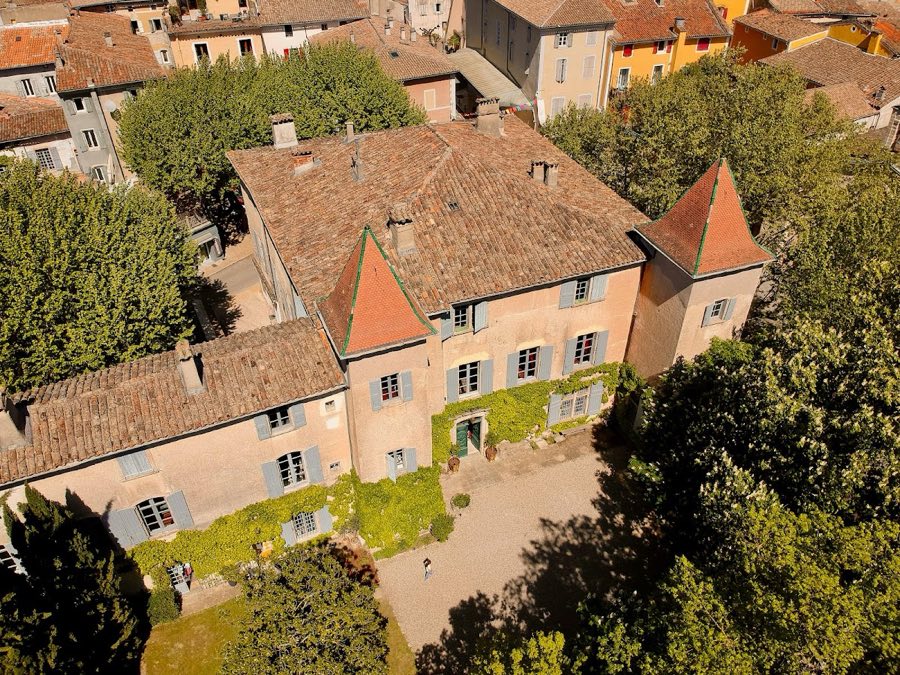
Castle of Saint-Jean-du-Gard
France
CastleRestoredFor events14th century
No. 57324
Château · France
No. 57324 · 44.168 N, 3.840 E
Quick summary
Château de Cambiaire is a château in France with origins associated with the 14th century.
See all castles in FranceThe Château de Cambiaire in Saint-Étienne-Vallée-Française, France, is a medieval seigneurial residence begun in the 14th century by members of the Raymond family, local feudal lords. Construction started in 1366 under Bernard and Pierre de Raymond de Calberte with the permission of the viscount of Beaufort, who also held the title count of Alais. The building’s towers and battlements served as visible signs of lordship, marking the site as a seat of local authority rather than as a major military fortress.
Work on the site continued through the later Middle Ages. In 1392 the castle’s castellans purchased part of the local rights of justice and thereby became co-lords of Saint-Étienne, extending the household’s legal and administrative reach. The square tower and early domestic levels date to this period, and the property remained in the Raymond family line for several centuries.
Ownership passed by marriage into the Cabiron family during the 18th century. In 1746 the Raymond heiress married the marquis Borelly de Roqueservières, who still held the property in 1789. During the revolutionary year 1792 tenants, by force of arms, forced the marquis to return feudal titles and to reimburse levies he had continued to collect; despite this violent confrontation the château itself did not suffer physical damage at that time. A later descendant, Jeanne de Cabiron, married General Jean Joseph Alexandre Amédée de Cambiaire, and the house came to bear his family name.
From 1873 Jeanne de Cabiron initiated a restoration that embraced a neo-medieval appearance. Work included the addition of a small church dated to 1875 and a constructed grotto modeled on the Lourdes site; the grounds became a place for pilgrimages and Catholic gatherings for several decades. On 7 April 1944 the château served as the headquarters of the Bir-Hakeim maquis, a local unit of the French Resistance. On 8 April 1944 German troops, assisted by a company of GMR, burned the building in reprisal for local deaths. The fire consumed most of the older furnishings, including the library, and the house stood in ruin for several years. The last baron of Saint-Étienne sold the damaged estate and subsequent owners rebuilt the structure closely following its previous form, though the southern corner turrets lost their earlier slender profiles.
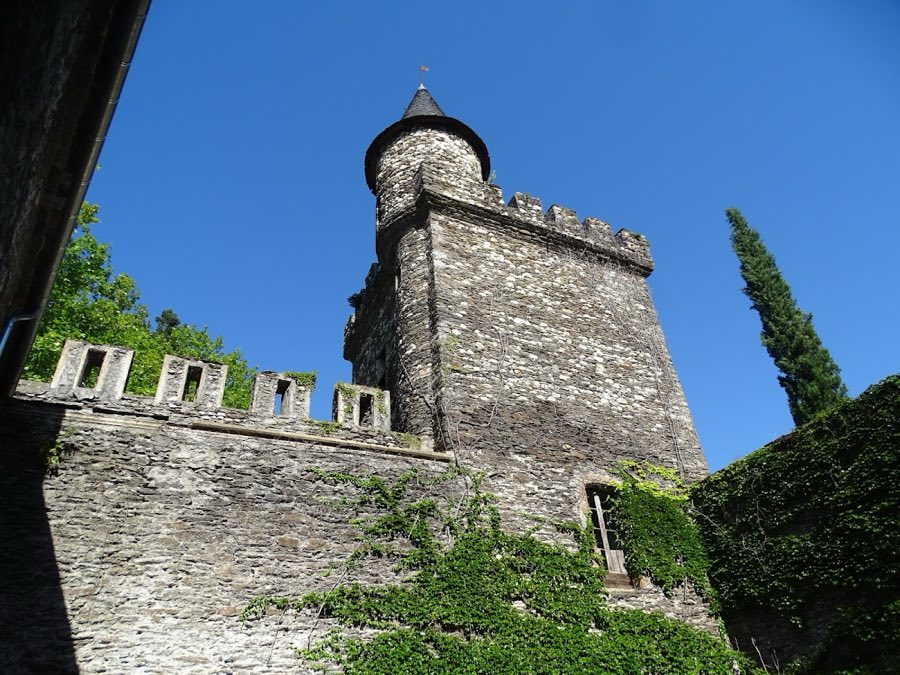
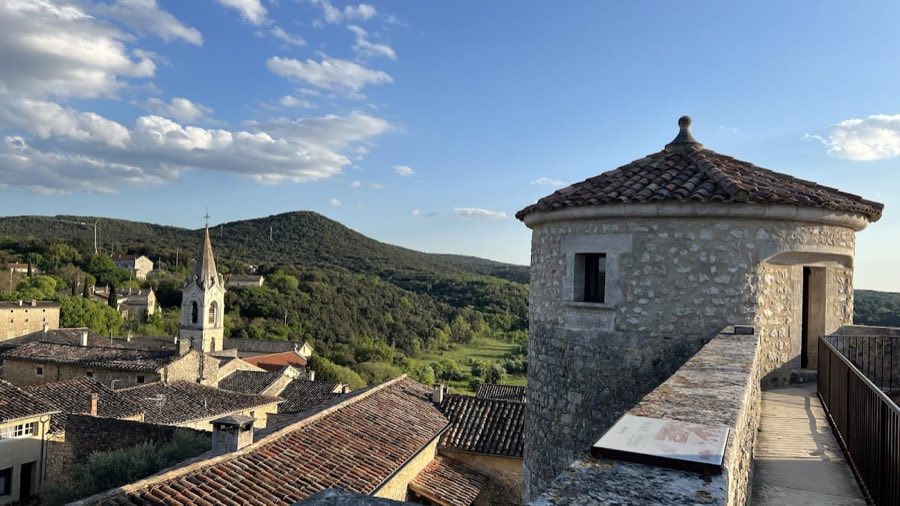
The layout presents a roughly rectangular plan composed of three wings set around an inner courtyard, closed on the west side by a battlemented outer wall pierced by a single entrance portal. At three corners a circular tower rises, while a square tower occupies the north‑west angle. A large battlemented tower serves as the keep (main tower) and is topped on its roof terrace by a small watch turret with a pepperpot roof.
The oldest masonry survives in the square tower, built of local schist mixed with white quartz. That tower has three storeys; the first and second storeys date to the 14th century, while the uppermost level and the spiral staircase were added in a raising carried out in the late 15th century. One ground-floor level in the domestic wings likely belongs to the same medieval phase as the keep, while other ground-floor levels show later interventions.
Later changes are visible in materials and plan: the late 19th-century restoration produced neo-medieval interior and exterior treatments and added the chapel (a small church) dated to 1875, and the constructed grotto replicating the Lourdes site sits within the planted grounds. Repairs after the 1944 conflagration altered rooflines and other details; subsequent reconstruction followed the former appearance closely, though the southern turrets lost their original slender form. The park around the house contains mature chestnut and cedar trees planted in the 19th century and later, and the restored buildings stand today with much of their historic plan and the later nineteenth‑century additions retained. The large tower is notable for its decorative, rather than purely military, character, and the house was not used as the fortified castle of Saint-Étienne.
No. 64743
No. 16653
No. 28359
No. 11836
Comments
Comments for Château de Cambiaire will require a verified account before posting.
We'll send a verification link before your first comment is published.