No. 18413
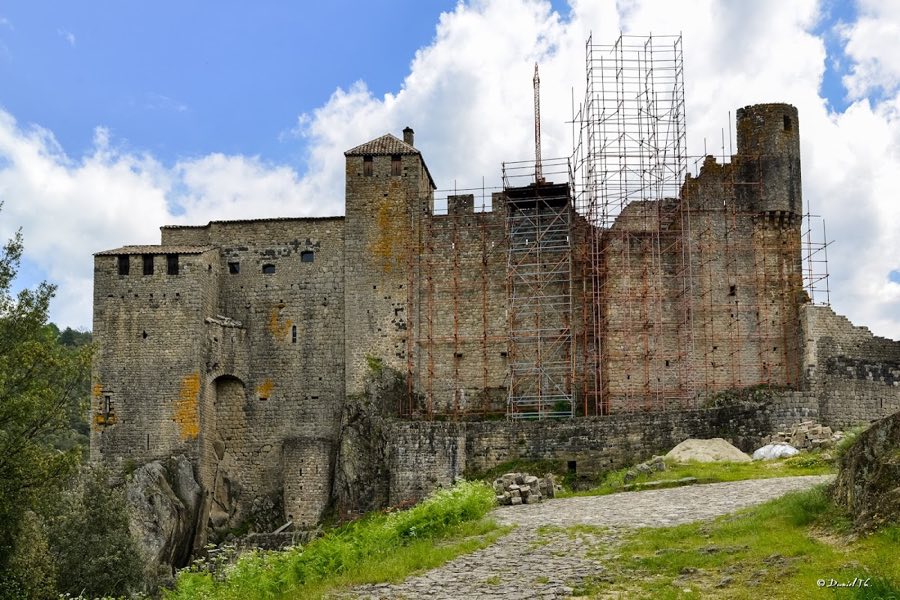
Château de Ventadour
France
ChâteauRuin12th century
No. 11836
Château · France
No. 11836 · 44.352 N, 4.401 E
Quick summary
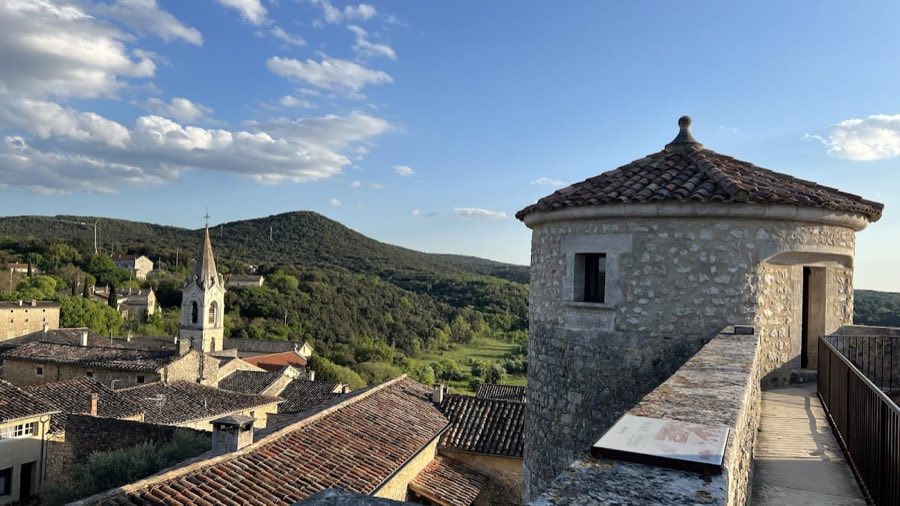
Château des Roure is a château in France with origins associated with the 11th century.
See all castles in FranceThe Château des Roure is situated in the village of Labastide-de-Virac in present-day France. Its origins trace back to the medieval period when it was initially constructed by local feudal powers.
The earliest form of the site was a square tower fortress erected in the 11th century. This stronghold was established to oversee and control the important route passing through the Pont d’Arc area, a key passage in southern France. During the late 14th century, this initial fortification was replaced by a new castle, built on the same site. The Beauvoir de Grimoard du Roure family owned the estate at this time, reflecting the feudal landscape of the era.
In the 16th century, the property came into the hands of Philippe Sautel, lord of Barjac. His son Claude constructed a fortified house called Roure, which took its name from a matrimonial alliance with the Beauvoir du Roure family. This reflects the common practice of strengthening territorial claims and alliances through marriage among noble families.
The castle gained notable importance during the turbulent years of the French Wars of Religion in the late 16th and early 17th centuries. The château was owned by the Duke of Rohan, a prominent Huguenot (French Protestant) leader, who resided there in 1628. However, following the conflict and the policy of consolidating royal power, King Louis XIII and his chief minister Cardinal Richelieu ordered the removal of the castle’s defensive features in 1629, including its machicolations (stone openings through which defenders could drop objects), watchtowers, keep, and the protective walls surrounding the adjacent village.
After the revocation of the Edict of Nantes in 1685, which ended official tolerance for Protestants, the count of Roure converted from Protestantism to Catholicism, mirroring the broader religious shifts imposed by the French monarchy.
The castle also became entwined with the Camisard uprising of 1703, a Protestant rebellion in the Cévennes region. Jean Cavalier, one of the rebellion’s leaders, captured the Château des Roure and set fire to the village church, underscoring the area’s continued significance in religious conflict.
Transitioning from medieval stronghold to agricultural estate, the Beauvoir du Roure family sold the castle in 1825 to the Pradier family. The new owners repurposed the site into a large magnanerie, a silk farm for breeding silkworms. This enterprise grew to become one of the most important in the region but went into decline after the First World War.
In the late 20th century, the descendants of the Pradier family opened the site to the public in 1975. The château was designated as a historic monument in 1978, formalizing efforts to preserve its notable features. Subsequent restoration projects between 2013 and 2016 rebuilt key elements of the castle’s medieval fortifications. A replica trebuchet was installed in 2018, and a medieval-themed park was established nearby, continuing the site’s long legacy of adaptation and cultural significance.
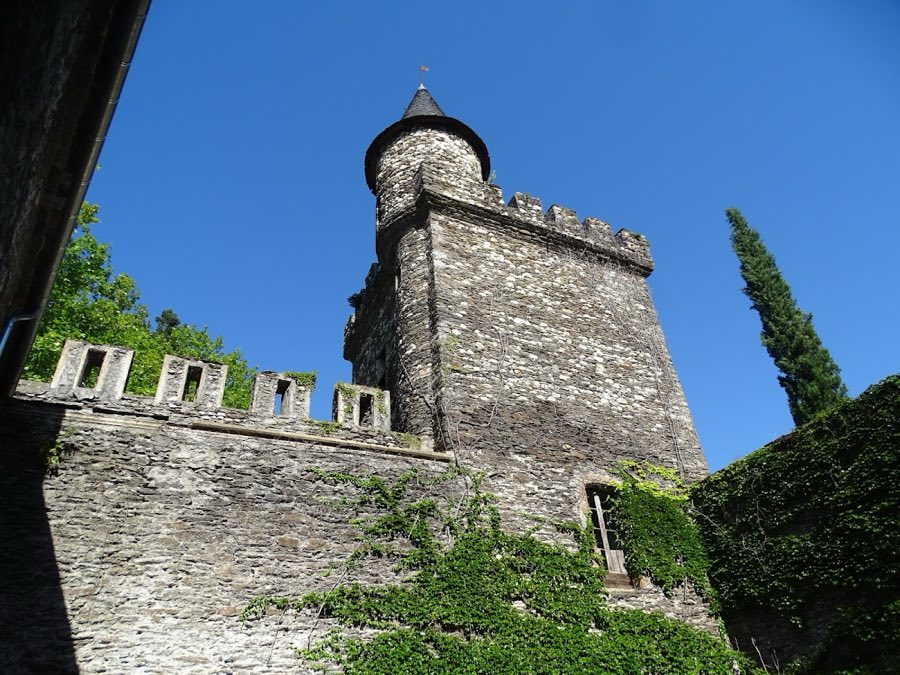
The Château des Roure is a solid quadrangular fortress, notable for its robust medieval construction. Its layout includes two round towers capped with distinctive orange tile roofs and two smaller watchtowers known as échauguettes, which provided elevated vantage points for observation and defense. These features frame the battlemented walkway, or chemin de ronde, allowing defenders to patrol the upper perimeter. At the center of the castle stands the keep, or donjon, originally designed as a stronghold and last line of defense.
Within the castle, a large spiral staircase connects the floors, demonstrating skilled masonry and design typical of the period. The interiors also display French-style ceilings, likely reflecting Renaissance influence, and a grand fireplace, which served both practical and social functions. These features have been carefully preserved as part of the castle’s historic character.
Many of the castle’s defensive structures, such as the machicolations, watchtowers, and central keep, suffered destruction in the 17th century by royal order. However, extensive restoration efforts in the early 21st century reconstructed these crucial elements, restoring the fortress’s original silhouette and defensive appearance.
The castle is closely integrated into the village fabric, with houses built directly around it. This arrangement not only reflects the typical medieval pattern of settlement clustering but also served as an additional layer of defense, forming a natural barrier.
Adjacent to the main fortress is a magnanerie, historically used for silk production by raising silkworms. This building remains maintained today for educational and cultural purposes, preserving the heritage of the site’s later economic role.
As part of the modern reinterpretation of medieval life, a full-scale replica trebuchet was constructed and placed at the base of the castle in 2018. This siege engine is representative of medieval military technology and complements the nearby medieval-themed park, enhancing the historical narrative of the château.
Protected elements of the site include the castle’s facades, roof structures, interior courtyard, staircases, and fireplaces, which are preserved under its official historic monument designation. These features collectively illustrate the château’s evolving role from feudal fortress to manor house, silk farm, and heritage landmark.
No. 18413
No. 57324
No. 64743
No. 51007
Comments
Comments for Château des Roure will require a verified account before posting.
We'll send a verification link before your first comment is published.