No. 59435
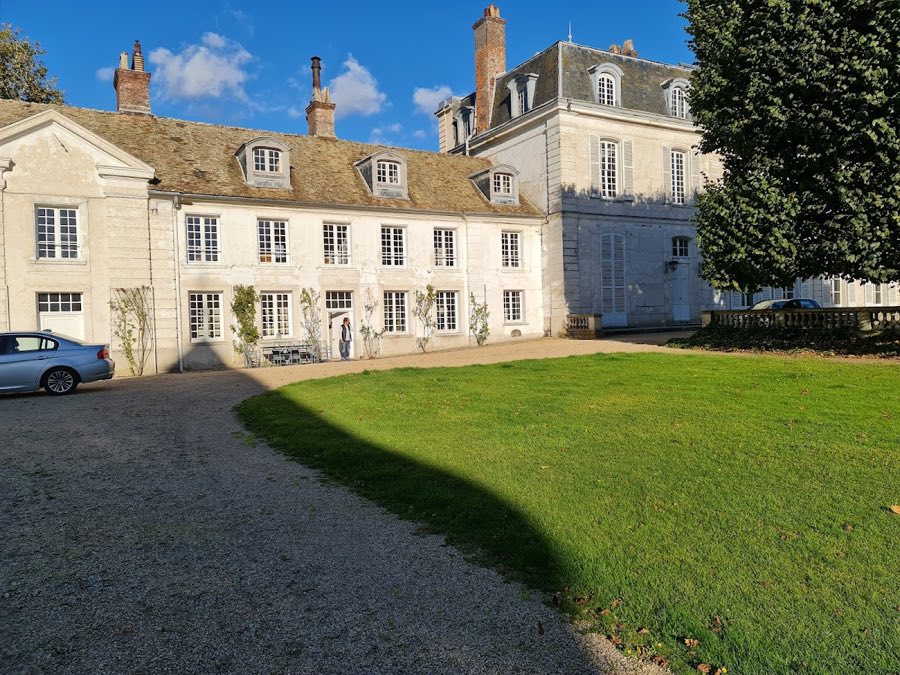
Château de Millemont
France
ChâteauIntact16th century
No. 35395
Château · France
No. 35395 · 48.779 N, 1.821 E
For events
Château de Groussay is marked as a château or castle venue lead. Capacity, indoor/outdoor spaces, catering rules, and accommodation options are published only after public verification.
Event types: Private events, Cultural gatherings, Filming and photography
Quick summary
Château de Groussay is a château in France with origins associated with the 19th century.
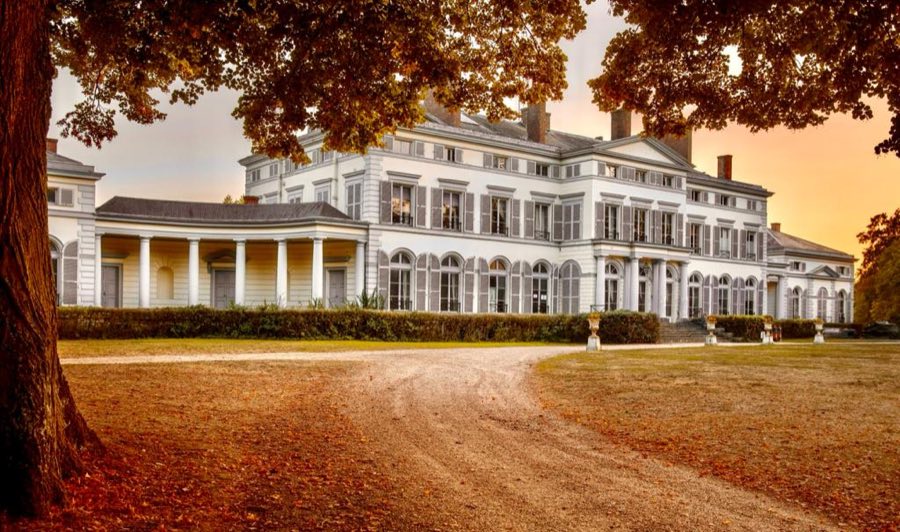
See all castles in FranceChâteau de Groussay in Montfort-l’Amaury, France, is an early Restoration château built in 1815 for Henriette Adélaïde du Bouchet de Sourches, duchess of Charost, and erected within the culture of the French aristocracy of the period. Constructed at the end of the Napoleonic era and completed around 1823, the house gained significance as a private country seat linked to figures connected with the pre‑revolutionary royal household and later as a site of extensive mid‑20th‑century transformation and cultural use. Its layered history reflects both nineteenth‑century aristocratic residence and a twentieth‑century reinvention that shaped the present park and interiors.
The first documented phase centers on the family who commissioned the house. Louise Élisabeth de Croÿ, the duchesse de Tourzel, returned from London to live at Groussay after accompanying the royal family during their attempted flight and died at the château in 1832 at the age of eighty‑two. Henriette, known as Madame de Chârost, oversaw construction and occupancy; records give two different dates for her death, one noting 1835 and another 1837. A notice from 1837 states that she was buried in the cemetery of Montfort-l’Amaury and that she had built an orangery to shelter Mediterranean shrubs.
Ownership shifted in the middle of the nineteenth century. In 1843 the comtesse Julie de Pahlen acquired the domain following the death of her husband, Pierre Antonin Perry, and she received the emperor and empress at Groussay during her tenure. The estate passed in 1873 to Henriette Dufour d’Hargeville, who was the wife of Prince Soltikoff.
A decisive transformation began in the late 1930s when the property was purchased in 1938 (dates given variously as 1938–39) by Charles de Beistegui, also referred to in some accounts as Carlos de Beistegui. He enlarged and reshaped the house with professional collaborators and went on to alter the grounds and add theatrical and decorative features after 1945. Major garden constructions and park follies were created roughly between 1949 and 1970. Beistegui opened an Italian‑style theatre at the château in 1957 with a performance of Marcel Achard’s L’Impromptu staged by the Comédie‑Française company. He also commissioned interior watercolours from a painter; two series, one showing arrangements at Groussay and another commemorating a 1951 ball, were published together in 1956 as paired albums.
After Beistegui’s death in 1970 the estate passed within his family, first to his brother and then to his nephew Juan de Beistegui. In 1999 the château was sold to the television producer Jean‑Louis Remilleux and many of the movable furnishings were dispersed through a multi‑day Sotheby’s sale that was documented in a four‑volume auction catalogue. On 30 June 2011 the property changed hands for €25 million to Rubis International, managed at the time by Rustam Madumarov. The ownership later moved to Gulnora Karimova; following her indictment for money laundering and misappropriation of public funds, her assets were seized in 2015 and the château was placed back on the market under the condition that bidders propose a cultural or artistic programme for the site. In February 2021 the property was acquired through a real‑estate holding company by the Garèse family, who also purchased the Académie de la Grande Chaumière.
The château, its interiors, park, and park buildings were officially classified as historic monuments by decree on 27 September 1993. The gardens have been recognized in English accounts as one of France’s Remarkable Gardens. From 1969 the estate became a recurrent location for film and television work and under later owners occasionally served as a television studio. The property opened for guided visits and cultural programming from April 2016 and hosted theatrical productions and other events in the 2010s. The château has been closed to the public for works since 2022.
The main house dates to 1815 and reflects the early Restoration domestic style of a French country château, set within a park of about thirty hectares. The original stables survive from the period when the first house was created. Over time the building was extended with two lateral wings and reorganized internally to create larger reception spaces and a dedicated theatre of the Italian type, an arrangement that gives the house a staged, salon‑based sequence of rooms.
Inside, the theatre and a number of richly appointed reception rooms remain from the twentieth‑century refitting. A gallery of tapestries conceived with echoes of Goya, the grand salon, a Russian salon, a billiard room, a Dutch gallery (the salle hollandaise, meaning the Dutch room), a large Dutch salon, and the formal dining room all survive as coherent interior ensembles. Decorative schemes introduced at that time include painted trompe‑l’œil and programs inspired by classical models that unify paneling, ceiling treatments, and wall hangings.
The library occupies two levels and connects them by two spiral staircases. To provide greater vertical space a ceiling and two bedrooms were removed, producing a double‑height room capped by a trumeau (a mirrored and painted overmantel) above the fireplace that once displayed a painting possibly identified as La Mascarade nuptiale by José Conrado Roza. That painting was acquired in 1985 for the Musée du Nouveau Monde in La Rochelle and is on show there. In the château vestibule several mahogany chairs bearing the former owner’s gilded monogram remain in place.
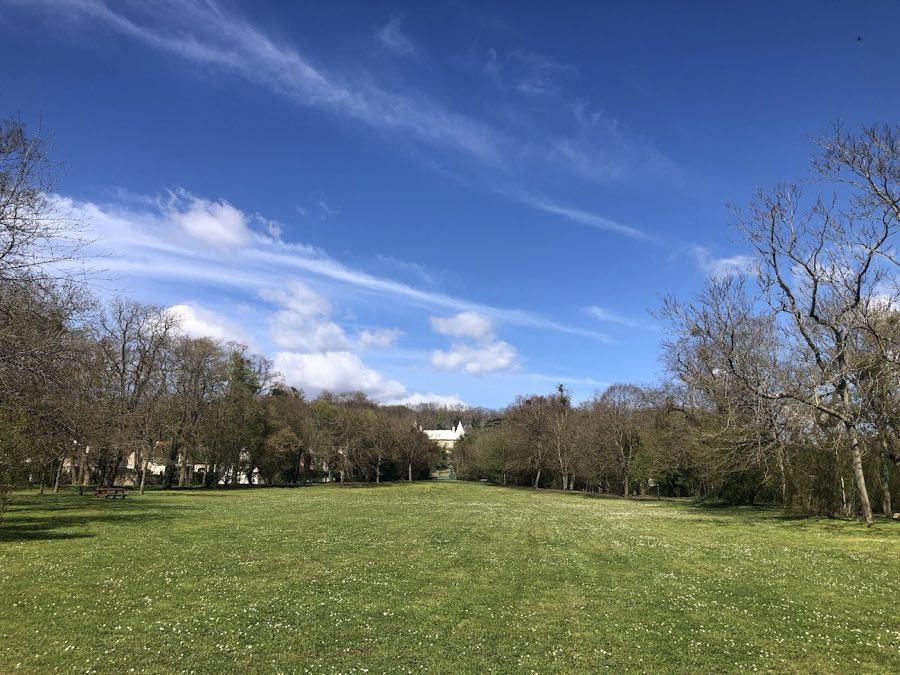
The grounds contain numerous garden follies and decorative constructions added chiefly in the middle and later decades of the twentieth century. Small temples and theatrical structures were placed across the park in a program begun in 1949 and continued into the late 1960s, producing features named the Temple of Love (1949), a Tartar Tent (1960), a Palladian Bridge (1960), a Column Observatory (1962), a Chinese Pagoda (1963), a Temple of the Labyrinth (1967), and a Pyramid (1968). The park’s ceramic vases are attributed to the craftsman Jean Luneau. Stone sphinxes appear at the foot of some staircases and other playful or folly elements are scattered through the landscape, reinforcing the estate’s theatrical character.
Beneath these modern additions an earlier garden layout survives in plan. The grounds retain the imprint of an eighteenth‑century formal arrangement with a parterre that opened onto a large rectangular water basin and an island at its centre, a composition compared with the parterre and basin of the Château de Clagny. Many interior decorative elements introduced in the twentieth century remain in situ, while a large number of movable furnishings that once furnished the rooms were removed and sold at auction.
No. 59435
No. 90375

No. 13401
No. 11463
Comments
Comments for Château de Groussay will require a verified account before posting.
We'll send a verification link before your first comment is published.