No. 83284
Château de Passy
France
ChâteauRestored17th century
No. 84657
Château · France
No. 84657 · 48.232 N, 3.672 E
Quick summary
Château de Saint-Benoist-sur-Vanne is a château in France with origins associated with the 11th century.
See all castles in FranceChâteau de Saint-Benoist-sur-Vanne stands in the commune of Saint-Benoist-sur-Vanne, France, and its fabric was created and modified during the Middle Ages and early modern period.
In the 11th century the village was granted to the abbey of Saint-Benoît-sur-Loire by the bishop of Troyes, and by 1075 the fief is recorded under the name Courmorin. Local lordship is first attested in the 1200s with a Hughes de Montreuil holding authority in the area.
From about the mid-14th century the Averly family held the estate, and the house that formed the core of the property was probably erected under their control. In 1542 Jeanne d’Averly married Antoine Guerry des Essarts, and Antoine undertook a major remaking of the principal residence during his ownership.
A legal and military turn occurred in 1555 when the property was seized for failure to perform fealty and homage; control was later restored to Louise des Essarts, who was married to Laurent de Saint Marcel, lord of Avançon. Violence struck again in 1594 when supporters of the Catholic League from Troyes set fire to the seigneurial house; a contemporary record describes the building as reduced to ruins after that event.
After 1638 the château regained its former standing following purchase by Louise de Cormont. In 1651 Henri de Longueau acquired the domain, which then passed through his family by marriages and successions. Ownership later transferred among several proprietors, ultimately coming to Nicolas-René Peschard d’Ambly, baron de Levoncourt. The last descendant-owner noted was Lucie d’Ambly, who married Charles Buxtorf before the Second World War. After Charles Buxtorf’s death Jean Bertrand bought the property and carried out a comprehensive restoration with the assistance of the national historical monuments authority. The building was officially registered as a monument historique in 1984, and it is presently occupied by Philippe Bertrand, who continues rehabilitation and decorative work.
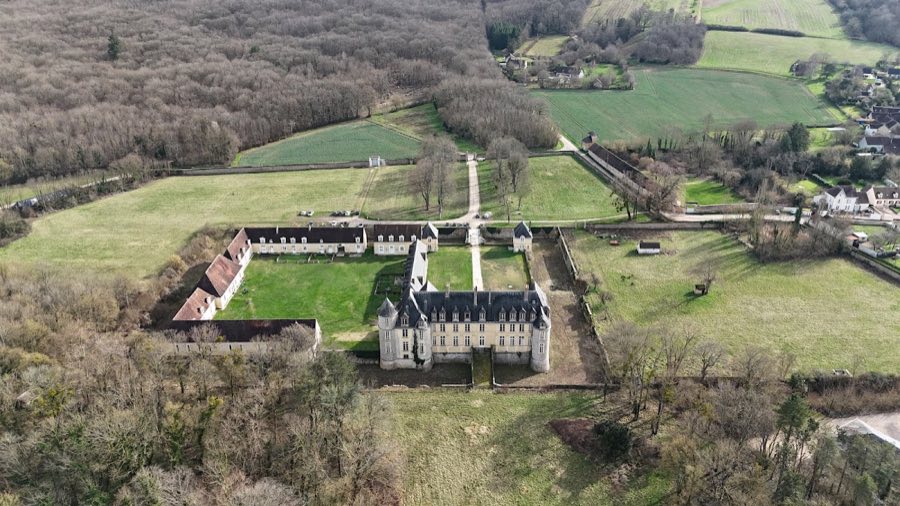
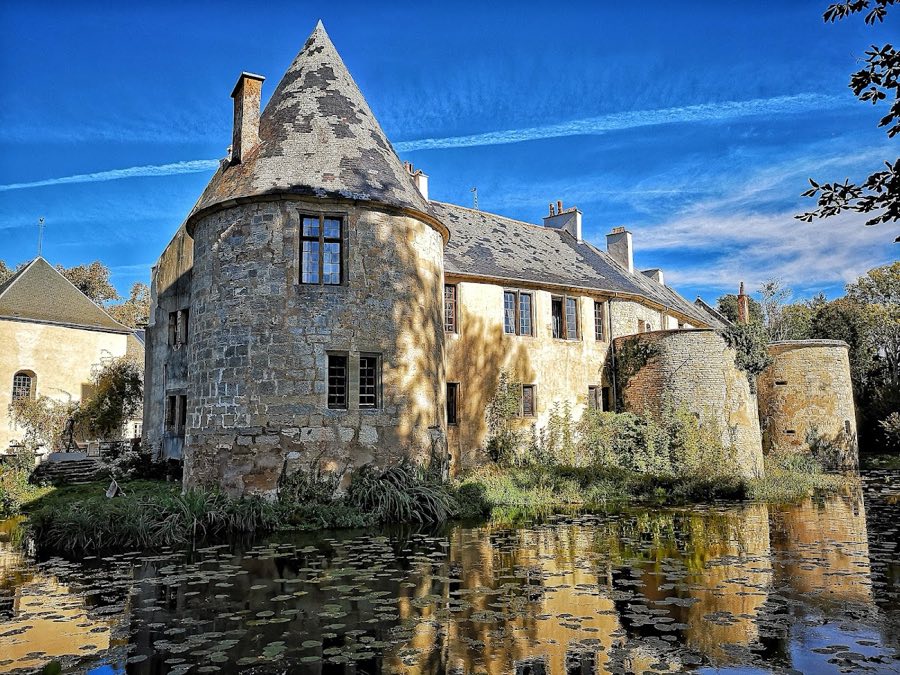
The estate occupies roughly 100 hectares and presents a layered ensemble of buildings assembled and altered over several centuries. The principal residential block shows evidence of repeated remodelling, reflecting phases of medieval construction and later sixteenth- and seventeenth-century rebuilding. A surrounding moat still defines the main portion of the house and is crossed by a functional drawbridge that secures the approach. An entrance pavilion gives access to the enclosed court, while the central living block is accompanied by several subsidiary buildings that have been repaired and renewed so that the complex once again displays substantial form and presence.
A prominent octagonal dovecote stands within the grounds, its eight-sided masonry mass balanced above by a doubled timber bell-turret roof. This dovecote was carefully restored and is notable for the contrast between the solid stone volume and the lightness of its wooden roof structure. The dovecote’s silhouette remains a distinctive vertical element in the ensemble.
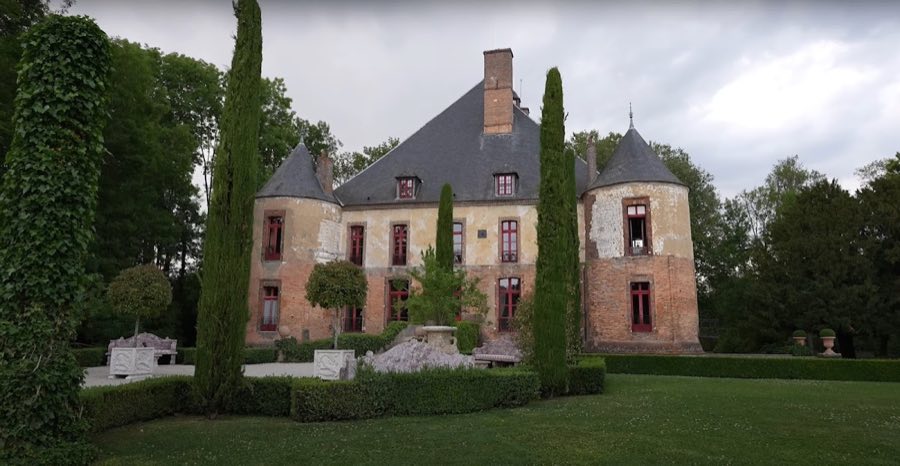
The visible character of the main house reflects architectural language associated with the late sixteenth and early seventeenth centuries, showing narrow pavilion-like corner structures, sharply pitched roofs, and stone dormer windows set into the roofline. These stone dormers and high roofs attest to rebuilding and stylistic updating after the damages of the late 1500s, and conservation work supported through the historical monuments authority has preserved these features. The château occupies a valley-bottom location close to the old Roman road that once ran between Sens and Troyes, a position that tied the property to historic routes of movement and communication.
No. 83284
No. 21568

No. 64870
No. 74732
Comments
Comments for Château de Saint-Benoist-sur-Vanne will require a verified account before posting.
We'll send a verification link before your first comment is published.