No. 23562
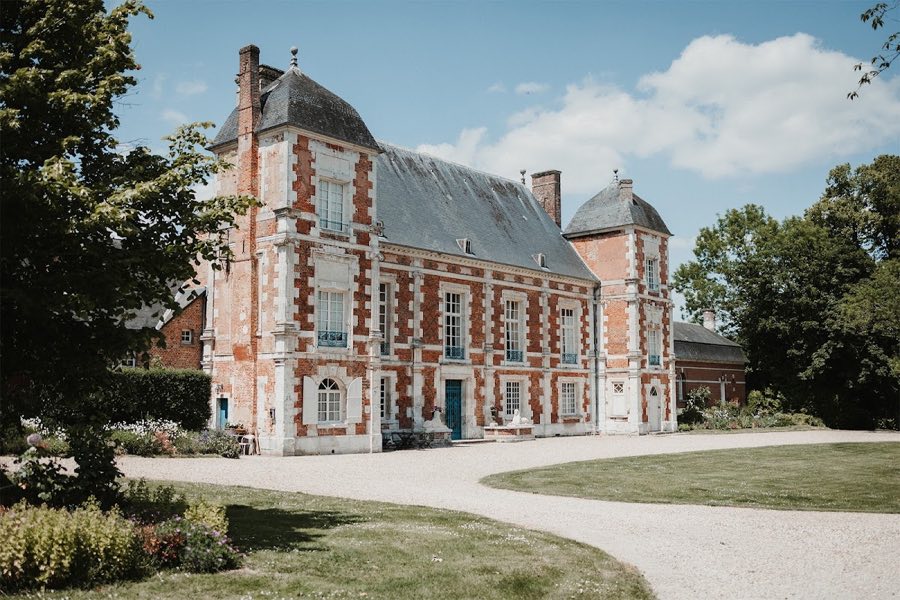
Château de Bonnemare, Radepont
Radepont, France
ChâteauRestored16th century
No. 82279
Château · France
No. 82279 · 49.447 N, 1.379 E
For sale
Château de Vascœuil in France is marked with a public sale signal. Asking price, tenure, land area, floor area, and room counts are shown only after public verification.
Status: Public sale signal
Price: Price on application or not publicly verified
Property type: Château / Chateau
Notable features: Restored historic fabric, Residential use, Museum or cultural use, Public-access operations
Availability note: Submit an official public listing or register buying interest to complete the sale record.
Quick summary
Château de Vascœuil is a château in France with origins associated with the 19th century.
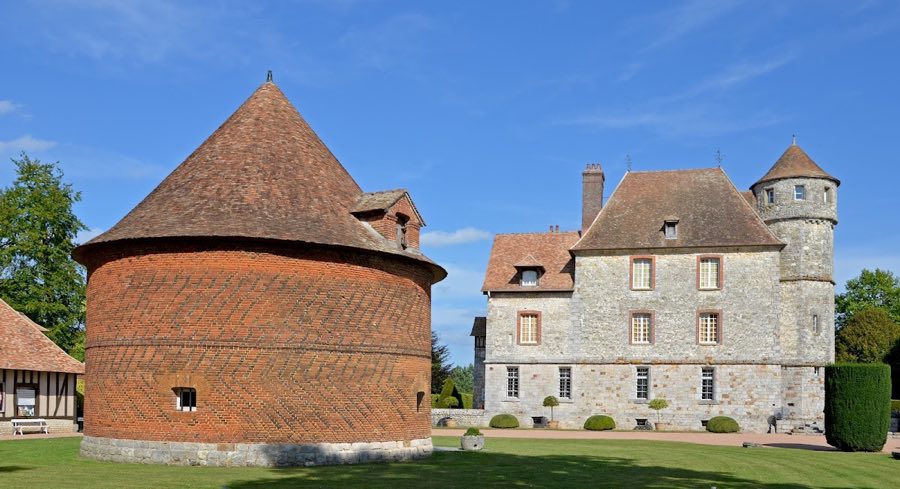
See all castles in FranceThe château de Vascœuil in Vascœuil, France, is a historic castle and dwelling whose oldest standing element, an eight-sided tower, dates to the 1100s. Most of the house visible today was constructed in the later Middle Ages and in the early modern period, with major fabric from the 1300s and the 1500s. The estate figures in regional lordship networks from the medieval era onward and later became associated with notable cultural history through the 19th-century historian Jules Michelet.
The site appears in documentary records from the late eleventh century, when Gilbert of Vascœuil held the local seigneury within the lordship of Saint-Denis-le-Thiboult. Over the late medieval and early modern centuries the fief remained in the hands of the La Haye family until 1505, when it was sold to Guillaume Le Gras, a merchant from Rouen.
During the early modern period the domain formed part of the holdings of the duchy of Longueville. That situation continued until 1694, when the last duke died without heirs and the French crown took possession of his lands. Ownership thereafter passed through private hands until the nineteenth century.
From 1843 until about 1860 the historian Jules Michelet spent several extended periods at the château. He used the high tower as his study and there wrote major works, including his History of France and his History of the French Revolution. Michelet first stayed with Madame Dumesnil and later with her son Alfred Dumesnil; Alfred became Michelet’s son-in-law, his principal follower, and the owner of the property.
In the twentieth century the estate acquired formal heritage recognition. The grounds were entered on the register of protected sites by decree at the end of 1942 and were made a classified site in January 1944. From 1970 the château accommodated a regional center for art and culture that staged regular exhibitions, an initiative begun by Maître François Papillard, a Paris lawyer who owned the property at that time. A seventeenth-century barn on the estate was converted to house a museum dedicated to Jules Michelet, which reconstructs the writer’s tower study at its upper level. In December 2025 an auction in Paris offered a selection of thirty-four works from the château’s collections for sale.
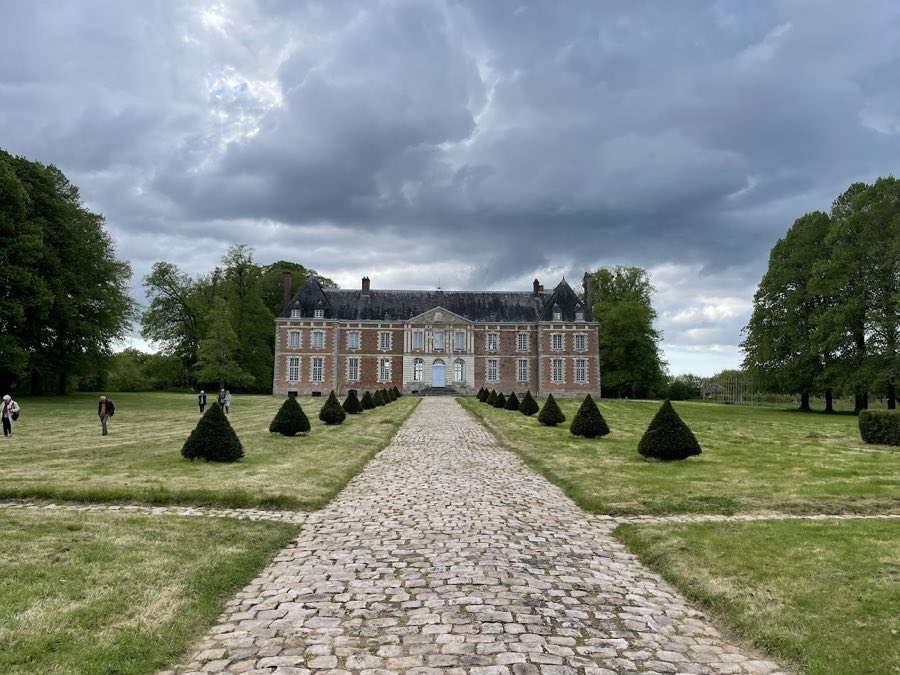
The ensemble stands as a compact, enclosed group of buildings set within a formal French garden laid out across about three hectares. The principal components are the main residence, the dovecote, and an associated farm, all arranged around a formal entrance court. The main house shows building phases from the 1300s and the 1500s, while the prominent tower that rises above the complex dates to the 1100s and is octagonal in plan.
The tower served as an upper-level study in the nineteenth century and the museum on the site recreates that workspace at the tower’s summit, presenting the place where Jules Michelet wrote major works. A seventeenth-century barn near the buildings has been adapted to display the Michelet museum. The barn now contains the reconstructed study as an exhibition feature linked to the tower.
In front of the residence the formal entrance court contains a dovecote, a freestanding building used historically for keeping pigeons. The façades and roofs of that dovecote received legal protection by decree in November 1985. The main residence’s external walls and roofline obtained similar protection by decree in April 1991. The estate as a whole was first inscribed as a protected site by decree at the end of 1942 and later classified as a site in January 1944.
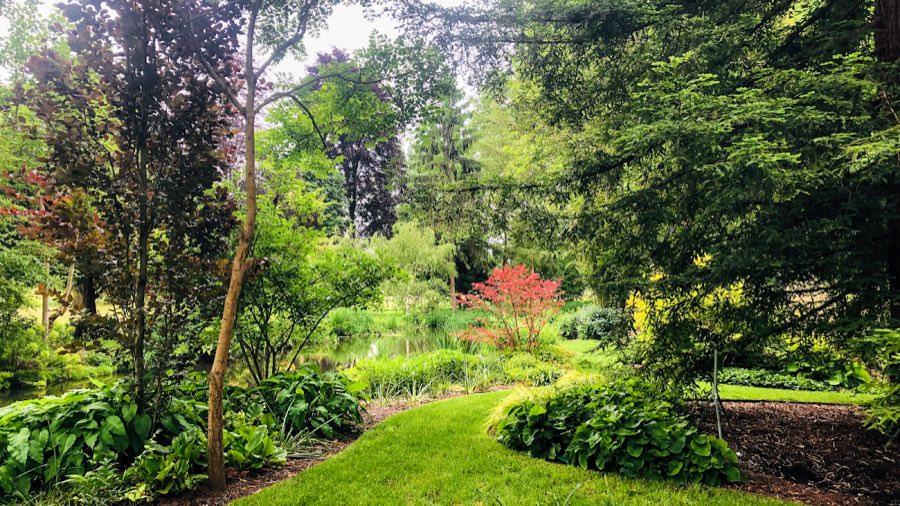
The grounds include a planted formal park and an open-air sculpture display that presents roughly fifty original pieces in a variety of media, including bronze, marble, ceramic, and mosaic. The château, its ancillary buildings, and the park combine domestic and commemorative functions: the residence and tower preserve medieval and early modern building phases, the barn interprets the nineteenth-century intellectual use, and the garden presents a modern sculpture ensemble.
No. 23562
No. 22267
No. 72037
No. 62973
Comments
Comments for Château de Vascœuil will require a verified account before posting.
We'll send a verification link before your first comment is published.