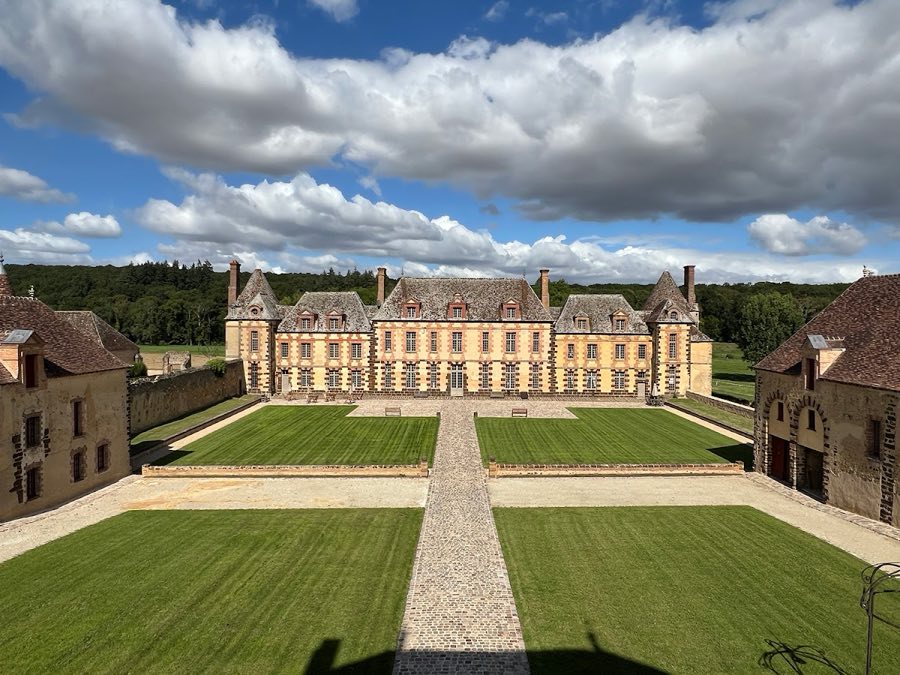
No. 85198
Château de la Rivière
France
ChâteauRestored10th century
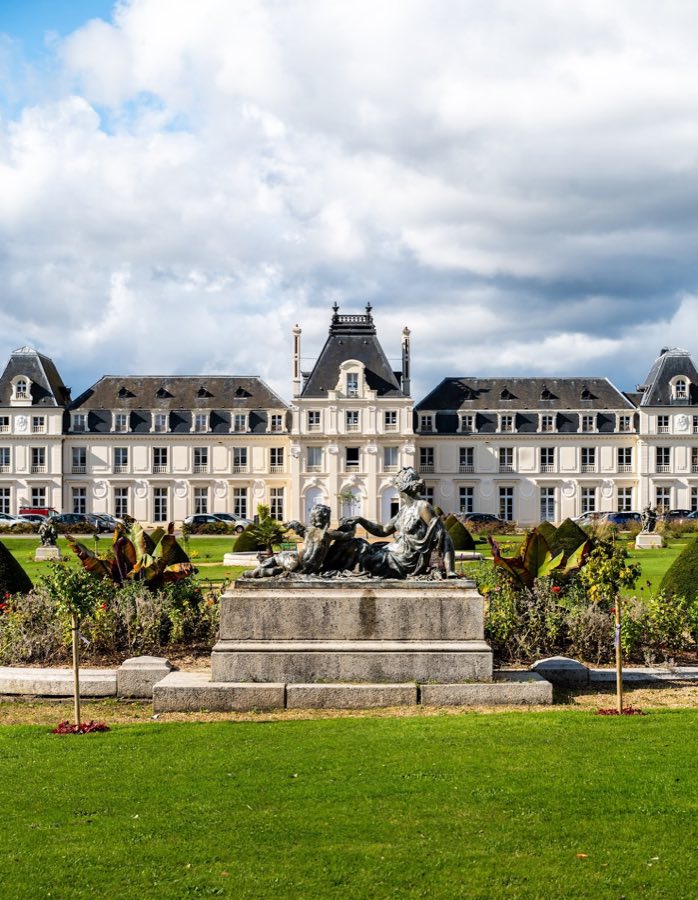
No. 27057
Château · France
No. 27057 · 48.493 N, 1.089 E
For rent
Château des Vaux is marked for bookable castle accommodation. Nightly pricing, sleeps count, stay rules, and amenities are displayed only when public operator data is available.
Rental type: Hotel / bookable stay, Short-stay rental
Short-term availability: Bookable accommodation signal
Quick summary
Château des Vaux is a château in France with origins associated with the 17th century.
See all castles in FranceChâteau des Vaux in Saint-Maurice-Saint-Germain, France, is a large country château whose core dates to the 17th century and whose appearance was largely shaped by a major program of 19th‑century expansion carried out by members of the French nobility. The building evolved from an early modern French manor into an extensive landscaped estate and hunting domain, and it became notable in the 19th century for the scale of the enlargement that turned a modest house into a vast family residence.
The first recorded owner in the 17th century was Charles de Roussin, when the house stood as a single main block with a central pavilion and two side pavilions. Around ten years before the French Revolution a buyer named Desvaux purchased the property with the intention of converting it into a farm; he later sold the estate, shortly before 1789, to Louis d’Ussieux. After Louis d’Ussieux died in 1805 his children sold the property to Étienne V d’Aligre (also recorded as Étienne Jean François d’Aligre), marquis d’Aligre, who already owned the nearby Château de la Rivière.
Étienne VI Marie Charles d’Aligre, born in 1813 and the last marquis of Aligre, inherited Château des Vaux in 1847 and launched a large program of rebuilding and enlargement. Over the following decades the house grew into what contemporaries described as an immense palace, eventually containing over three hundred rooms. When the marquis died in 1889 his widow, Marie Charlotte de Preaulx, completed the enlargement works; the major building campaign concluded in 1891.
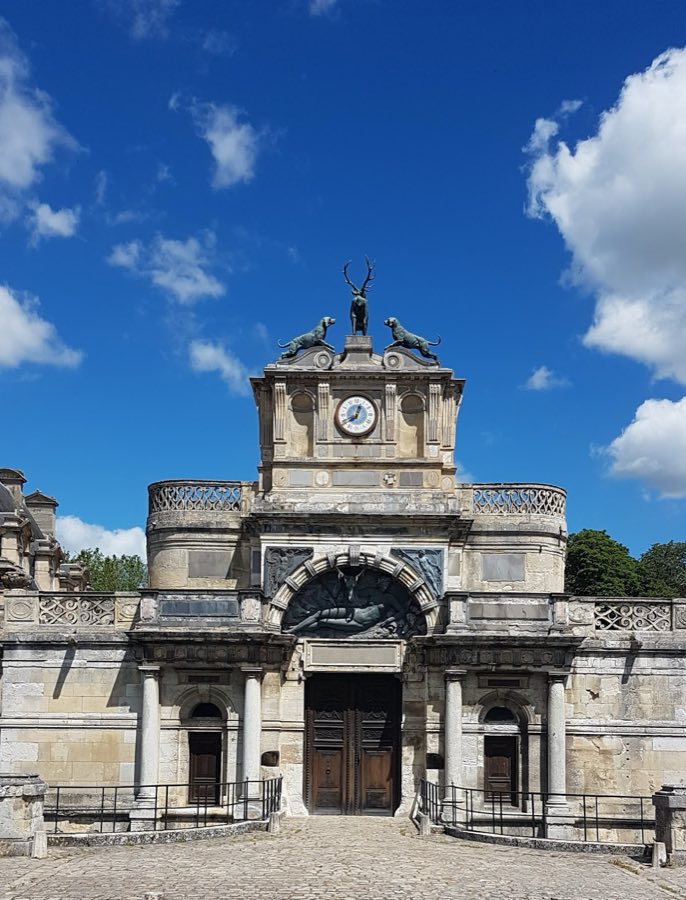
After Marie Charlotte’s death in 1926 the estate farms were sold off by auction and the château and its park passed into the hands of a hotel company. Following the death of that owner the property was sold to Charles Delaporte of Lille, who kept the contents until 1934 and used only a small part of the house. For much of its modern history the estate centered on hunting with hounds, its lands described as covering some 10,000 hectares and estate life organized around the hunts; a deer statue placed facing the forecourt commemorated the one‑thousandth stag killed on the grounds. In October 1946 the organization Apprentis d’Auteuil acquired the château, reportedly for the value of two postage stamps, and under Father Barrat, a missionary, about one hundred orphaned children moved into the site; the institution’s population quickly rose to roughly 350 and later to about 500 young people. In 2018 the Temple of Love, a 19th‑century garden folly on the estate, was placed on a list of heritage at risk.
The present composition of Château des Vaux reflects two principal building phases. The seventeenth‑century core survives as a single main block with a central pavilion flanked by two lateral pavilions. The nineteenth‑century campaign preserved those pavilions while adding two long wings and an extensive range of service buildings, producing a residence counted as having over three hundred rooms and a complex of ancillary structures.
The outbuildings, recorded as large service ranges, were constructed during the enlargement campaign to support the expanded household and estate activities. These outbuildings were described as extensive and, in their original form, included very large stables that contemporaries judged almost grandiose. After the site’s acquisition in 1946 the stables were adapted and converted into a series of workshops following repair and modification work.
The grounds were subject to deliberate landscape engineering in the nineteenth century. The course of the Eure river was diverted to open park views, and formal French gardens were laid out around the house. An orangery stands among the garden structures, and the Temple of Love, a 19th‑century garden folly, formed part of the ornamental scheme; the Temple of Love was placed on a heritage‑at‑risk list in 2018.
Interior fittings and decoration reflect the estate’s nineteenth‑century embellishment. Reception apartments and a chapel were given decorative treatment, and interiors included over‑mantel panels (decorative panels above a fireplace), friezes, and Sèvres porcelain. A large dining room was equipped with chandeliers made from hunting horns, tying interior display to the estate’s hunting culture. A deer statue oriented toward the forecourt marked the commemoration of the estate’s one‑thousandth stag. Today the most explicitly reported conditions are the workshop conversion of the stables after 1946 and the endangered status of the Temple of Love; other rooms and fittings retain their nineteenth‑century decorative character as elements of the building complex.
No. 85198
No. 61932
No. 86320
No. 69785
Comments
Comments for Château des Vaux will require a verified account before posting.
We'll send a verification link before your first comment is published.