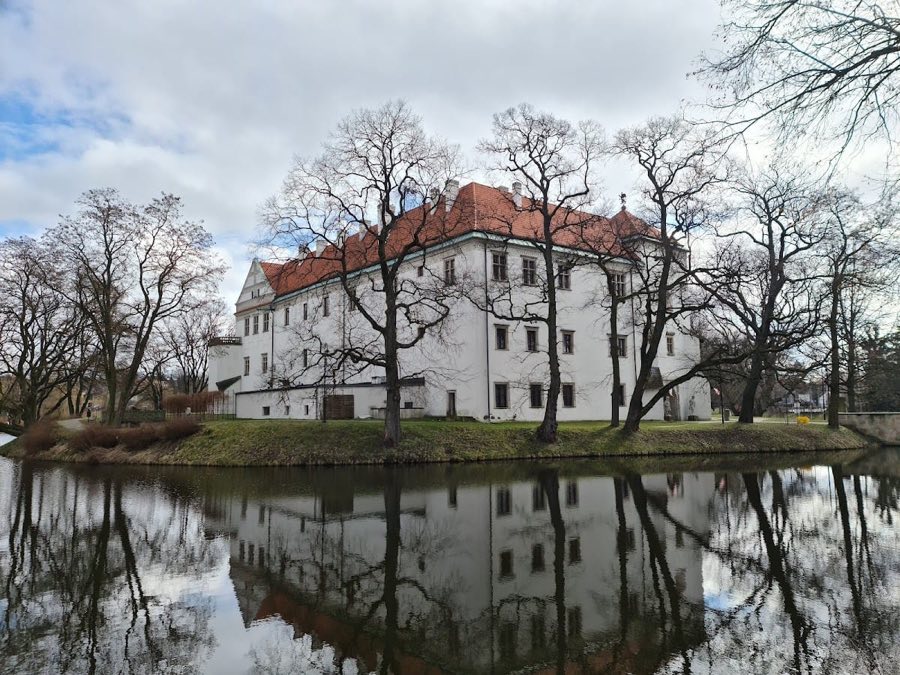
No. 17860
Szydłowiec Castle
Poland
CastleRuin13th century
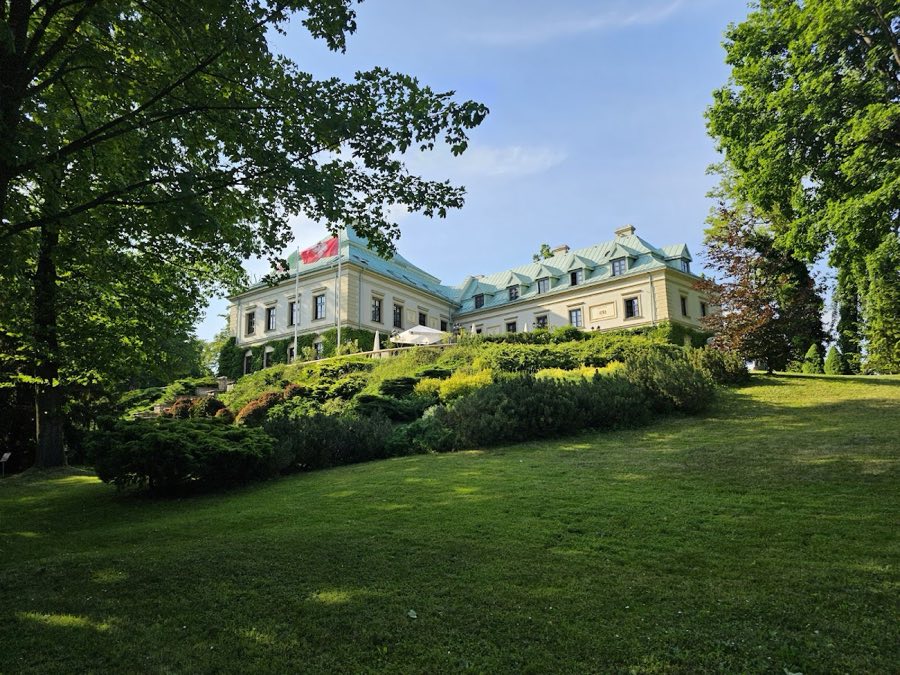
No. 86411
Manor house · Poland
No. 86411 · 51.247 N, 20.760 E
For rent
Chlewiska Castle is marked for bookable castle accommodation. Nightly pricing, sleeps count, stay rules, and amenities are displayed only when public operator data is available.
Rental type: Hotel / bookable stay, Short-stay rental
Short-term availability: Bookable accommodation signal
Quick summary
Chlewiska Castle is a manor house in Poland with origins associated with the 13th century.
See all castles in PolandZamek w Chlewiskach stands in the municipality of Chlewiska, Poland, and its first buildings were erected by members of the medieval Polish Odrowąż family.
The estate entered the Odrowąż sphere when Prędota Stary Odrowąż received Chlewiska by grant from Duke Bolesław Krzywousty in 1098. Soon after, the family established a local church in 1121 and a knight’s court in 1135; the earliest fabric that lies beneath the present park and palace complex dates to this period. During the 13th century the estate is associated in local tradition with a visit by Saint Jacek Odrowąż, who is remembered as a patron linked to the place.
Through the later Middle Ages the property remained in the Odrowąż and Chlewicki line. Named members appear in records in 1360 and again in the late 15th century. Contemporary records attribute a stone-walled fortification in the 15th century to the owners Dobiesław and Strasz Chlewicki. A masonry castle stood by that time and the surviving courtyard well was constructed between about 1460–1490.
The stronghold was rebuilt and remodelled in the early modern period. In 1605 Wawrzyniec Odrowąż Chlewicki carried out a renovation recorded on a commemorative plaque fixed to the building, and an epitaph for Wawrzyniec dated 1613 survives in the ensemble. In the 18th century owners Józef and Aleksander Podkański transformed the older castle fabric into the palace that largely shaped the present appearance.
Ownership passed into new hands in the 19th century. Stanisław Sołtyk purchased the estate in 1801; it passed to his son Roman Sołtyk, a general who served under Napoleon, and the property was confiscated by the Russian government in 1831 because of Roman Sołtyk’s participation in the November Uprising. Marceli Sołtyk is recorded as owner in 1867, and stables were added in 1886. In 1895 Ludwik Broel-Plater acquired the estate, and it later belonged to his son Konstanty Broel-Plater.
Trial archaeological investigations were carried out in 1973. Since 1999 the complex has been owned by a private company operating the manor, and on 12 May 2009 the surrounding historic park, with its palace ponds and protected veteran trees, was entered on a preferential list administered by the National Fund for Environmental Protection and Water Management. On 25 December 2012 a fire damaged part of the palace attic while the building was operating as a hotel; subsequent renovation works changed the palace back into luxury hotel accommodation. A historic tower that had functioned as a viewing point and a shooting platform for the former game reserve was reconstructed in 2013.
The palace complex now reads as two buildings joined at right angles, forming an L-shaped plan set on a small rise within a historic park. The main buildings are of masonry and stand above the older footprint of medieval and early modern construction. The site occupies ground above palace ponds and is surrounded by protected, notable trees that form part of the designed landscape.
A small external turret is attached to the buildings; its lower level houses a chapel dedicated to the Blessed Virgin Mary, and the upper level contains a chapel honoring St. Jacek Odrowąż. Two ground-level vaults in the main building retain barrel-cross vaulting executed in stone, demonstrating medieval or early modern structural technique, and the palace retains a stone Renaissance entrance portal. These features survive in situ and are visible within the present palace fabric.
The courtyard holds a well associated with Dobiesław Odrowąż, dated to the later 15th century (about 1460–1490). Close to the main structures lie numerous fragments of old cellar walls rendered in stone and brick; these remains are interpreted as fragments of former buildings or parts of earlier defensive works and survive as low walls and foundations in the earth around the courtyard.
On the northern slope of the hill are the remains of a manor icehouse constructed in 1837; the icehouse survives in fragmentary form and marks 19th‑century service‑estate activity. Nineteenth-century stables added in 1886 remain beside the current entrance, preserved as surviving ancillary buildings and reflecting later domestic use of the estate.
A commemorative plaque dated 1605, bearing a Latin inscription, is fixed to a palace pillar and records the renovation undertaken by Wawrzyniec Odrowąż Chlewicki; an epitaph for Wawrzyniec dated 1613 is also recorded within the complex. The Gothic-styled tower that served as a former viewing point and game‑reserve shooting platform was reconstructed in 2013 and stands renewed above the palace, while other historic elements remain in various states from well-preserved to fragmentary across the site.
No. 17860
No. 65691
No. 95269

No. 39531
Comments
Comments for Chlewiska Castle will require a verified account before posting.
We'll send a verification link before your first comment is published.