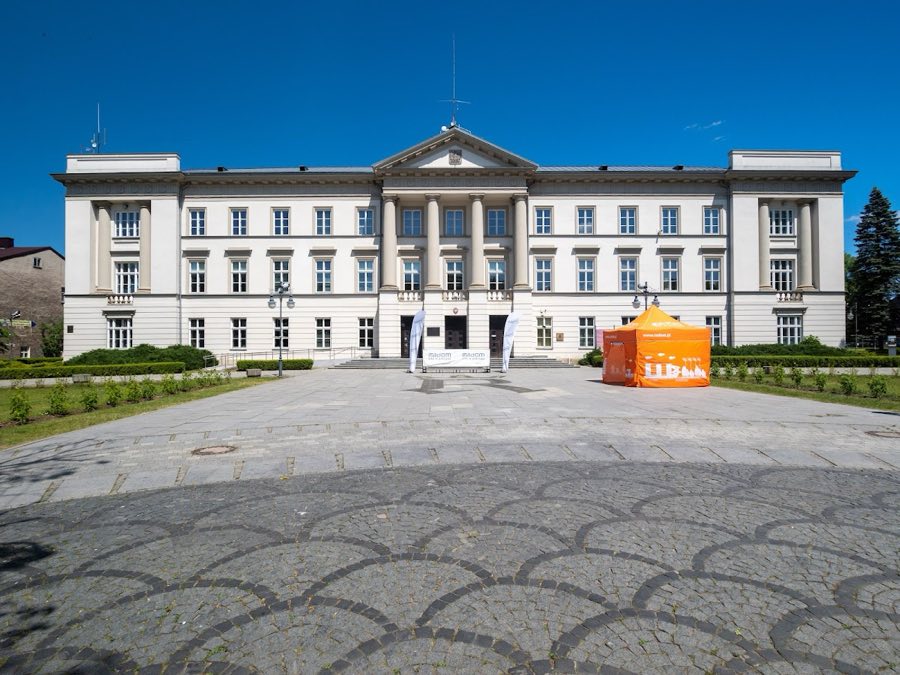
No. 95269
53 Żeromskiego Street, Radom
Radom, Poland
PalaceIntact19th century
No. 65691
Palace · Poland
No. 65691 · 51.401 N, 21.152 E
For rent
Karsch Family Palace, Radom is marked for bookable castle accommodation. Nightly pricing, sleeps count, stay rules, and amenities are displayed only when public operator data is available.
Rental type: Hotel / bookable stay, Short-stay rental
Short-term availability: Bookable accommodation signal
Quick summary
Karsch Family Palace, Radom is a palace in Radom, Poland with origins associated with the 19th century.
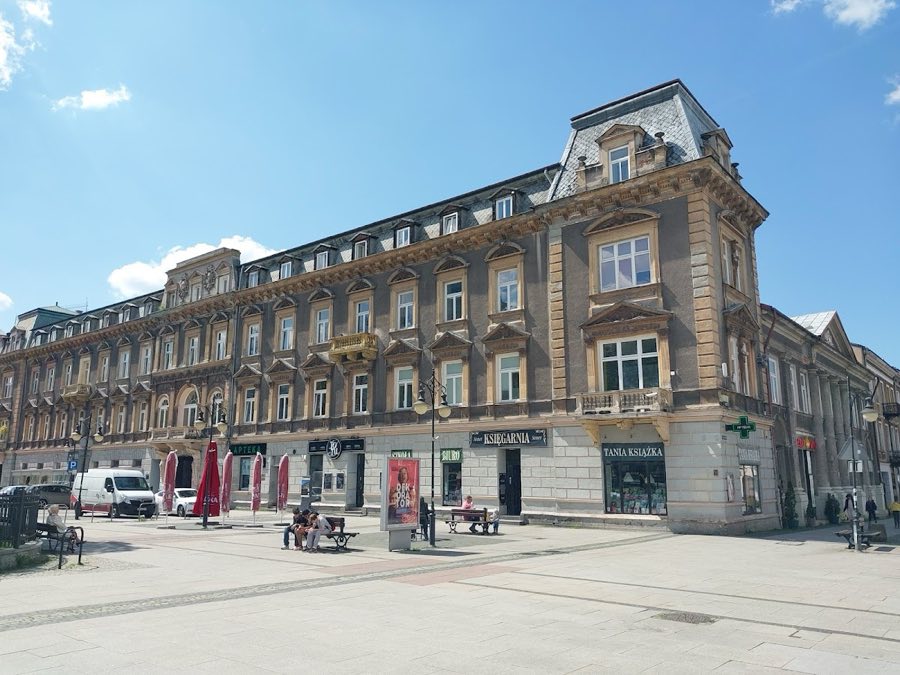
See all castles in PolandKarsch Family Palace in Radom, Poland, is a late 19th-century urban palace erected in 1881–1882 for leading local industrialists, built during the period when Radom lay in the Vistula region of the Russian Tsarist Empire. Executed in an eclectic manner with Neo‑Renaissance and Neo‑Baroque elements, the building became one of the town’s largest and most prominent structures around the turn of the 19th to 20th century and anchored the west side of the main square.
Work on the palace was completed for Teodor Karsch and Franciszek Wickenhagen, members of Radom’s industrial and tannery community. The design took visual cues from the grand town houses of Łódź and from a prominent palace in Warsaw. Apartments for the owners occupied the upper floors while the ground level was arranged for public and commercial use, hosting a long‑running pharmacy, a confectionery, the district court’s offices and the local Russian Citizens’ Club.
In 1890 the Łagodziński family added a hotel directly to the south of the palace; that Hotel Europejski remained Radom’s principal hotel into the 1980s. During the First World War years the palace accommodated the Miraże theatre from 1915 until 1918. Under German occupation between 1939 and 1945 the building contained, among other offices, the operations directorate of the German Eastern Railway.
The twentieth century brought forcible changes of ownership and state appropriation. Members of the founding families were expelled over the course of the century. The People’s Republic of Poland nationalized the pharmacy and formally assumed control of the building in 1955. After the Second World War a descendant of Teodor Karsch, architect Alfons Pinno, donated furniture and fittings from the original apartments to the Jacek Malczewski Museum in Radom; part of this Pinno family collection is on permanent display. Ownership of the palace returned to the family in 1993. The building has received legal protection at national and ensemble level, receiving formal historic‑monument registrations during the second half of the twentieth century.
The palace occupies a long, rectangular footprint and presents a richly modeled street front organized into three pronounced projecting sections. The façade is pierced by nineteen window axes and is articulated by two narrow outer projections and a wider central projection. The central projection carries a balcony that rests on two sculpted male figures serving as supports, and it originally sat beneath a decorated gable zone that was once topped by a group of three female figures. The façade is framed at its corners by pavilion-like masses and the main block is covered by a mansard, hipped roof that formerly carried ornamental spires.
Inside, rooms and stair halls retain many of the building’s original decorative fittings. Surfaces include terracotta floor tiles, coal or wood fireplaces, ornamental cast‑iron railings on the staircases and a variety of stucco ceilings and wall treatments. When completed the palace contained some 150 rooms, making it the largest building in Radom at the turn of the century. Several of the exterior sculptural groups and roof ornaments no longer survive, while much of the interior decoration has been preserved and remains protected under the site’s historic‑monument status.
The ground floor retains its historic role as a zone for shops and offices, reflecting the building’s mixed private and public function since its construction. Adjacent historic buildings help define the palace’s setting: to the south it stands beside the former Hotel Europejski, to the north it meets Żeromski Street and to the west it adjoins the earlier Kierzkowski Palace. Parts of the original apartment furnishings and fittings removed after the Second World War are now exhibited in the Jacek Malczewski Museum, complementing the preserved architectural fabric that survives within the listed structure.
No. 95269

No. 39531
No. 17860
No. 86411
Comments
Comments for Karsch Family Palace, Radom will require a verified account before posting.
We'll send a verification link before your first comment is published.