No. 85075
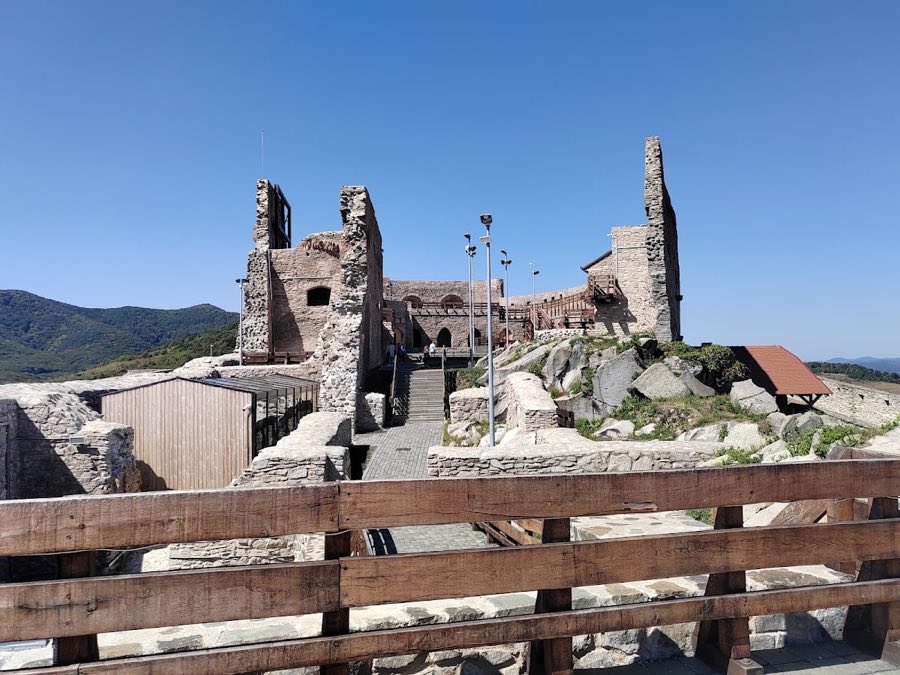
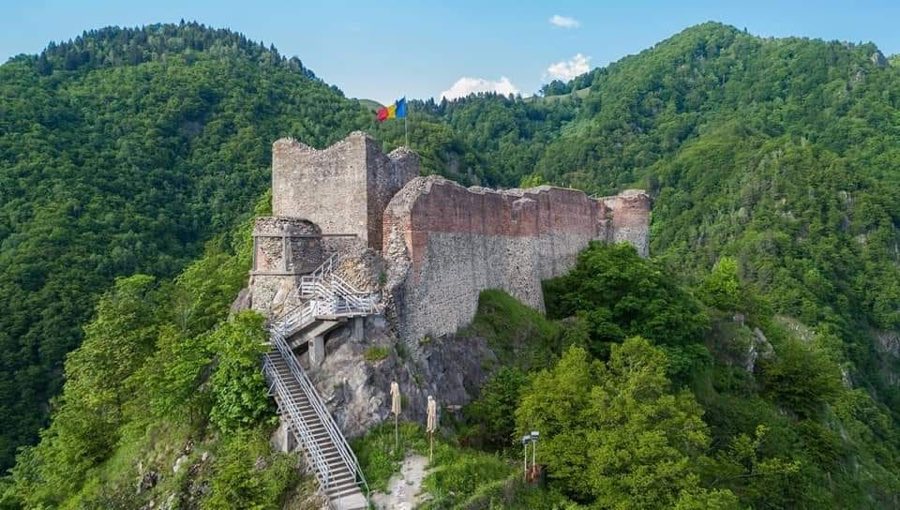
Fortress of Deva
Romania
CastleRuin13th century
No. 17449
Castle · Romania
No. 17449 · 45.749 N, 22.888 E
Quick summary
Corvin Castle is a castle in Romania with origins associated with the 14th century.
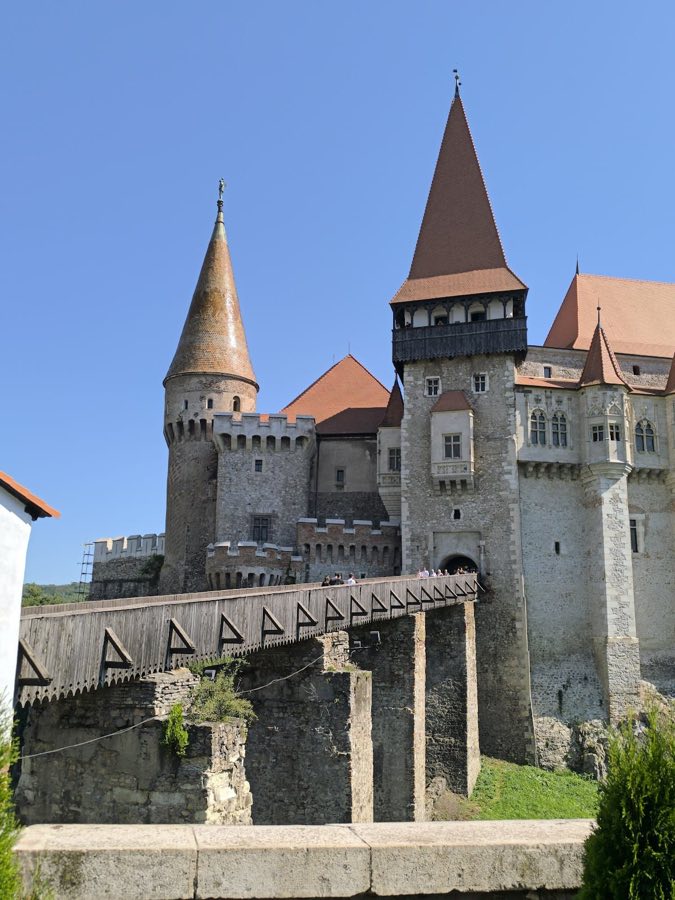
See all castles in RomaniaCorvin Castle, located in Hunedoara, Romania, occupies the site of an earlier fortification originally erected in the 14th century by the Kingdom of Hungary. This medieval stronghold was initially a defensive structure before developing into a significant noble residence associated with prominent Hungarian leaders.
The castle’s most transformative period began shortly after 1440, when John Hunyadi, a distinguished Hungarian statesman and military commander, took possession of the fortification. He expanded and modified it to establish the ancestral home of the Hunyadi family. Following his death, further enlargement occurred under King Matthias Corvinus from 1458, whose reign saw the addition of key residential and defensive sections. These improvements reflected the castle’s evolving role as both a military fortress and a noble seat.
In the early 1600s, the castle underwent notable changes under Prince Gábor Bethlen. Seeking to accommodate new administrative and strategic functions, he commissioned significant alterations, including the construction of the Great Palace and the White Tower. Throughout the centuries, ownership passed through several hands due to inheritance, marriage alliances, and political disputes, involving figures such as Ladislaus Hunyadi, Beatrice de Frangepan, and the Török and Bethlen families.
Although the castle originated within the Kingdom of Hungary, it became property of the Romanian state after World War I in 1918. Over its history, Corvin Castle served simultaneously as a fortified bastion and a residence of feudal authority, balancing military defense with courtly life.
Numerous legends developed around the castle, notably stories linking it to Vlad the Impaler, despite historical records showing he never owned Corvin Castle. Another enduring tale concerns the deep well dug within its walls by Turkish prisoners, who inscribed an Arabic message believed to have been left by a prisoner named Hassan. These legends remain part of the castle’s cultural heritage, supplementing its documented past.
Corvin Castle is perched atop a limestone outcrop covering about 7,000 square meters in southwestern Hunedoara, naturally defended on the west and south by the Zlaști River and complemented by a wide moat on two sides. Its irregular courtyard follows the natural rock surface, emphasizing the adaptation of construction to the terrain. The structure blends defensive and residential functions typical of Gothic castles in Central Europe.
The complex contains five bastions that strengthen the fortifications, with a mix of round and rectangular towers. Noteworthy are the Pustiu, Tobosarilor, and Capistrano towers, which have circular plans, and the gate towers known as Nou de poarta and Vechi de poarta, rectangular in shape. The main gate tower, bearing a carved date of 1480, remains a significant entrance point, featuring a carefully designed defensive system. Connected to the main castle by a covered gallery with a drawbridge is the Njebois Tower, positioned at the northern end and linked by a 33-meter passage.
Residential areas include the Knights’ Hall, dating back to 1452, distinguished by its size and interior decorations such as family coats of arms depicting a raven clutching a golden ring, a heraldic symbol of the Hunyadi lineage. This hall contains Latin and Gothic inscriptions alongside 15th-century frescoes illustrating allegorical scenes tied to family legends. The Matthias Wing, added after 1458, expanded living quarters and features a Renaissance-style bridge supported by five tall brick pillars, marking an architectural evolution.
Supporting facilities at the eastern sector consist of the Great Palace and the White Tower, built during the early 17th century by Prince Gábor Bethlen to suit updated political and military needs. A bakery, farms including barns, a cattle stable, and a poultry yard are also part of the castle complex, attesting to its self-sustaining nature.
Interior defensive measures include a system of 181 embrasures, small openings for firing weapons, and 97 windows, some of which bear damage from historic battles. Drainage was thoughtfully incorporated with rainwater outlets at wall angles, protecting the foundations. The castle chapel houses a unique Arabic inscription, said to be left by the prisoner Hassan, who is traditionally credited with digging the castle’s 28-meter well. This feature stands as a rare epigraphic record linking forced labor to the castle’s infrastructure.
Restoration efforts since the 19th century have preserved and partially reconstructed Gothic ornamental elements, though some 19th-century changes altered original details. Currently, much of the castle’s structure remains intact, showcasing a blend of medieval defensive design and noble residential architecture adapted over several centuries.
No. 85075
No. 14908
No. 80736
No. 50293
Comments
Comments for Corvin Castle will require a verified account before posting.
We'll send a verification link before your first comment is published.