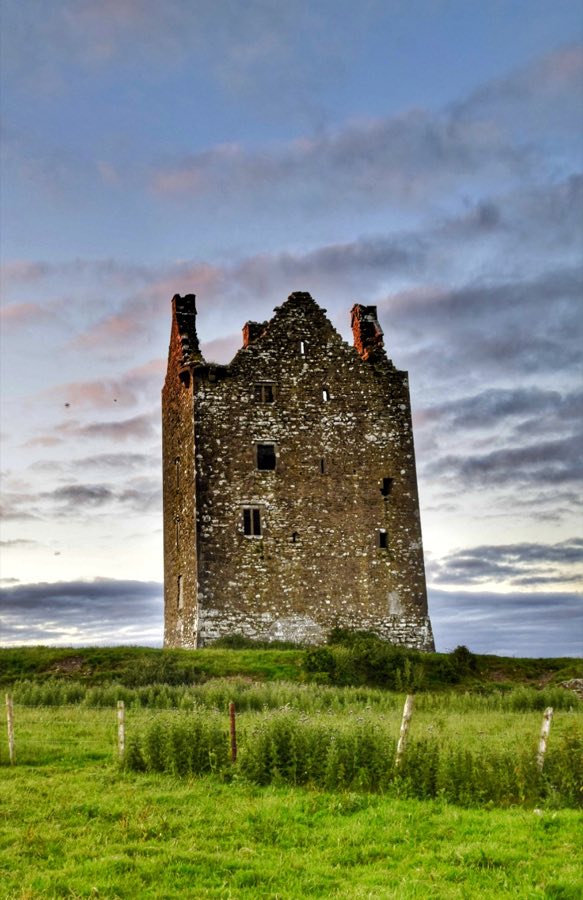
No. 59720
Oola Castle
Ireland
Tower houseIntact19th century
No. 73779
No. 73779 · 52.583 N, 8.260 W
Quick summary
Coonagh Castle is a castle in Ireland with origins associated with the 13th century.
See all castles in IrelandCoonagh Castle stands at Coolbaun, Cooga, Ireland, and was erected by members of the Hiberno-Norman community.
In the early decades of the thirteenth century the wider estate was taken into royal hands. In 1210 King John confiscated the land and gave the cantred of Okonagh, together with the vill of Tipperary and the right to appoint the parish priest, to the Augustinian Friary of the Most Holy Trinity in Dublin. The place served as the principal manor for the medieval cantred named Okonagh or Oconagh, a territory later identified with the barony called Coonagh.
A fortified residence was raised around 1225 by William de Marisco and his wife Matilda, a relative of King Henry II; the property passed to Matilda when she married William sometime before 1226. There is a possibility that an earlier stronghold at the same location had been constructed in the twelfth century by William de Braose, 4th Lord of Bramber, though that earlier fort is not certain.
Political conflict altered ownership in the 1230s. In November 1234 the de Marisco family lost the castle because they supported Richard Marshal, 3rd Earl of Pembroke, against the crown. King Henry III then granted the site to Luke, Archbishop of Dublin. In 1242 Archbishop Luke let the manor of Coonagh on a twenty-year lease to Maurice FitzGerald, 2nd Lord of Offaly, but the king reclaimed the property in 1244. The site was granted again in 1281 to Otto de Grandson, after which the record of active use ceases and the castle was allowed to fall into ruin.
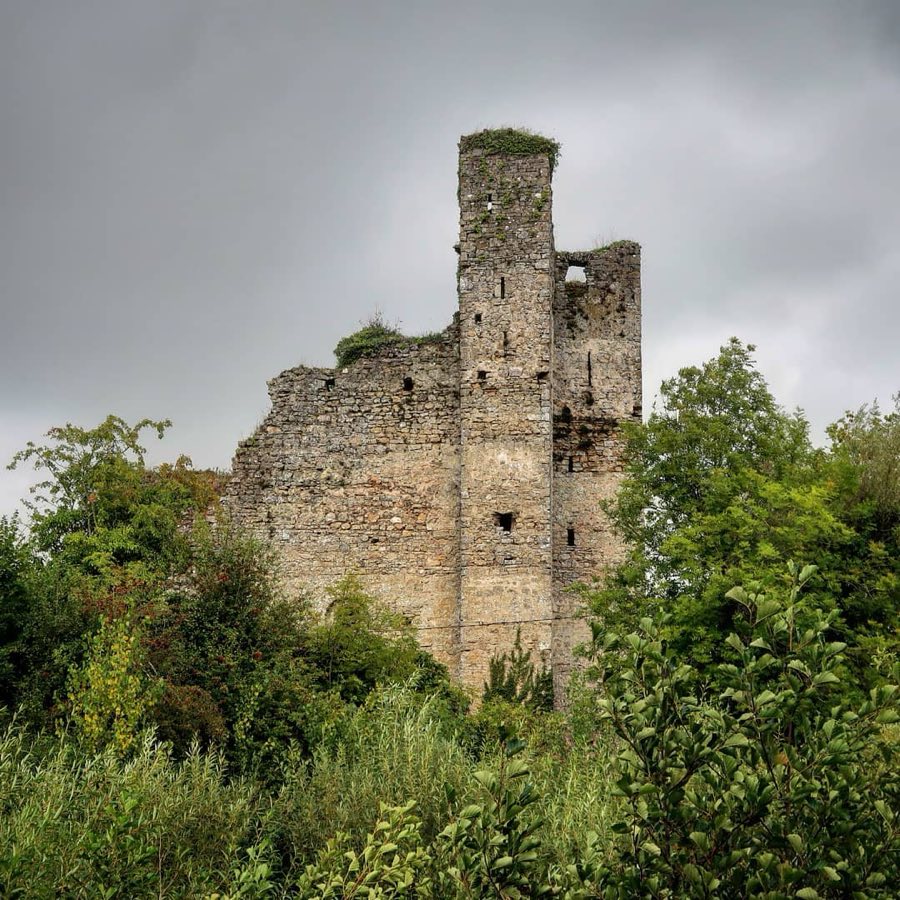
The surviving remains form the footprint of a medieval keep surrounded by the landscape of the Cahernahallia valley. The structure occupies flat ground above a curving slope to the south and stands on the west bank of the Cahernahallia River, a tributary of the Dead River and ultimately of the Mulkear. The principal building is a single, rectangular tower house or donjon, set within the manor’s original enclosure.
The tower’s internal plan measures approximately 14.3 metres by 9 metres, with the cellar or basement founded on very thick masonry, recorded in places as reaching about 3.3 metres in thickness. An attached turret lies close to the main block and measures roughly 5.2 metres by 3.4 metres externally. Contemporary descriptions record the tower’s walls as having once risen to about 14 metres, though only fragments of those walls remain today and the structure is described as ruined.
No. 59720
No. 69384
No. 51980
No. 90644
Comments
Comments for Coonagh Castle will require a verified account before posting.
We'll send a verification link before your first comment is published.