No. 73779
Coonagh Castle
Ireland
CastleRuin13th century
No. 59720
Tower house · Ireland
No. 59720 · 52.528 N, 8.242 W
Quick summary
Oola Castle is a tower house in Ireland with origins associated with the 19th century.
See all castles in IrelandOola Castle is in Oolahills East, County Limerick, Ireland; it was built by the O’Briens.
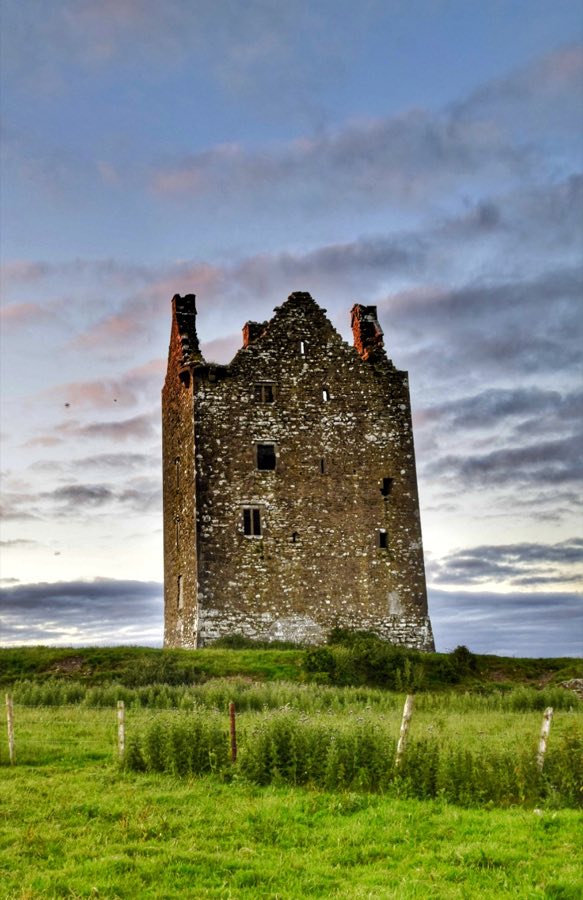
The standing tower dates from the late sixteenth century, when members of the O’Brien family erected the stone house now known as Oola Castle. The building belongs to a later phase of Irish tower-house construction in which the older, compact defensive form was adjusted to provide more heat and light and to adopt a more ordered arrangement of openings that reflects Renaissance influences.
In the nineteenth century the site yielded notable finds. In 1825 antlers from the giant deer, commonly called the Irish elk, were uncovered at Oola. Three years later a bronze trumpet, a spear and several bronze arrowheads were discovered and these metal objects were deposited in the museum of Trinity College, Dublin. The nearby castle at Ballyneety is sometimes also called “Oola Castle,” a name overlap recorded in local references.
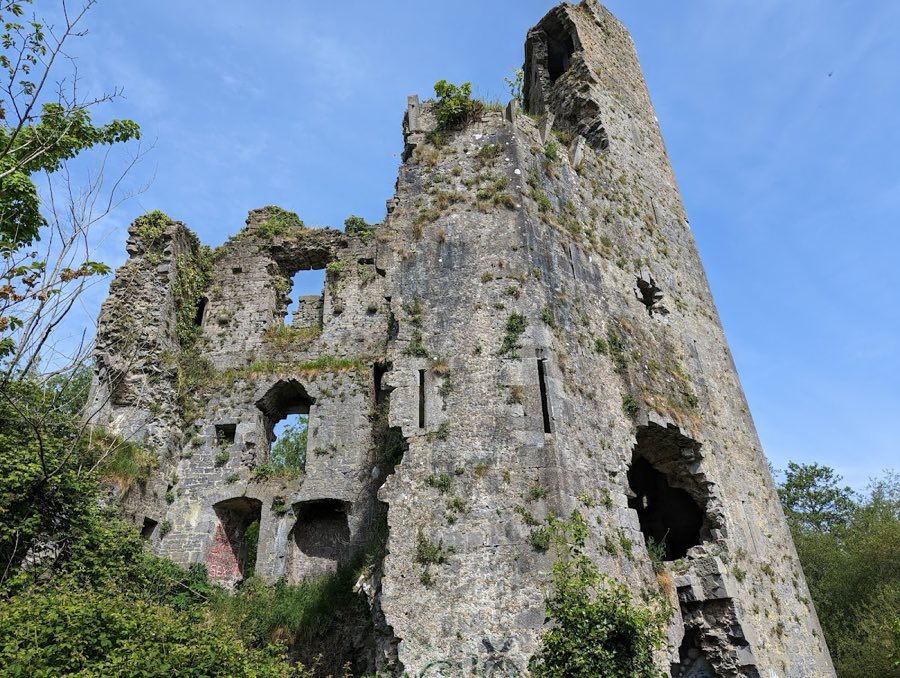
The surviving structure is a square, six-storey tower house built of limestone. As a later tower house it combines a traditional vertical plan with features intended for greater domestic comfort and improved daylight. The masonry is stone-built and the tower rises through multiple floors to its parapet level.
Small projecting turrets are intact on the northeast and southwest corners; these circular bartizans extend from the wall and would have served as lookout or flanking positions. The tower’s upper windows keep their hood moulding, a projecting stone band above each opening that helps to throw off rain. Fireplaces built into the east and west walls survive in their original positions and indicate how the interior was heated.
When occupied, the tower would have presented whitewashed interior or exterior surfaces, gables finished with chimney stacks, and windows divided by stone mullions. Archaeological finds from the immediate site included the antlers recovered in 1825 and the bronze trumpet, spear and arrowheads unearthed in 1828; those metal objects were transferred to the museum of Trinity College, Dublin. The bartizans, window hood mouldings and the original fireplaces remain visible on the standing fabric of the castle.
No. 73779
No. 69384
No. 14785
No. 51980
Comments
Comments for Oola Castle will require a verified account before posting.
We'll send a verification link before your first comment is published.