No. 16882
Mettingham Castle
United Kingdom
CastleIntact21st century
No. 59573
Castle · United Kingdom
No. 59573 · 52.320 N, 1.150 E
Quick summary
Eye Castle is a castle in United Kingdom with origins associated with the 14th century.
See all castles in United KingdomEye Castle, located in the town of Eye in England, was constructed by the Normans soon after their conquest of England in 1066. The castle was established by William Malet, a Norman nobleman who held significant estates in the region. The Malet family managed the Honour of Eye, a large estate network that included both the castle itself and the surrounding parkland.
The castle quickly became a notable economic as well as military asset. By the time of the Domesday Book in 1086, Eye Castle was one of only two castles recorded as sources of income, thanks to a market operating within its bailey. This market competed directly with the nearby market at Hoxne, overseen by the Bishop of Norwich.
Following William Malet’s death in 1071 during fighting against the rebel Hereward the Wake, the castle passed to his son Robert. However, Robert was eventually exiled and died in 1106, leading King Henry I to confiscate Eye Castle. Henry briefly held the castle as a royal possession before granting it in 1113 to his nephew Stephen, who later became king in 1135. During Stephen’s turbulent reign, marked by the civil war known as the Anarchy (1138–1154), Eye Castle passed through various hands, including lieutenants and Stephen’s son William. Despite unrest in the region, the castle itself saw little direct conflict during this period.
After Henry II ascended the throne in 1154, he took back control of Eye Castle in 1157 to reinforce royal authority. This action was supported by the death of William, Stephen’s son, in 1159, which ended Stephen’s family’s direct hold over the Honour of Eye. In 1173, during a widespread revolt against Henry II, Hugh Bigod, a powerful noble, attacked Eye Castle but failed to capture it. Following this, the castle was reinforced, including the construction of two square towers on its inner bailey, reflecting broader defensive improvements seen at nearby Framlingham Castle.
The castle faced significant damage in 1265 when it was attacked and sacked during the Second Barons’ War, a conflict between royal forces and rebellious barons. After this assault, Eye Castle gradually fell into disuse and was largely abandoned as a military stronghold. By the 14th century, it was mostly in ruins, though parts of the site served as a prison. The surrounding estates continued to generate income through converted monetary rents for centuries afterward.
Between 1561 and 1562, a windmill was constructed atop the castle’s motte, repurposing this prominent earthwork for industrial use. In the early 1600s, the medieval parkland that once surrounded the castle was divided into agricultural fields, marking a shift in land use.
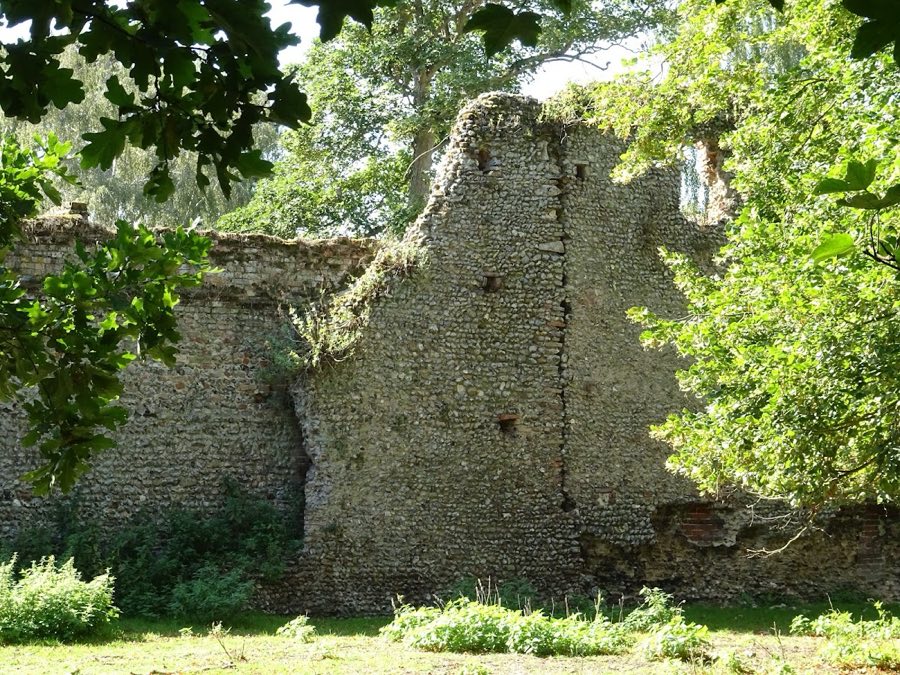
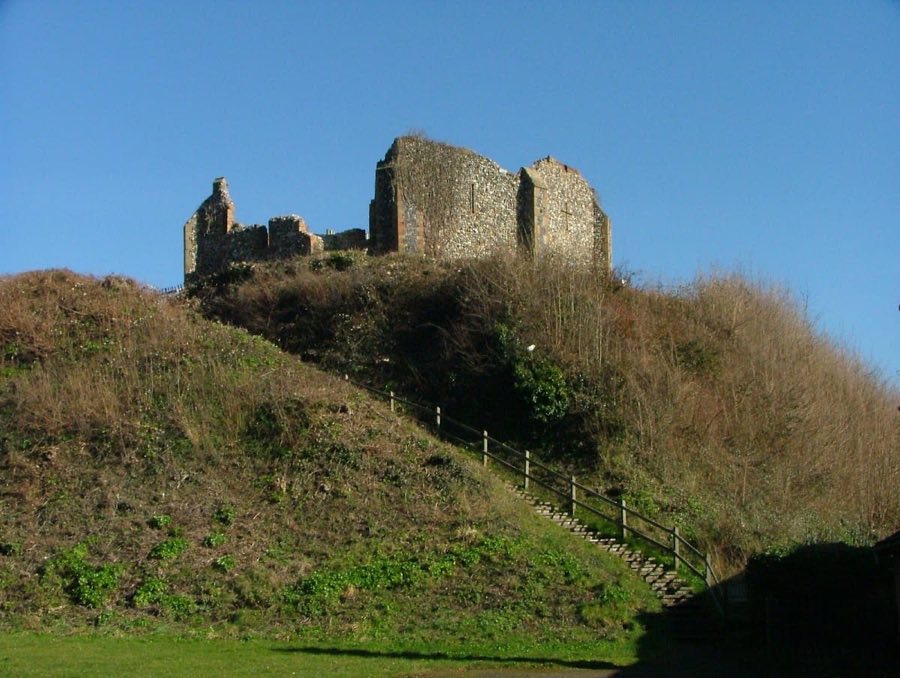
In the 19th century, the castle’s bailey saw new developments, including the construction of a workhouse and school in the 1830s. A later windmill on the motte was demolished in 1844 by Sir Edward Kerrison, who built a stone house there for his servant who had saved his life at the Battle of Waterloo in 1815. This house was crafted with flint and designed to look like a medieval shell keep. Known informally as Kerrison’s Folly, it deteriorated severely after storm damage in 1965 and has since become a ruin.
Today, Eye Castle is recognized as both a scheduled monument and a Grade I listed building, highlighting its historical importance. The traditional role of Constable of the Castle remains linked to the Lord of the Manor of Eye Sokemere, a title historically held by the Palmer family of nearby Haughley.
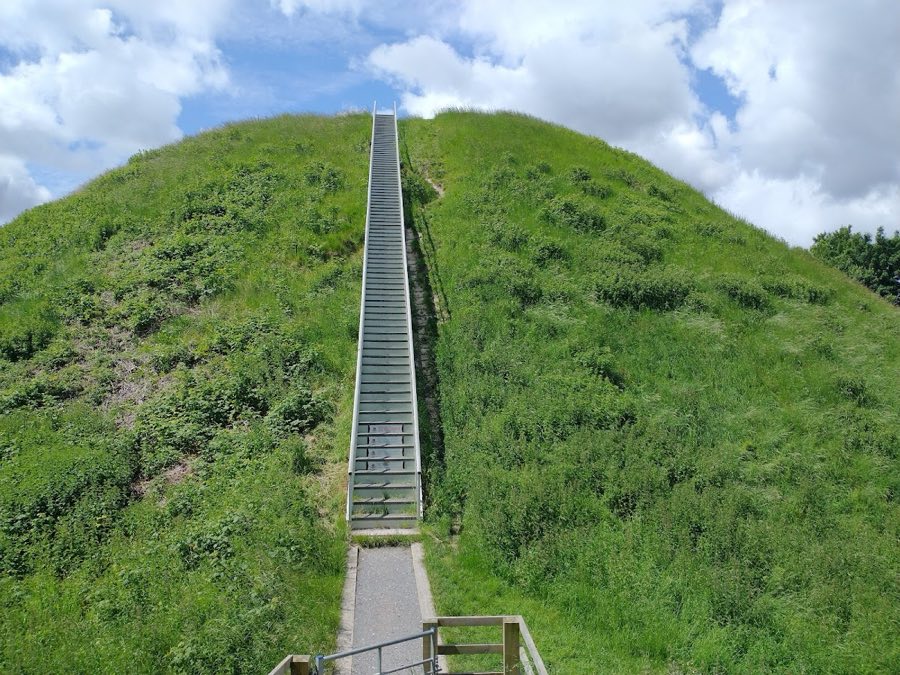
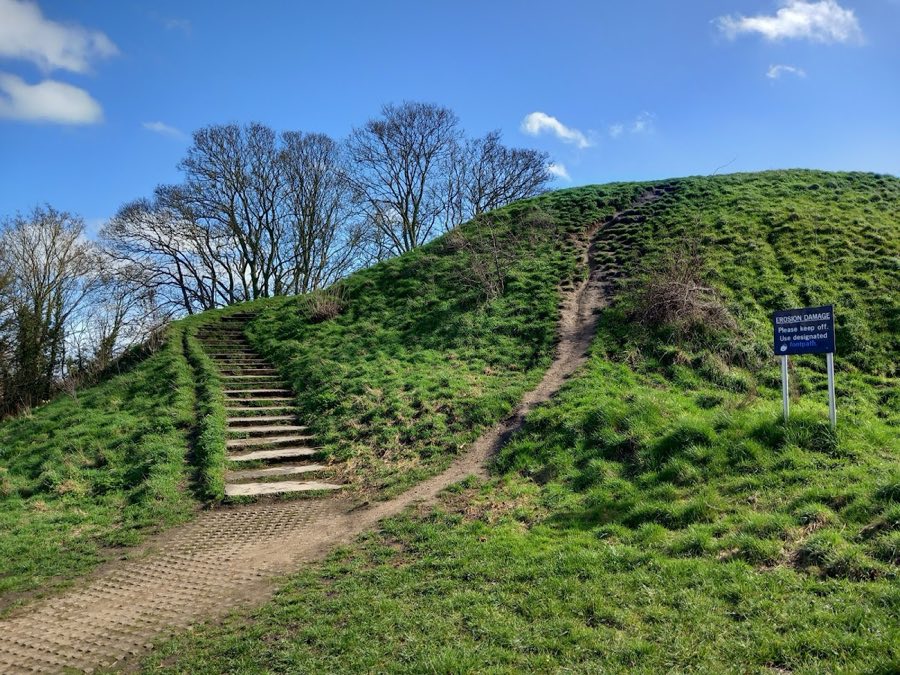
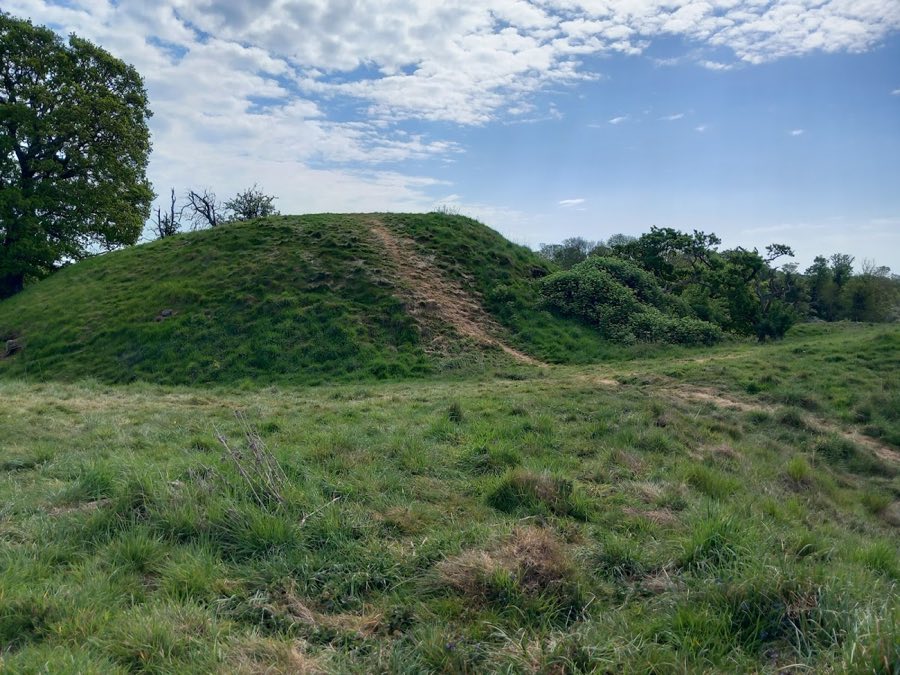
Eye Castle was originally built as a motte and bailey fortress, a common Norman design featuring a large earthen mound (motte) with an enclosed courtyard or outer ward (bailey). The motte rises approximately 12 meters (40 feet) high and spans about 49 meters (160 feet) across, providing a commanding position over the surrounding landscape. Adjacent to the motte, the bailey measures roughly 122 by 76 meters (400 by 250 feet), forming the castle’s main enclosed area.
During the late 12th century, two square stone towers were added to the north side of the inner bailey. These towers enhanced the castle’s defenses and were likely constructed around the same time as similar fortifications at the nearby Framlingham Castle, indicating coordinated military improvements in the region.
In the mid-16th century, the original medieval structures were adapted for new uses when a windmill was established on top of the motte. This installation reflects the shift in priorities from military defense to local industry. Later, in 1844, the windmill was replaced with a flint stone house built by Sir Edward Kerrison. Designed to resemble a shell keep—a circular stone fortification wall once common on mottes—this Victorian structure included living quarters incorporated into its south and west walls. Although built long after the castle’s military prime, it paid homage to the site’s medieval past.
The stone house sustained severe storm damage in 1965, leading to partial collapse and long-term ruin. The remains of this building are now known locally as Kerrison’s Folly. Despite this, the motte’s earthworks remain well-preserved and clearly visible, standing as a prominent feature of the landscape.
Today, the site also includes some scattered stone fragments from the original castle buildings, offering physical evidence of its Norman heritage. These elements, together with the motte and bailey earthworks, are protected as a scheduled monument and Grade I listed historic site, ensuring their conservation for future generations. Throughout its history, Eye Castle’s defensive arrangements relied on the castle-guard system, whereby local landholders provided knights and soldiers to support its garrison, reflecting its role within the medieval feudal military network.
No. 16882
No. 14556
No. 42582
No. 79280
Comments
Comments for Eye Castle will require a verified account before posting.
We'll send a verification link before your first comment is published.