No. 59573
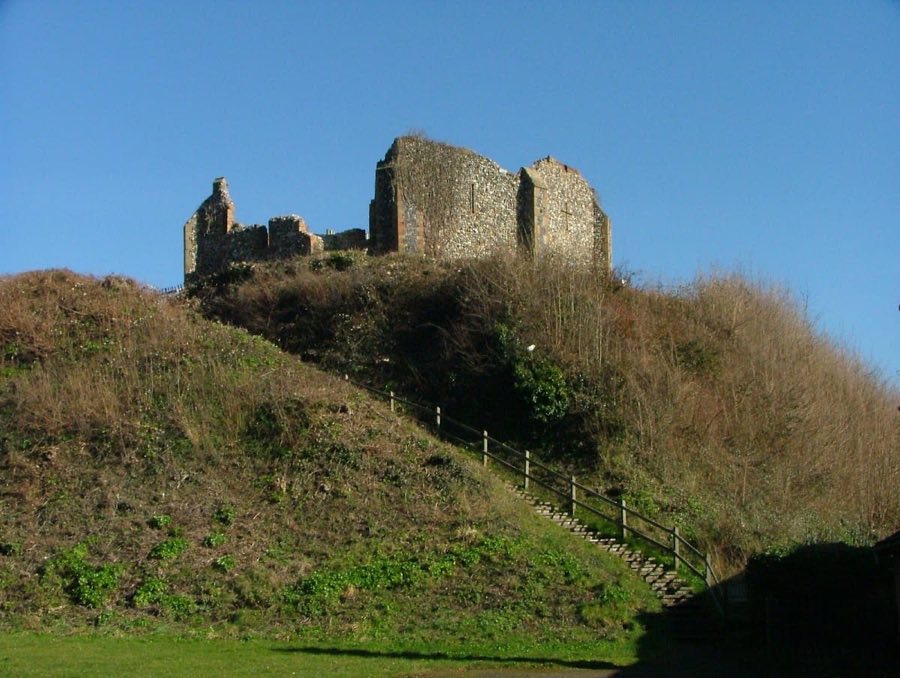
Eye Castle
United Kingdom
CastleRuin14th century
No. 14556
Castle · United Kingdom
No. 14556 · 52.411 N, 0.754 E
For events
Thetford Castle is marked as a château or castle venue lead. Capacity, indoor/outdoor spaces, catering rules, and accommodation options are published only after public verification.
Event types: Private events, Cultural gatherings, Filming and photography
Quick summary
Thetford Castle is a castle in United Kingdom with origins associated with the 11th century.
See all castles in United KingdomThetford Castle stands in the town of Thetford, England, and was constructed by Norman builders.
A compact early fortification, known as Red Castle, was created on the site in the years after the Norman Conquest. This installation was a ringwork, probably erected in the 11th century by William de Warenne, Earl of Surrey. The ringwork was placed across a Saxon defensive ditch and its footprint enclosed and cut off the local churchyard, overbuilding part of the cemetery.
Around c.1100 the town came under the control of Roger Bigod, who commissioned a much larger motte-and-bailey fortress on the opposite side of Thetford. The Bigod family thereafter used Thetford alongside Framlingham, Bungay and Walton as centres of their regional power. The new defences replaced Red Castle and made fuller use of earlier earthworks in the town.
King Henry II took the Bigod castles into royal control in 1157 and kept Thetford under the crown. During the revolt led by Henry’s sons, Hugh Bigod seized the castle, and in 1173 royal forces retook the stronghold and deliberately slighted its fortifications, leaving the mound itself intact. After the events of the 12th century the castle fell out of military use. The Castle Yard remained in use and was reported to be surrounded by a stone wall as late as 1558. In 1772 the east bank of the outer bailey was destroyed, and in 1823 elm trees were planted near the top of the mound. Local medieval and later tradition preserved legends about the mound’s origins, including a story that the devil was responsible for making it, while Victorian writers preferred a Norman explanation. Archaeological investigations of the earlier ringwork were carried out in the late 1950s and early 1960s, which uncovered the design and helped date that first castle.
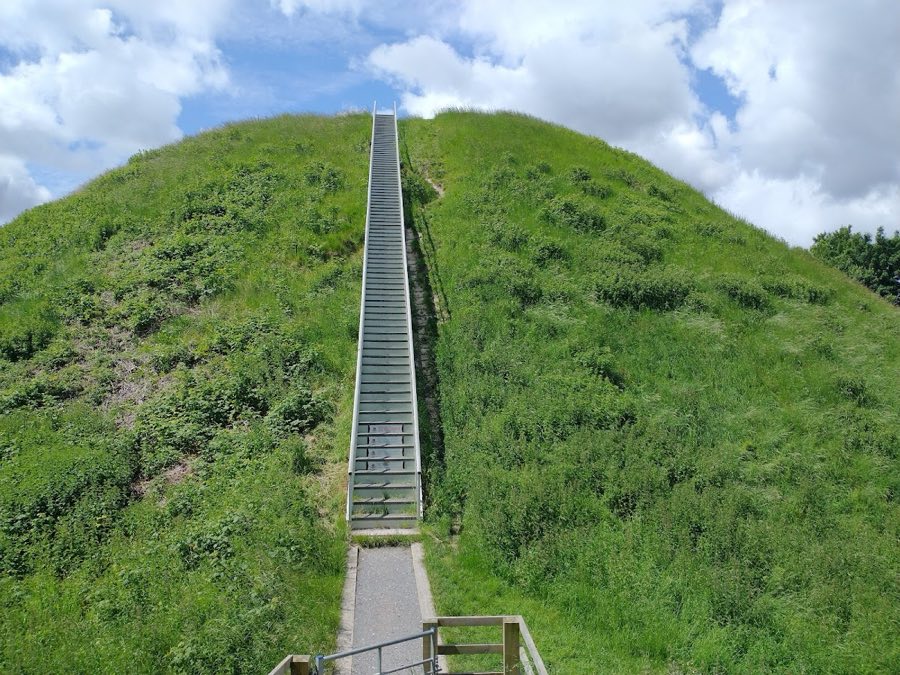
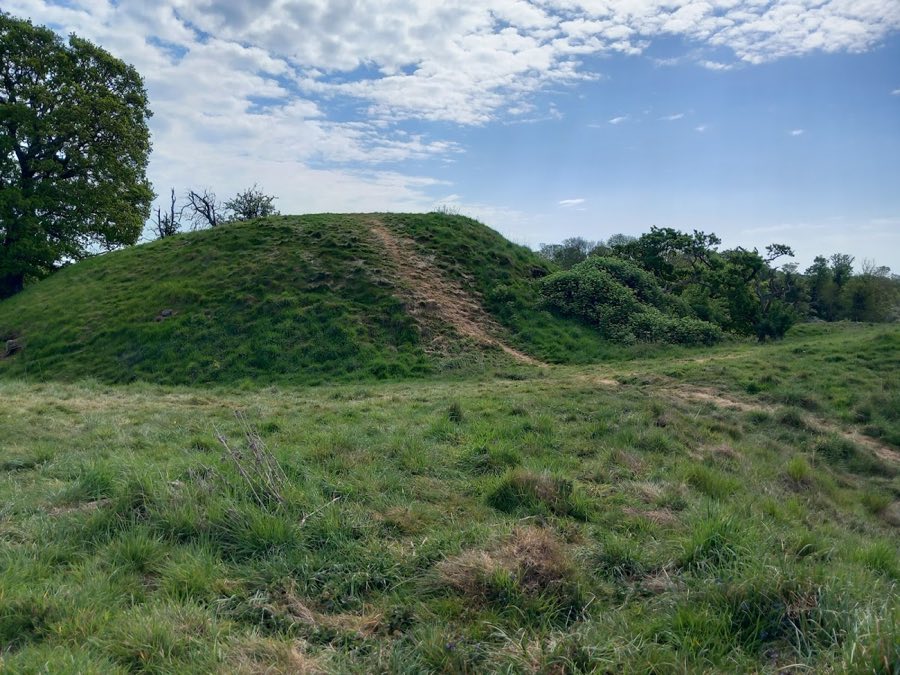
The site is dominated by a very large artificial mound set within surrounding ditches and an attached rectangular enclosure. The surviving earthworks combine the man-made motte, an outer ditch, a series of ramparts on the north side and a bailey that exploits older defences, giving the layout a layered appearance that incorporates earlier prehistoric and Saxon features.
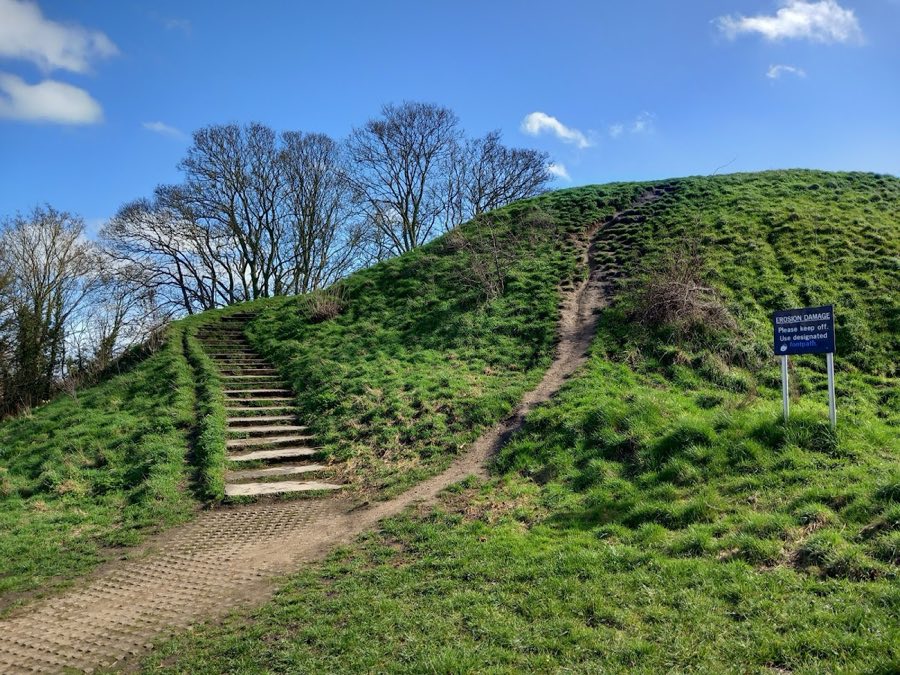
The motte is the principal feature, standing about 19.6 metres tall from its summit (measuring about 22 metres from the base of the surrounding ditch) and roughly 100 metres across at the base. It was formed from local chalk dug and moved by hand, with workers using wooden shovels in a process estimated to have required about 24,000 man-days. The motte sits within a deep encircling ditch and on its north side was defended by two sets of complex ramparts that probably reused elements of an earlier Iron Age fortification. After the deliberate dismantling of the castle defences in 1173 the mound remained essentially intact, and it survives today within a public park as a protected scheduled monument.
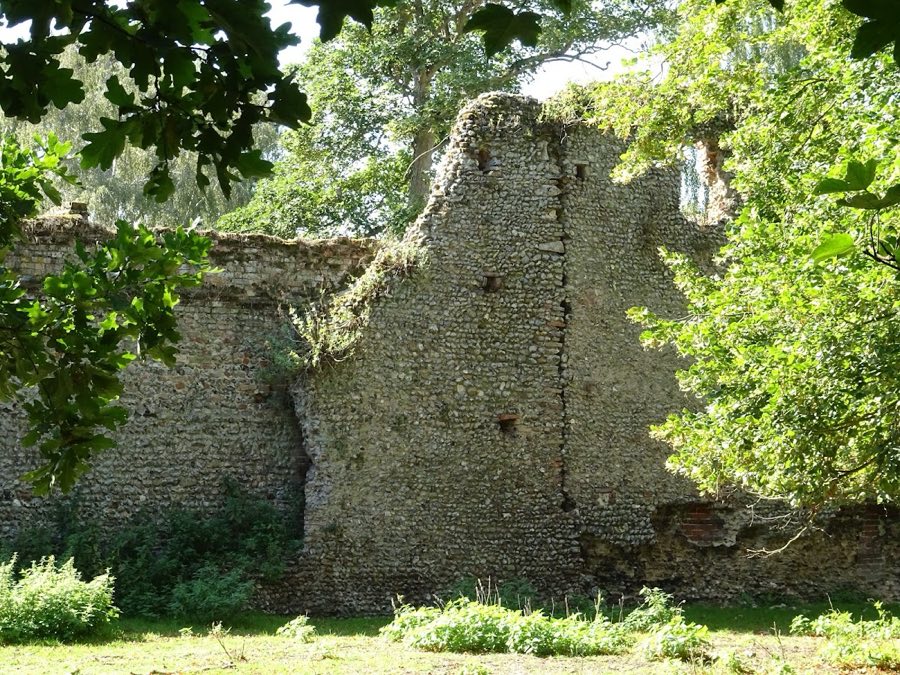
The bailey lies beside the motte as a roughly rectangular enclosure, approximately 105 metres by 95 metres, and one side was laid out to take advantage of pre-existing Iron Age earthworks. The bailey’s banks were built from the same local chalk as the motte; tradition records that additional material was quarried from a nearby area known as the Gallows Pits because the ditch material alone was insufficient. In the 12th century a stone wall was likely erected around the bailey and there is also a suggestion that a stone keep may have been built. The east bank of the outer bailey was removed in 1772, and the bailey area today is known as Military Parade.
Evidence for the earlier fort, Red Castle, survives in the form of a ringwork aligned across a Saxon ditch, a layout that enclosed the churchyard and overbuilt part of the cemetery. Excavations in the mid-twentieth century clarified the form and dating of this 11th-century ringwork, confirming its sequence before the larger motte-and-bailey replaced it. Local commentary over the centuries has preserved folklore about the mound’s creation alongside the archaeological picture of Norman construction and later modification.
No. 59573
No. 42582
No. 16882
No. 79280
Comments
Comments for Thetford Castle will require a verified account before posting.
We'll send a verification link before your first comment is published.