No. 80627
Alden Biesen
Belgium
CastleRuin13th century
No. 69548
Manor house · Belgium
No. 69548 · 50.804 N, 5.536 E
Quick summary
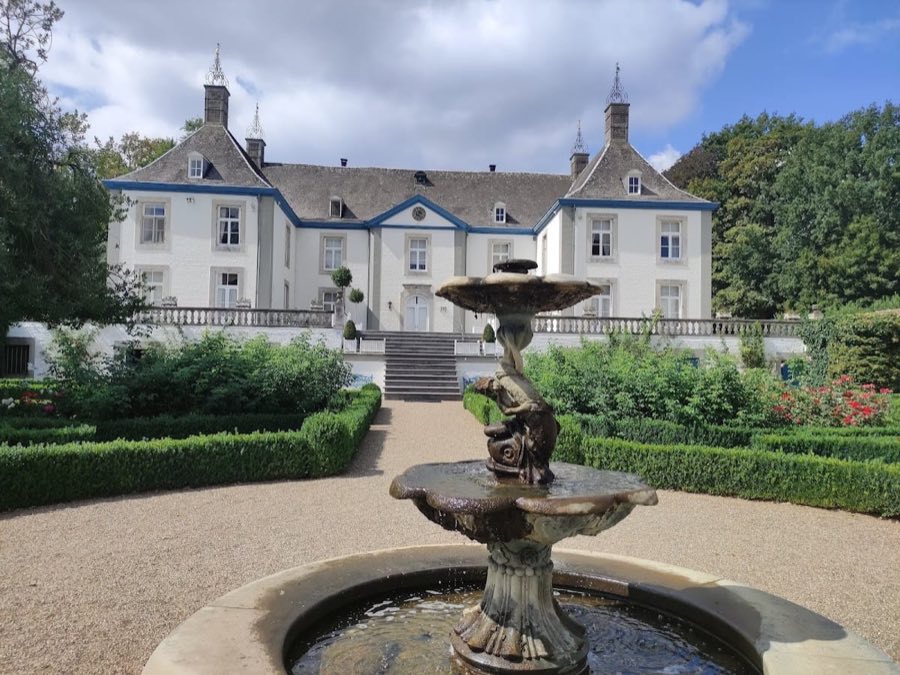
Genoels-Elderen Castle is a manor house in Belgium with origins associated with the 13th century.
See all castles in BelgiumGenoels-Elderen Castle is located in the municipality of Riemst, Belgium. Its origins trace back to the late 13th century when the original stronghold was established by a nobleman named Godenoel. This early castle lent its name to the surrounding village now known as Genoelselderen. The fortress became associated with the Elderen family, a noble lineage who held the estate for several centuries, maintaining ownership until the early 1700s. Among these nobles was Jean-Louis (Johan Lodewijk) d’Elderen, who notably served as prince-bishop of Liège during the 17th century, linking the site to regional religious and political authority.
The medieval castle met its demise towards the close of the 18th century amid the upheavals of the French Revolution. While the primary structure was destroyed, the wine cellars survived this destruction, preserving a tangible connection to the estate’s earlier history. Following this period of ruin, a new castle was erected in 1859 on the same site by Count Guillaume de Borchgrave. This construction employed architectural styles popular at the time—neoclassical and Louis-Philippe—revitalizing the estate after a century of disrepair.
Throughout the 19th century and beyond, the castle passed through several hands, coming under the ownership of families such as d’Oyembrugge, De Borchgrave, and later the industrial Gilain family. In 1990, Jaap van Rennes acquired the property and initiated the development of a large, modern vineyard on the grounds, reaffirming the estate’s longstanding connection to wine production. The site’s historical layers extend even further back, as evidenced by a Gallo-Roman tumulus from the 1st century located in the nearby Kiezelingenbos forest, highlighting the area’s significance well before medieval times.
The present castle features a U-shaped design with two projecting wings framing a central section that is decorated by pediments on both ends. While the building’s core dates back to the first half of the 18th century and underwent restoration during the late 1700s, the major transformation that defines its current appearance took place in 1859. This remodeling gave the castle its distinctive blend of neoclassical and Louis-Philippe style, aligning it with architectural trends of the period.
Attached to the wings are various service buildings, including quarters for servants, barns, stables, and a coach house, which together create an enclosed space around a French garden. This garden features two fountains where sculptures of the classical figures Apollo and Artemis stand opposite one another, adding decorative detail rooted in ancient mythology. The castle grounds extend into an English-style landscaped park, which houses an 18th-century belvedere designed as a small temple in the Louis XVI style. This ornamental structure is situated in the southern section of the park, enhancing the estate’s layered historical ambiance.
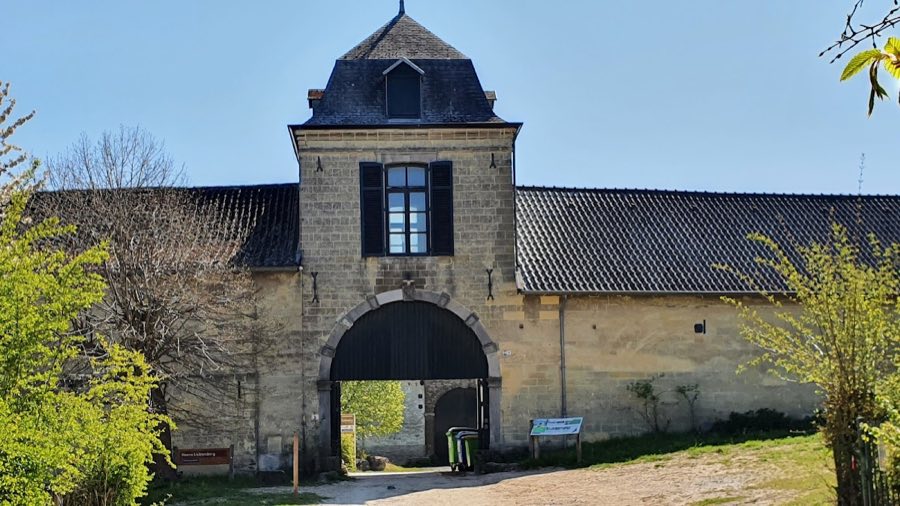
North of the castle buildings lies a castle farmstead, known locally as the kasteelhoeve. This farmstead was constructed in the Mosan Renaissance style and predates the present castle, connecting the estate to earlier regional architectural traditions. The vineyards surrounding the castle represent a significant element of the site, covering about 22 hectares since planting began in 1991. These vineyards are organized into multiple plots, growing grape varieties including Chardonnay, Pinot Noir, Pinot Blanc, Pinot Gris, and Auxerrois. The initial vineyard was planted within the enclosure of the castle itself, while additional plots extend to south-facing hillsides and historic vineyard areas identified by names such as “Wijngaardveld.”
A notable feature surviving from the medieval period is the wine cellars, which have been expanded in modern times to accommodate the increased wine production. These cellars preserve a direct link to the estate’s long tradition of viticulture and serve as a foundational element of the castle’s historical landscape. Overall, the castle grounds and buildings illustrate an evolving ensemble of architectural styles and land use that reflect the site’s significance across centuries.
No. 80627
No. 54313
No. 56104
No. 95327
Comments
Comments for Genoels-Elderen Castle will require a verified account before posting.
We'll send a verification link before your first comment is published.