No. 23421
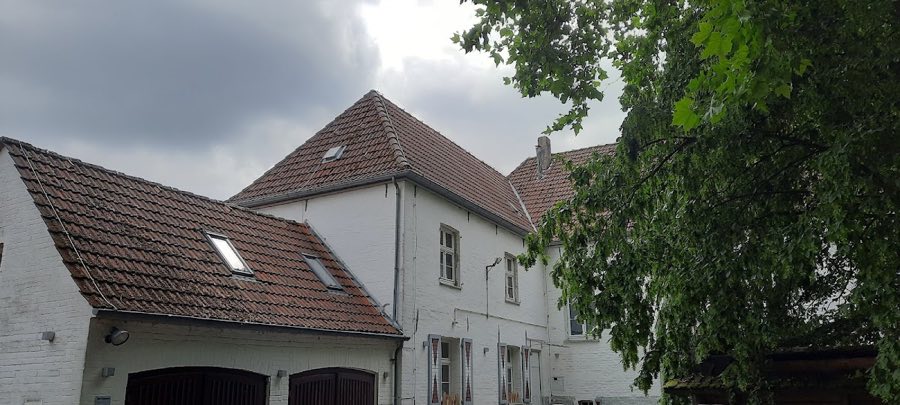
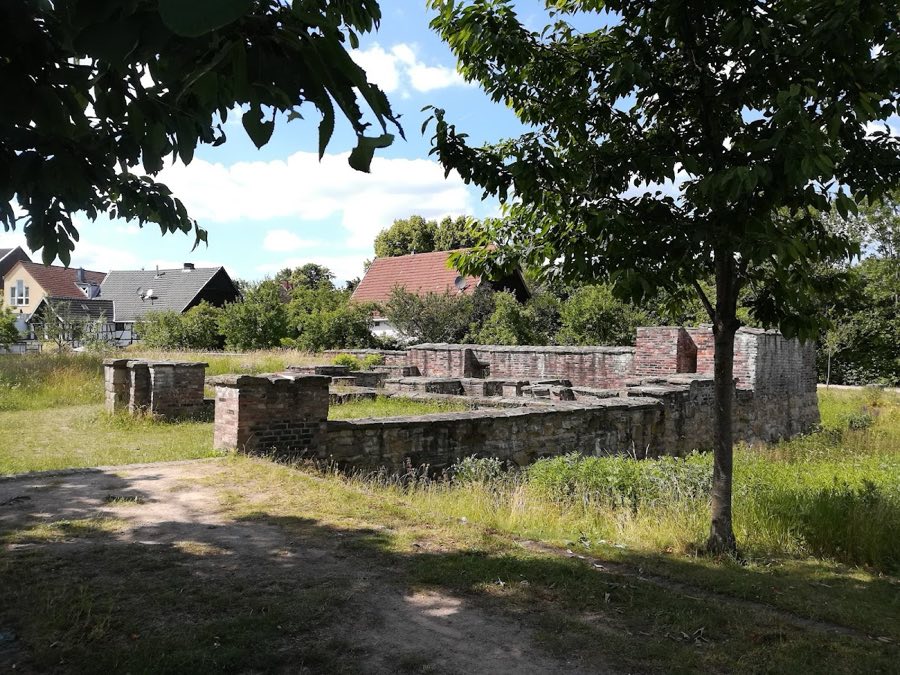
Haus Götterswick
Germany
Manor houseRuin12th century
No. 76145
No. 76145 · 51.527 N, 6.784 E
Quick summary
Kastell Holten is a castle in Germany with origins associated with the 14th century.
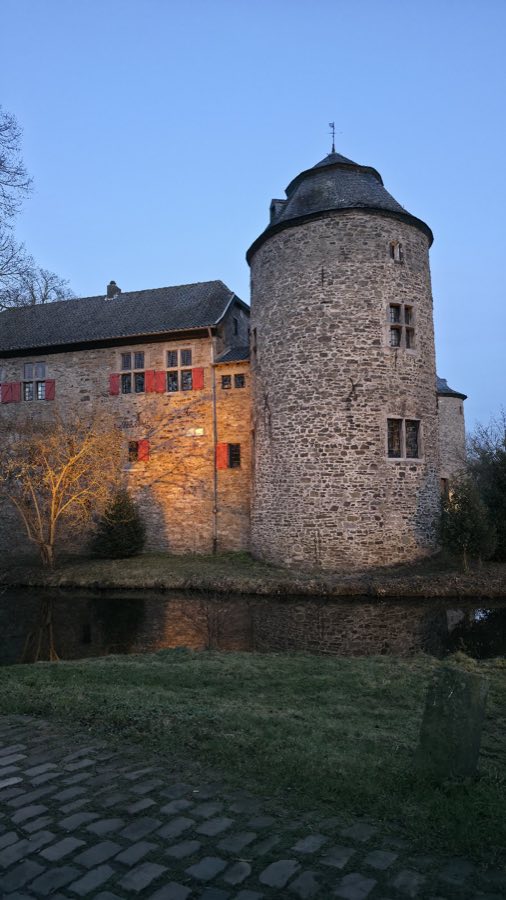
See all castles in GermanyKastell Holten is a former medieval water castle located in Oberhausen, Germany. It was originally founded by the Counts of the Mark, a noble family of the Holy Roman Empire, who built it as a border fortress in the early 14th century.
The site’s earliest documented structures date back to the late 12th and early 13th centuries. Records from 1188, 1243, and 1250 mention a predecessor castle called Burg Holte, which was linked to the Archbishopric of Cologne. These early fortifications occupied the area before it passed into the hands of Engelbert II of the Mark, who acquired the estate around 1299 through his marriage to Mechthild von Holte, a member of the Arenberg family. Engelbert II founded the water castle in 1307, establishing it as a defensive stronghold along the border with the nearby County of Cleves.
The settlement of Holten gained town rights in 1310 under Engelbert II, reflecting its growing importance. By the mid-14th century, in 1355, control of both the castle and town shifted when they became a fief under the Duchy of Cleves. This change diminished Holten’s strategic value compared to neighboring fortifications, such as Dinslaken. From 1445 until 1557, the castle was pledged to the noble von Loë family, who maintained stewardship of the site during this period.
Throughout the late 16th and early 17th centuries, Kastell Holten experienced multiple military occupations amid broader European conflicts. During the Eighty Years’ War, Spanish forces seized the castle twice, in 1586 and again in 1598. The Thirty Years’ War brought further turmoil; in 1623, troops from Ansbach and Anhalt took possession, followed by Hessian forces in 1634. The castle sustained serious damage by 1640, remaining in disrepair for approximately sixty years thereafter. In 1672, French troops made a brief occupation of the structure.
Politically, the rule over Holten shifted considerably over the centuries. From 1609 until 1701, the area was governed by Brandenburg. The elevation of Brandenburg to the Kingdom of Prussia in 1701 incorporated Holten into Prussian territory. During the Napoleonic era, between 1806 and 1813, Kastell Holten and its lands fell under the Grand Duchy of Berg before returning to Prussia as determined by the Congress of Vienna in 1815.
In the 19th century, the castle transitioned from a military to a civilian role. It entered private hands in 1818 and was adapted for use as a school starting in 1842. Following the Second World War, the building’s condition declined, leading to the demolition of the south wing in 1961. Since 1968, the surviving eastern section has housed the local shooting society, known as the Bürgerschützengilde Holten von 1308. The adjacent settlement of Holten developed under the protection and influence of the castle throughout the Middle Ages.
The original layout of Kastell Holten consisted of a main castle complex accompanied by an outer bailey, both encircled by moats and a significant earthen rampart. These earthworks, built to strengthen defenses, remain visible in parts today, marking the castle’s former fortified enclosure. The location on a natural defensive site, bordered by swamp on three sides, contributed to its security during its active use.
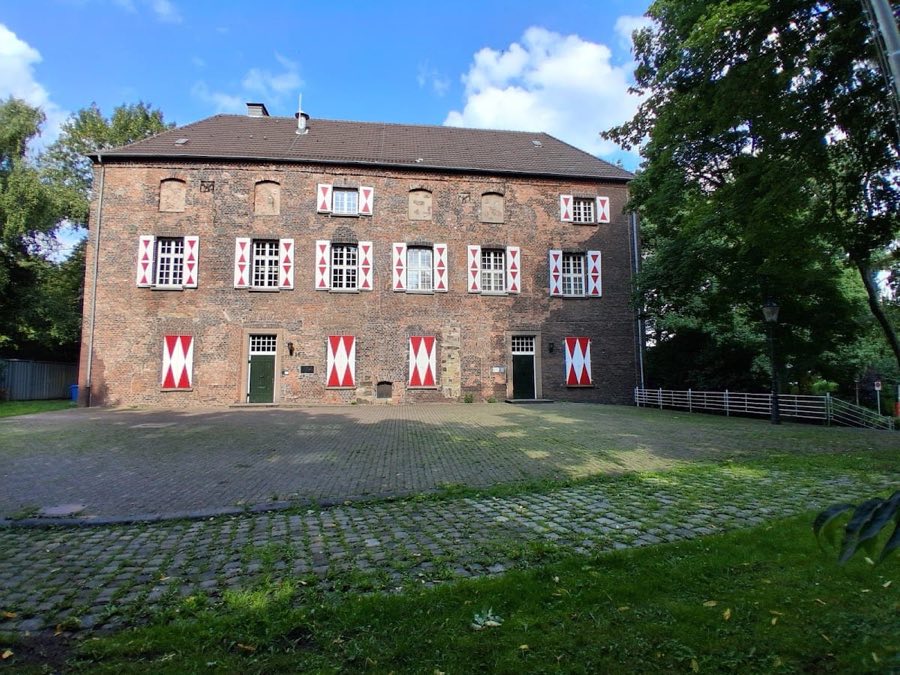
What survives now is primarily the east wing of the main castle building. This portion was reconstructed in the 16th century and remains well preserved, serving practical functions in recent decades. Built mainly from masonry typical of the period, it lacks ornate decorative elements or inscriptions. The east wing’s durable construction has allowed it to endure while other parts of the castle have been lost.
In the 16th century, adaptations were made to enhance the castle’s military capabilities against evolving weaponry, including the installation of casemates—fortified chambers designed to provide shelter and firing positions for firearms. These changes reflect a shift in defensive architecture corresponding to the introduction of gunpowder weapons.
Formerly, a four-story residential tower stood on the castle’s north side, providing elevated living and surveillance quarters, while a stair tower was located on the west side, facilitating access between floors. Both towers have since been demolished, leaving no above-ground remains. The outer bailey, once forming a protective area in front of the main castle mound, has been converted into a park area complete with a playground, preserving the footprint of the castle’s extended defensive zone.
Documentary evidence includes photographs and 3D models that capture the present condition and historical appearance of Kastell Holten, aiding in the understanding of its architectural evolution and ongoing preservation efforts. The castle’s classification as a protected historic monument underscores its cultural and historical value in the region.
No. 23421
No. 11707
No. 47613
No. 38895
Comments
Comments for Kastell Holten will require a verified account before posting.
We'll send a verification link before your first comment is published.