No. 93749
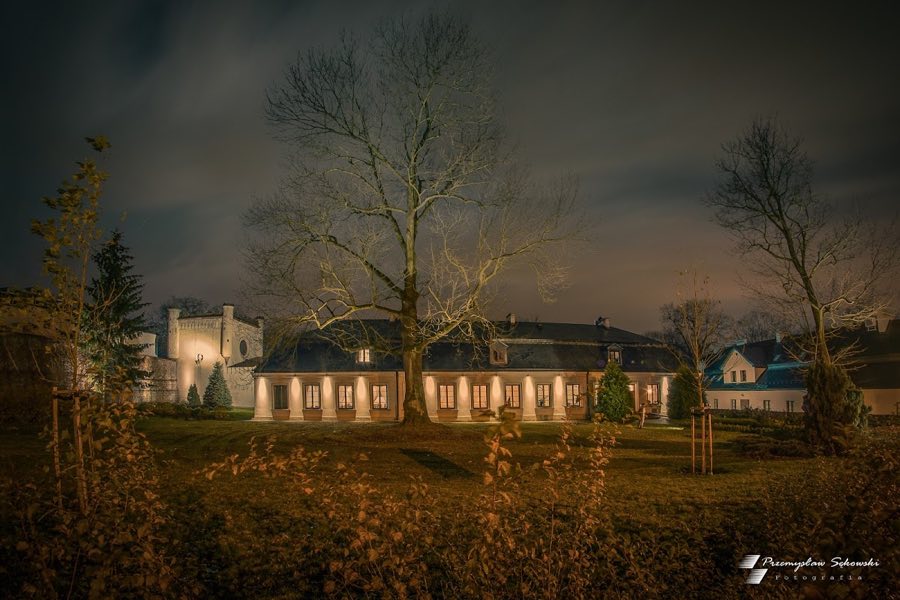
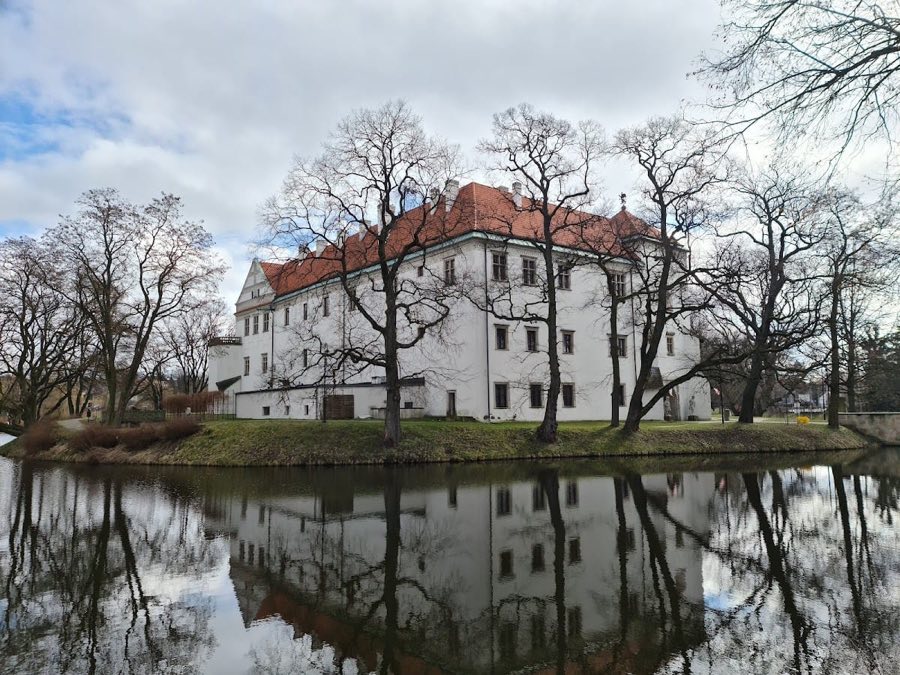
Zieliński Palace, Kielce
Kielce, Poland
PalaceRestoredFor events16th century
No. 69264
Manor house · Poland
No. 69264 · 50.957 N, 20.476 E
Quick summary
Henryk Sienkiewicz Museum, Oblęgorek is a manor house in Oblęgorek, Poland with origins associated with the 6th century.
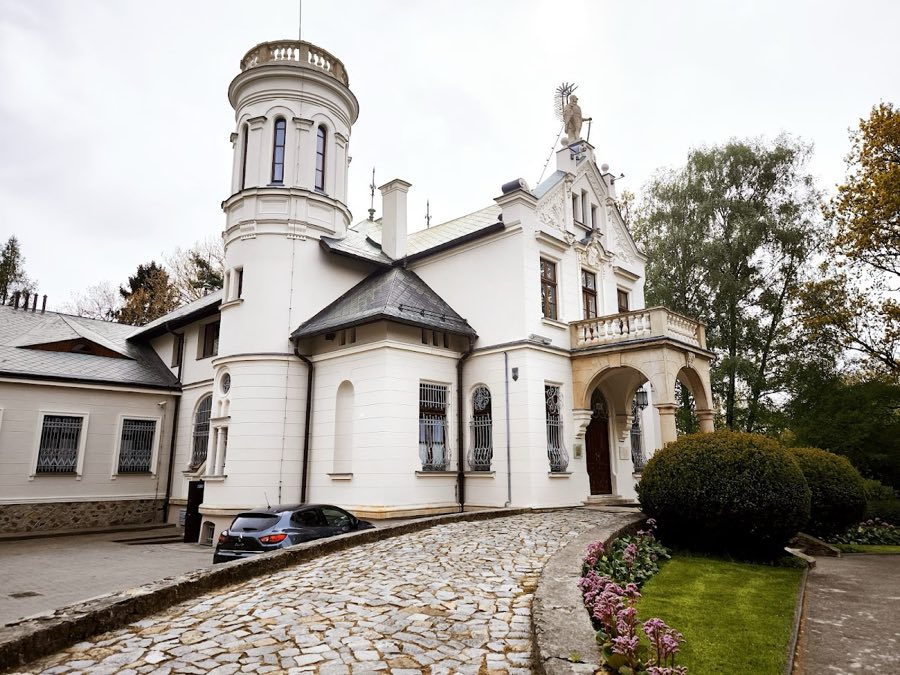
See all castles in PolandThe Henryk Sienkiewicz Museum in Oblęgorek, Oblęgorek, Poland, is a manor-house erected by Polish estate owners around the turn of the 19th and 20th centuries in an eclectic style. The building and its grounds became important because they were presented to the writer Henryk Sienkiewicz as a national gift in 1900, serving thereafter as his countryside home and a place where he worked and received guests.
In 1900 a civic jubilee committee transferred the estate to Sienkiewicz to mark twenty-five years of his literary career; the notarial deed was signed on 18 July 1900. The purchase price recorded was 51,249 rubles and 59 kopecks and the property then comprised 515 morgs of land, including a large area of forest, arable fields, hay meadows, park and orchard. Funds raised with the gift also purchased livestock and farming equipment for the household. A white marble portrait bust of the writer was commissioned for the occasion.
Construction and early form of the manor are reported in two ways: one account gives a design and build date of 1895, while another records construction during 1900–1902 in a nineteenth-century eclectic manner. The assembled house incorporated an older hunting cottage once belonging to the Tarło family, known locally as Tarłówka, and a hunting pavilion built in 1895 by the owner Mieczysław Halik, today often called Halikówka. A formal approach through a marked gate and an avenue of lime trees led to the house and its planted parkland.
Henryk Sienkiewicz took up residence at Oblęgorek in May 1902 and his movable property arrived the following month. He used the house chiefly as a summer retreat and a place to work, remaining there until the outbreak of the First World War. At the end of September 1914 he left Oblęgorek and travelled via Kraków and Vienna to Switzerland. After his death his widow Maria and his son Henryk Józef lived continuously at the manor until 1944; during the German occupation residents of Oblęgorek concealed part of the son’s collections.
The writer’s testament was found in Oblęgorek in 1935. Following the Second World War the estate underwent nationalisation and parceling, while the family retained the manor-house together with forty-nine hectares of land. In 1948 Sienkiewicz’s children petitioned the Ministry of Culture and Art to establish a museum in the house; the plan gained state backing and financial support from regional bodies and a national social fund. Donors conveyed the manor-house together with a two-hectare park to the State Treasury by notarial act in 1956, and renovation work began the following year. Preparatory conservation of furniture and textiles was carried out by the national folk and art industry organisation, with major organisational roles played by individuals associated with that project and by the regional museum curator. The house opened to the public as the Henryk Sienkiewicz Museum in Oblęgorek on 26 October 1958, initiated by the writer’s children; the first curator was the writer’s daughter-in-law, Zuzanna. On 1 January 1976 the museum became a branch of the National Museum in Kielce. In 2007 the writer’s granddaughter Maria Korniłowicz left more than 350 items to the museum, increasing the family collection kept at Oblęgorek. The manor and its park, dating from the late nineteenth and early twentieth centuries, were entered in the national register of immovable monuments on several dates between 1957 and 1972.
The complex centers on a manor-house set within a large English-style park, arranged to surround the residence with open lawns, specimen trees and planted drives. The designed grounds extended across a substantial area around the house and include the lime-tree avenue that leads from the outer gate to the main façade, providing a formal approach that terminates before the entrance.
The house itself is a late nineteenth–early twentieth-century eclectic manor that incorporates earlier structures. The oldest element is the former hunting cottage of the Tarło family, known as Tarłówka, preserved within the composition. A separate hunting pavilion erected in 1895 by the then-owner Mieczysław Halik, often called Halikówka, stands as a distinct component of the complex. The main façade is crowned by a carved stone figure of a hussar and above the entrance balcony doors a stone cartouche bears the Oszyk family coat of arms.
Inside, the ground floor displays spaces reconstructed to reflect the writer’s domestic use and working life. A study contains a dominant writing desk, a revolving book shelf and a glazed bookcase holding volumes. A guest salon contains a round table with chairs brought from a Warsaw apartment, and a small card table sits alongside painted works on the walls. A dining room, a smoking room and a bedroom form part of the principal floor; the bedroom was made accessible to visitors after a 1974 reconstruction carried out with the aid of the writer’s long-serving housekeeper and family members. The upper storey houses exhibitions assembled in former children’s rooms, showing published editions in many languages, correspondence and personal mementos.
Objects placed within the manor complement the architectural fabric. A white marble bust by sculptor Pius Weloński stands among the collection, and paintings by artists such as W. Czachórski, J. Malczewski, K. Mordasewicz and multiple works by P. Stachiewicz (portraits and scenes tied to the writer’s books) form part of the displayed holdings. The building and park survive in a restored condition as a museum complex and are listed in the register of immovable monuments, with formal registration occurring on several dates in the mid-twentieth century.
No. 93749
No. 79434
No. 86411
No. 17860
Comments
Comments for Henryk Sienkiewicz Museum, Oblęgorek will require a verified account before posting.
We'll send a verification link before your first comment is published.