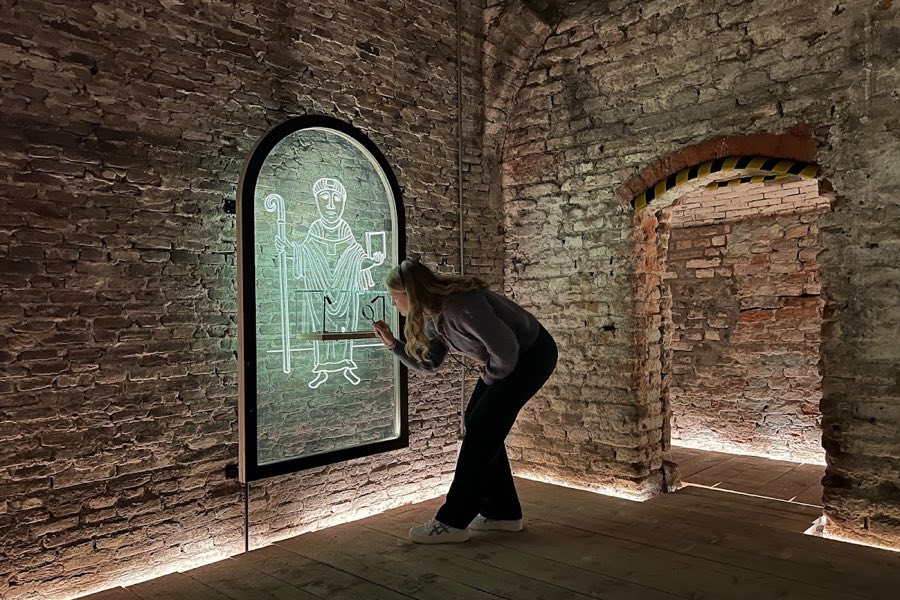
No. 94971
Paleis Lofen
Netherlands
PalaceIntactFor events11th century
No. 58374
Castle · Netherlands
No. 58374 · 52.033 N, 5.125 E
Quick summary
Kasteel Heemstede is a castle in Netherlands with origins associated with the 17th century.
See all castles in NetherlandsKasteel Heemstede is a historic country estate located near the municipality of Houten in the Netherlands. It was built by the Dutch in the mid-17th century, replacing an older knight’s manor that once stood roughly 500 meters to the south. Constructed in 1645, this estate reflects the tastes and social changes of its time, focusing on refined living rather than military fortification.
The original owner of the new estate was Hendrick de Pieck van Wolfsweerd, while the castle’s first resident was Maria van Winssen, a member of the prominent Van Winssen family. During this period, the castle was designed and built in the Dutch Classicist style, emphasizing balance and symmetry. Its broad, surrounding moat preserved the traditional appearance of a castle, although actual defensive use was not intended. This shift highlights a 17th-century trend where castles became symbols of comfort and status rather than protection.
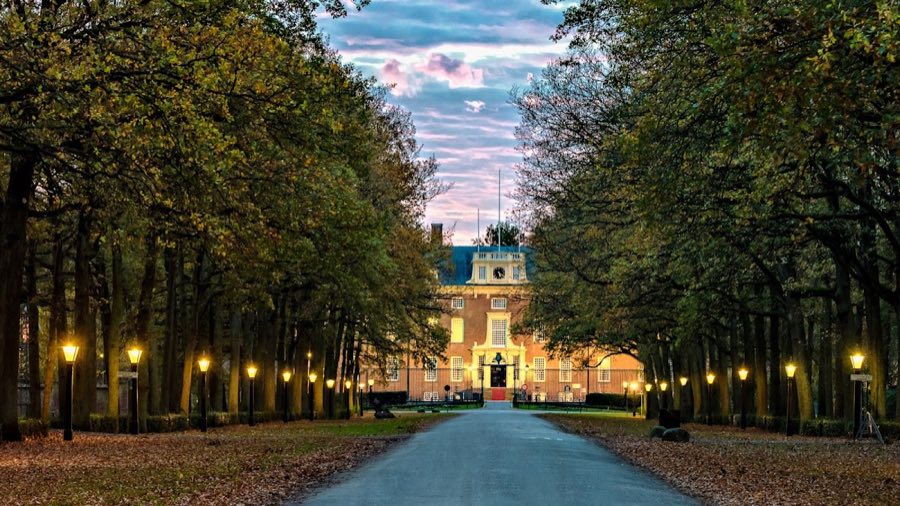
Between 1680 and 1690, ownership passed to Diederik (Theodorus) van Veldhuyzen, a government official who also participated in the States of Utrecht. Under his direction, the surrounding grounds underwent a significant transformation. The gardens were redesigned into a vast baroque park approximately 300 meters wide and 2,000 meters long. This elaborately arranged landscape featured ornamental walking paths, carefully trimmed hedges, fountains, and aviaries. Two long driveways bordered the castle, including a northeast driveway extending about 1,800 meters, parts of which remain visible despite later road developments. Van Veldhuyzen also modernized the interiors by introducing innovations such as sliding windows. Artists including Daniël Stoopendaal and Isaac de Moucheron created engravings that captured the estate’s grandeur, attracting attention beyond Dutch borders.
Ownership changed several times between 1716 and 1723, during which the gardens were initially removed. However, they were restored once again in 1723. By the turn of the 19th century, around 1800, the gardens began to deteriorate: many trees were cut down and statues and fountain lead were sold, signaling a period of decline in the estate’s care.
In 1781, the estate became the property of a member of the Van Utenhove family and stayed within their heirs’ possession until 1837. At that time, the Van den Berch family acquired the castle and kept it until 1919. That year marked a revival when L.J. Heijmeijer bought and undertook restoration efforts, signaling renewed interest in maintaining the estate’s historical character.
A remarkable discovery occurred in 1910 when a suitcase was found in the castle attic containing valuable documents from the West India Company (WIC) and Dutch East India Company (VOC). Among these was the founding charter of New York City, which drew scholarly attention, including study by historian Dean Borlée.
On January 10, 1987, a devastating fire destroyed much of Kasteel Heemstede. The blaze was intensified by the flammable materials used in the ceiling and on the walls. Firefighters had difficulty controlling the fire, and the roof tower collapsed. Following the fire, freezing weather turned the site into a hazardous place described as an “ice palace.” The precise cause of the fire was never officially established. The castle fell into neglect soon after the disaster.
A significant restoration project took place from 1999 to 2002, led by the company Phanos with support from the National Restoration Fund. This work carefully rebuilt the roofs and walls according to their historic appearance, securing the preservation of the castle as a cultural monument. Phanos occupied the estate until its bankruptcy in 2012.
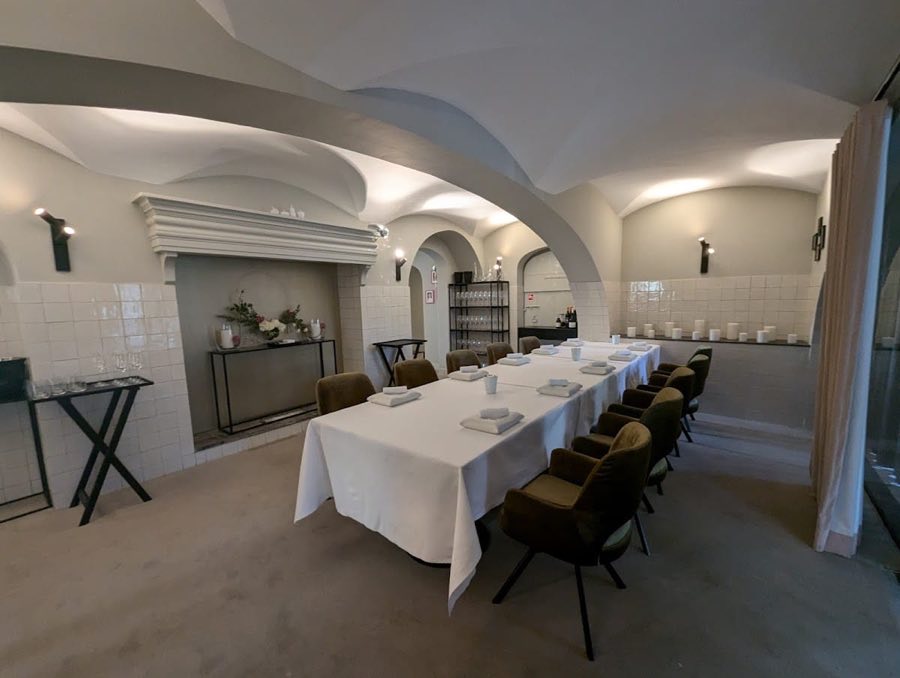
Since 2016, a real estate entrepreneur based in Zeist has owned the castle, leasing it mainly to the European Foundation for Business Qualification from 2017 onward. The foundation uses the estate as a social club primarily for executives and business leaders. The castle’s cellar contains Restaurant Kasteel Heemstede, which earned a Michelin star during two separate periods: from 2003 to 2019 under chef André van Doorn, and again from 2021 onward under chef Ollie Schuiling.
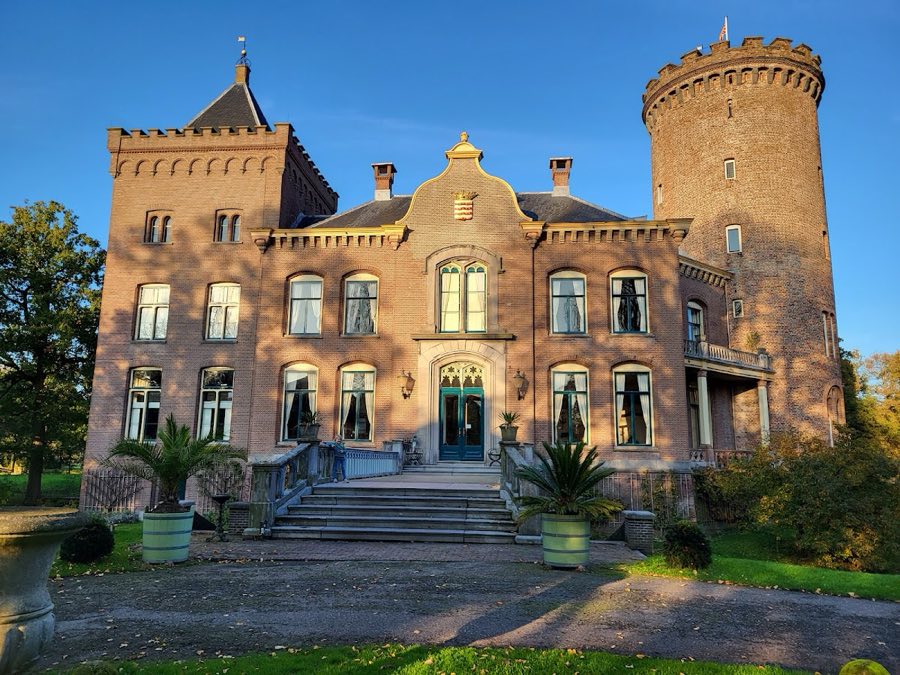
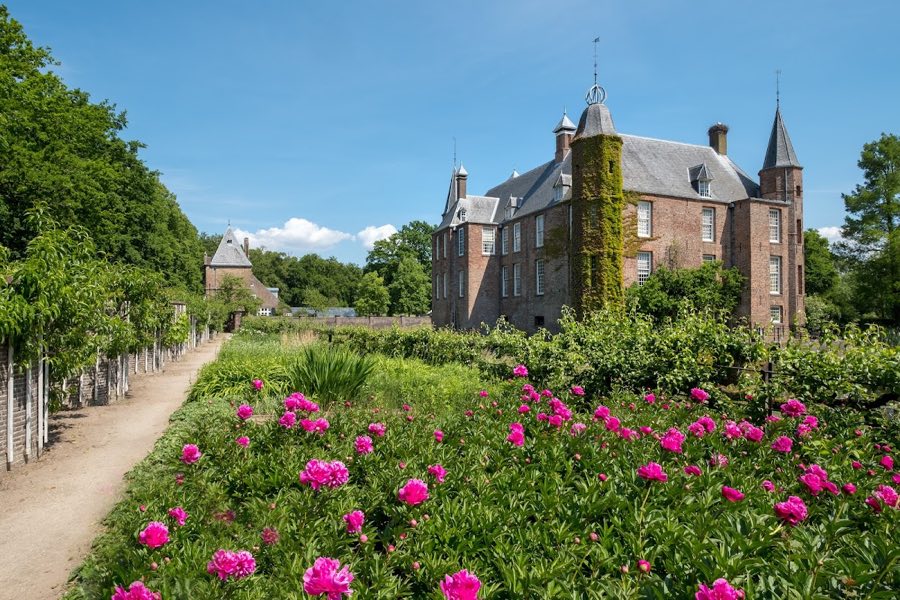
Kasteel Heemstede is a symmetrical estate designed in the Dutch Classicist architectural style. The main building features a central layout with four angular towers partially embedded at each corner, creating a balanced and harmonious form characteristic of the period. This design reflects the 17th-century preference for aesthetics and comfort over fortification.
Surrounding the castle is a wide moat, an element traditionally associated with castles but here serving primarily as a decorative water feature rather than a defensive barrier. This water element contributed to the estate’s overall elegance and spatial separation from its surroundings.
Originally, the estate encompassed extensive baroque gardens laid out as a large park measuring around 300 meters in width and 2,000 meters in length. These gardens included ornamental walking paths, neatly clipped hedges, plant arrangements, fountains, and aviaries for birds. Two notably long driveways bordered the property, with the northeast driveway reaching about 1,800 meters. Despite later road construction in the area, segments of these historic driveways are still identifiable in the landscape.
Inside the castle, innovations such as sliding windows marked a modern touch for the era. The interior decoration once featured large paintings by notable artist Nicholas Berchem, adding to the refined ambiance, although these works were likely sold during later periods of neglect.
Following the fire in 1987, the castle’s structure was heavily compromised. The roof tower was toppled during firefighting efforts, and the building’s exposure to freezing conditions caused further damage. For years after the fire, the ruins remained in decay until the comprehensive restoration between 1999 and 2002. This work faithfully reconstructed the walls and roofs, aiming to replicate the building’s original appearance and preserving its historic character.
Today, the castle includes a restaurant situated in the cellar space, continuing the site’s tradition of hospitality and refinement. The restoration has maintained the building as a heritage monument, ensuring that its architectural features and setting remain a testament to its 17th-century origins and subsequent history.
No. 94971
No. 50859
No. 44343
No. 58839
Comments
Comments for Kasteel Heemstede will require a verified account before posting.
We'll send a verification link before your first comment is published.